REVIEW · LINGUAGLOSSA
Etna Summit 3300m: Trekking on the Active Volcano
Book on GetYourGuide →Operated by Trip on Top Etna · Bookable on GetYourGuide
Etna’s summit feels like science class, but real. This trek takes you to active craters above 3,300 meters, with a big-eye view down into Sicily. I especially like the small group size (max 10) and the way the guides explain the route step by step so you always know what you’re walking over. One thing to consider: the exact route and how high you get can change with volcanic activity and weather, and the hike is not for low fitness or certain health conditions.
You’ll meet at Piano Provenzana (Etna North) and start with a briefing and equipment check, then drive up to 2,900m. The tour includes hiking boots, a jacket, and a helmet, so you’re not stuck hunting gear last minute—just bring long pants. I also took a lesson from a November review: even when Sicily feels warm, you can still end up walking in snow at altitude, so dress for cold conditions at 3,000m+.
In This Review
- Key Highlights That Actually Matter
- Walking Etna’s Active Craters Above 3,300m (Not Just Viewing Them)
- Meeting Point at Piano Provenzana: The Quick Setup That Makes Altitude Safer
- The 4×4 Ride to 2,900m: Where Your Energy Gets Saved
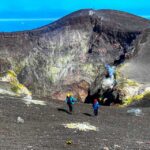
- Trekking Through Lava Fields to Summit Crater Areas
- The Summit Zone Around 3,400m: Views Over Sicily and Beyond
- Descending Via Sand Gullies to Pizzi Deneri and Valle del Bove
- Guides, Helmets, and That Small-Group Limit (Max 10 People)
- Price and Value: Why $65 Can Be a Deal (Plus the Possible Extra 50 EUR)
- Who Should Book Etna Summit 3300m and Who Should Skip It
- Seasonal Reality Check: Dress for Cold and Possible Snow
- Should You Book This Etna Summit Trek?
- FAQ
- Where is the meeting point for the Etna trek?
- How long is the experience?
- How big is the group?
- What is included in the price?
- What should I bring?
- Do I get transport to the trekking start?
- Is the route to the summit guaranteed?
- What extra costs should I expect on the day?
- What languages are available for the live guide?
Key Highlights That Actually Matter
- Active summit craters and lateral craters: you’re not just looking at Etna, you’re walking through its changing terrain.
- A 4×4 start that earns the hike: off-road transport gets you to 2,900m, so your energy goes into the craters instead of the approach.
- Views from the summit zone (around 3,400m): north and eastern Sicily, the Aeolian Islands, and the Calabrian coast in one big sweep.
- Small group pace control: max 10 people means fewer bottlenecks on uneven ground.
- Guide-led safety and flexibility: your plan can adjust based on volcanic activity, and that’s part of doing this responsibly.
Walking Etna’s Active Craters Above 3,300m (Not Just Viewing Them)
This is the kind of Etna experience that makes the volcano feel immediate. Instead of staying at a viewpoint, you move through volcanic ground—lava fields, crater zones, and sand gullies—at altitude. The summit area is the top of the highest and largest active volcano in Europe, and the hike is designed to put you close to the action on the less-frequented side of Etna.
What makes it “worth it” to me is the mix of geology and human scale. You’re high enough to see the island’s geography stack up—Sicily’s north and east, the Aeolian Islands off to the west/northwest, and the Calabrian coast. At the same time, you’re walking on terrain that doesn’t behave like a normal trail: it can be rough, dusty, and shaped by recent volcanic movement.
You also get a sense of Etna’s personality. The route is described as the wildest and least known side, far from the most standard tourist circuits. That matters because you’ll spend more time focused on the crater environment itself, rather than bouncing between crowded platforms.
You can also read our reviews of more tours and experiences in Linguaglossa.
Meeting Point at Piano Provenzana: The Quick Setup That Makes Altitude Safer
You’ll start at the Chalet Sole Neve Souvenir shop, right at the first parking lot when you arrive at Piano Provenzana (Etna North). The first minutes matter more than you think. There’s a briefing and an equipment check before you go off-road, and that’s where the guide sets expectations for pace, clothing, and the kind of ground you’ll cross.
Then comes the practical win: you’re not traveling the whole day in a big group bus. You’re in a small group, and you’ll be issued a jacket and helmet, plus you’ll use hiking boots provided for the conditions. The review scores for transport were very strong, with 88% of reviewers giving a perfect score—so you can feel confident the ride part is handled well.
One small gear note: you’re required to bring long pants. That’s not about fashion—it’s about protecting legs on rough volcanic ground and in cold air. If you’re tempted to wear shorts because it’s sunny at the base, this is where you should listen to the tour rules.
The 4×4 Ride to 2,900m: Where Your Energy Gets Saved
The trek begins after a 4×4 off-road drive up to 2,900 meters. This is a smart design for an altitude day. I like tours that respect physics: at 3,000m+, every extra meter you climb on your own legs costs a lot more effort. Getting to 2,900m by vehicle means you’ll arrive ready to enjoy the walking section, instead of “surviving the ascent.”
You’ll travel in special off-road vehicles to reach the start height, then switch from vehicle to trekking terrain. Since the tour includes a return by 4×4, you’re not stuck walking back either.
There is one logistics detail to be aware of for your budget: the tour price doesn’t include a cable car ticket or 4×4 bus return ticket, listed as 50 EUR. It also notes a mandatory supplement for the 4×4 Unimog return of 50 EUR per person, paid on site. The wording can sound confusing, but the takeaway is simple: plan for a potential extra charge around 50 EUR for the return vehicle access.
Trekking Through Lava Fields to Summit Crater Areas
Once you start hiking, the tour becomes all about volcanic terrain. You’ll cross lava fields and move toward the summit craters and lateral craters. This is where the “active volcano” part stops being a headline and becomes the actual ground under your feet.
The guide also plays a huge role here. In one Italian review, the person highlighted how the guide explained each step of the journey clearly, and named Fabio as especially helpful. That kind of step-by-step guidance matters when the ground is uneven or when you’re trying to stay calm on steep, sandy sections. You want your brain focused on balance, not guessing what’s next.
A realistic expectation: the time you spend at the summit area depends on volcanic activity and weather. That can affect whether you reach the highest point or how close you get to crater edges. One review even mentioned that conditions didn’t allow reaching the summit, but they still recommended the experience for seeing Etna’s north-east crater area. Translation: even if the highest goal shifts, you’re still doing the crater experience, just adapted to the day.
Terrain doesn’t feel like “one trail.” You’ll likely be dealing with changing surfaces—rocky and dusty patches, plus sand-like areas that can slow you down. This is a trek where good footing and steady pacing beat speed.
The Summit Zone Around 3,400m: Views Over Sicily and Beyond
If the day cooperates, you’ll reach the summit area at about 3,400 meters. This is the moment where Etna turns into a giant observation deck. You’ll have views of northern and eastern Sicily, plus the Aeolian Islands and the Calabrian coast—a huge slice of the region from up high enough that the coastline feels like it’s drawn with a pencil.
At this altitude, your body also becomes part of the experience. Air is thinner, and walking takes more effort even if you’re used to hiking. That’s why the tour includes gear (boots, jacket, helmet) and why the group stays small. You want a pace you can hold while you still have energy to enjoy the view, not just reach it.
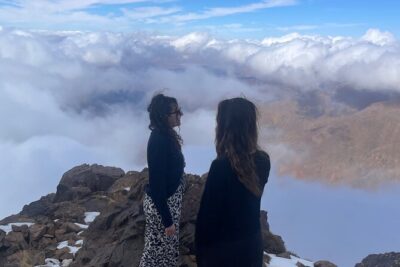
Cold can sneak up on you. A November review described walking on snow at that time of year, even though Sicily can feel warm lower down. The review recommended being prepared with proper cold-weather clothing and higher footwear. The good news is that the tour provides a jacket and boots, which helps a lot—but your required long pants are still key.
Descending Via Sand Gullies to Pizzi Deneri and Valle del Bove
After the summit-area time, you begin the descent through sand gullies. This part can feel tricky—not because it’s always steep, but because loose sand can change how your footing grips. The guide timing and your chosen steps matter. If you rush, you’ll pay for it with extra strain.
Then you reach the Pizzi Deneri area, where you get a majestic view of Valle del Bove. This is one of those Etna “signature” landscapes: a huge volcanic valley shaped by past activity, seen from a high angle. You don’t just get a crater peek—you get the volcano as a whole system, with the valleys, ridges, and eroded shapes visible at once.
Descent is also where you can relax your mindset. The hardest part is behind you; now you’re focused on control and comfort. Done right, this becomes a satisfying close to the hike: you’re moving carefully and still able to take in the scenery.
Guides, Helmets, and That Small-Group Limit (Max 10 People)
This experience is built around a guide who understands both the trekking and the volcano. You’ll have a volcanological or alpine tour guide, plus insurance and helmet included. That combination is practical: volcanology knowledge helps with route decisions and safety, while alpine trekking skills help with movement on rough ground.
The small-group cap of 10 participants is more than a number. On a terrain-heavy route at altitude, it means:
- less congestion on narrow or uneven sections
- better monitoring of pace and breathing
- more time for the guide to explain what you’re seeing and stepping on
In the reviews, people praised the guidance and the guide’s approachability. Fabio was specifically mentioned as fantastic, and the emphasis was on being helpful and well-prepared with explanations. That’s exactly what you want here: crater walking is easier when you know what the guide is trying to show you.
Price and Value: Why $65 Can Be a Deal (Plus the Possible Extra 50 EUR)
On paper, $65 per person for a 4.5-hour Etna summit trek sounds like a bargain for what you’re doing—especially with gear and expertise included. What your price covers includes the summit tour, hiking boots, a jacket, a volcanological or alpine guide, insurance, and a helmet.
So you’re not just paying for “a walk.” You’re paying for:
- off-road transport as part of the experience
- expert guidance in a volatile environment
- safety equipment that you may otherwise have to rent
- logistical handling of the summit-area tour
The one part to budget carefully is what’s not included: food and drinks, and the cable car ticket or 4×4 bus return ticket (50 EUR), plus the mandatory 50 EUR supplement for the 4×4 Unimog return. If that applies to your day, it can change the final cost of the trip. You’ll likely know the exact amount on the spot, but it’s wise to plan for it.
My practical advice: treat the published price as the base cost, then keep a little cushion for the return vehicle supplement so you’re not surprised mid-trip.
Who Should Book Etna Summit 3300m and Who Should Skip It
This is not a casual stroll. The tour lists it as not suitable for:
- pregnant women
- people with heart problems
- people with respiratory issues
- people who went diving up to 24 hours prior
- people with low level of fitness
If any of those apply, don’t push it. Altitude plus uneven volcanic ground can be a stressful combo, and the tour is designed for people who can manage that reality.
Who it suits best:
- people who like structured adventure with clear guidance
- hikers comfortable with rough terrain and cold at altitude
- anyone who wants crater access and the big Etna panorama
It’s also a good fit if you’re trying to see the north-east crater side of Etna. One review specifically recommended it for that crater view, and the overall direction of the tour is clearly aimed at summit-area crater experience, not just a viewpoint stop.
Seasonal Reality Check: Dress for Cold and Possible Snow
One of the most useful lessons from reviews is timing. A November booking included snow on the route, and the person praised the importance of having appropriate cold-weather clothing and higher boots. That doesn’t mean every day will be snowy, but it does mean the altitude is real and the summit area can run cold fast.
The tour gives you a jacket and boots, which helps a lot. Still, follow the rule: bring long pants. And if you’re traveling in cooler months, I’d plan your clothing as if you might be dealing with winter conditions at 3,300–3,400m.
Should You Book This Etna Summit Trek?
I’d book this if you want an Etna day that feels hands-on: active crater terrain, real elevation, and a guide-led plan that adapts to volcanic conditions. The small group size, the included safety gear, and the step-by-step guidance highlighted in reviews (including praise for Fabio) are strong signals that this isn’t thrown together.
Skip or reconsider if you want a relaxed walk, you have health limitations, or you’re not prepared for altitude and cold. Also, if summit access is a must-have for your personal checklist, keep expectations flexible. The tour explicitly says the trekking can be modified depending on volcanic activity and weather. You might still see crater zones even if conditions change, but the day may not play out exactly as hoped.
If you like flexibility, this operator also offers free cancellation up to 24 hours in advance and reserve/pay later options, which makes planning easier when weather on Etna is the wild card.
FAQ
Where is the meeting point for the Etna trek?
You meet at the Chalet Sole Neve Souvenir shop at the first parking lot as soon as you arrive at Piano Provenzana (Etna North).
How long is the experience?
The duration is about 4.5 hours.
How big is the group?
The group is limited to a maximum of 10 participants.
What is included in the price?
Included: the summit tour of Etna, hiking boots, a jacket, a volcanological or alpine tour guide, insurance, and a helmet.
What should I bring?
You should bring long pants.
Do I get transport to the trekking start?
Yes. You travel by special 4×4 off-road vehicle to about 2,900 meters, and then you trek on foot. You also return to the starting point by 4×4.
Is the route to the summit guaranteed?
No. Trekking may be modified depending on volcanic activity and weather conditions, and the time spent at the summit area depends on those factors too.
What extra costs should I expect on the day?
Food and drinks aren’t included. A cable car ticket or a 4×4 bus return ticket is listed as 50 EUR, and for the 4×4 Unimog return there is a mandatory 50 EUR supplement paid on site.
What languages are available for the live guide?
The tour guide works in Italian, English, and French.