REVIEW · MONTERREY
Rappelling, Hiking and Jumping into the water in the Matacanes Canyon
Book on Viator →Bookable on Viator
Rappels and water jumps start before dawn. Matacanes Canyon near Monterrey is one of Mexico’s canyoning icons, and this circuit turns it into a full-day mix of technique and playground fun: two rappel descents (30 m and 18 m), natural slides, underground river passages, caves, turquoise pits, and more than 20 jumps from 1 m up to 12 m. I love the blend of vertical challenge plus constant motion through the canyon, and I also love the way guides Lilly and Mike keep things upbeat and safety-led from start to finish.
One consideration: this is intense. The route totals about 19 km, with a 6 km approach walk before the main action and then a long downriver section, so you’ll want strong stamina. Also note that rappelling experience helps; if it’s your first time, you may need to take the beginner workshop the day provides.
In This Review
- Key Points You Should Know Before Matacanes
- Matacanes Canyon: Why This 19 km Circuit Feels So Big
- Start Time at 4:30 am: The Early Call You’ll Be Glad You Answered
- Gear Check: Neoprene, Helmet, Harness, Life Jacket
- The 6 km Approach Walk: Warming Up for the Real Work
- Downriver Magic: 10 km of Canyoning With Slides, Caves, and Underground Water
- Your Two Big Rappels (30 m and 18 m)
- Natural Slides and Cave Sections
- The Jumps: More Than 20 Times From 1 m Up to 12 m
- Final 4 km: Trails and River Crossings to Close the Circuit
- What the Day Feels Like in Real Life: Safety, Energy, and Staying Present
- Price and Value: Is $418.44 Really Fair for Matacanes?
- Who Should Book This (and Who Might Skip This One)
- Should You Book Matacanes Canyon With Lilly and Mike?
- FAQ
- What time does the Matacanes Canyon tour start?
- How long is the tour?
- Where is the tour located?
- How much does it cost?
- Is pickup available?
- What’s included with the tour?
- How long is the full route?
- What water activities and jumps are included?
- Is the tour only for experienced rappellers?
- What happens if the weather is bad?
Key Points You Should Know Before Matacanes
- Two big rappels (30 m and 18 m) set the tone early, with real commitment, not “training wheels.”
- More than 20 jumps from 1 m to 12 m means you can go smaller or bigger as conditions and comfort allow.
- Underground river sections, caves, and natural slides keep it from feeling repetitive.
- About 19 km total includes a 6 km approach and long movement downriver, so cardio matters.
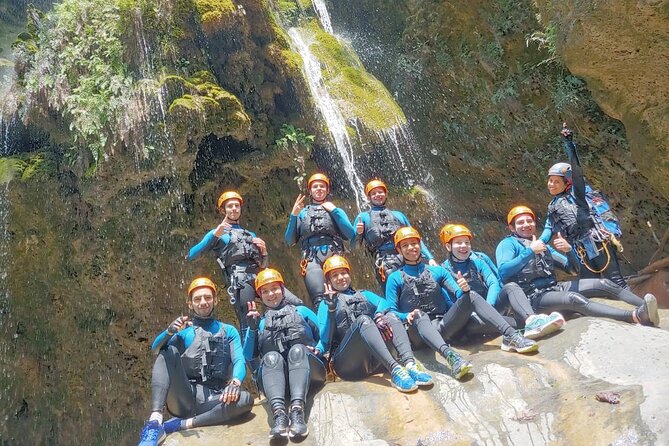
- Included full canyon gear (neoprene suit, helmet, harness, life jacket) cuts down what you need to pack.
- Max 24 people keeps the day feeling organized without turning into a cattle call.
Matacanes Canyon: Why This 19 km Circuit Feels So Big
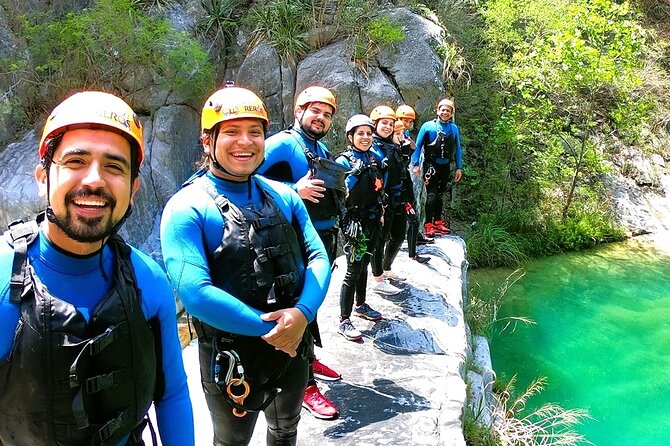
Matacanes Canyon is one of those places in the Monterrey area that earns its reputation. You’re not just walking through a pretty spot. You’re moving through a working canyon system: rappels, slides, jumps, river travel, and spots that feel enclosed and cave-like. The whole day is built around short bursts of adrenaline followed by recovery time on foot or in transit.
What makes this route especially memorable is the variety. You’ll swap between vertical work (two major rappels), water slides, and jumps, then transition into hiking and river crossings to tie everything together. Even if you’re chasing adrenaline, it stays grounded in real canyon logistics, like where the water is, how you get to the next section, and how you safely move as a group.
You can also read our reviews of more tours and experiences in Monterrey.
Start Time at 4:30 am: The Early Call You’ll Be Glad You Answered
Your day starts at 4:30 am, and you’ll want to show up before your brain fully wakes up. The benefit of that early start is simple: canyoning is a “weather and water conditions” sport. Heading out early helps you get in with better light, steadier conditions, and enough time to finish the circuit without rushing the technical parts.
You’ll likely do pickup (the option is offered), then ride in an air-conditioned vehicle in a private setup. I like this approach because it reduces decision fatigue. When you’ve got a day full of gear and water, you want the transportation handled so you can focus on one thing: staying calm and doing what your guides ask.
Gear Check: Neoprene, Helmet, Harness, Life Jacket
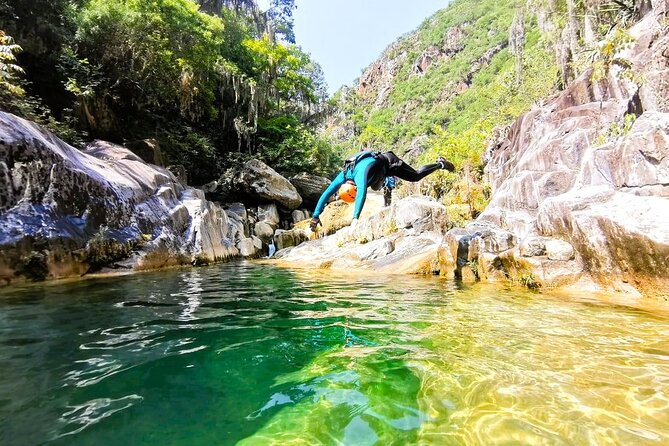
This trip gives you the core protection and comfort gear: neoprene suit, helmet, harness, and life jacket. That matters because canyoning gear is not optional fluff. Neoprene helps with temperature and drag. Helmet and harness are there for control during rappels. Life jackets keep you safer during water movement and help you stay afloat in the jumps and river sections.
When you get the gear, take your time with fit. A harness that sits wrong or a helmet that doesn’t feel secure is not a small annoyance once you’re in cold water and moving quickly. You’ll feel better when everything stays put while you climb, rappel, and step onto slippery surfaces.
The 6 km Approach Walk: Warming Up for the Real Work
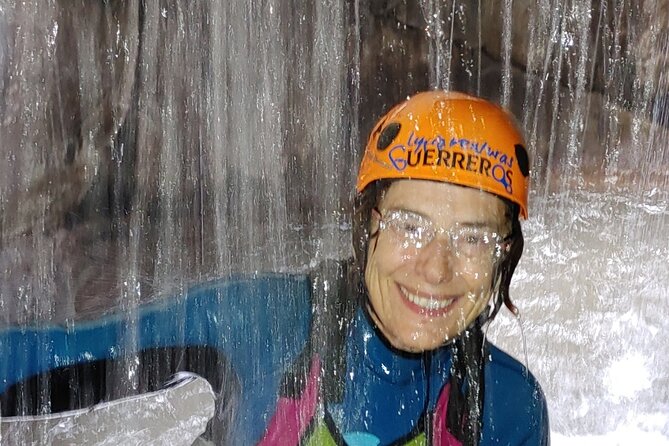
Before you hit the main action, you’ll do a 6 km approach walk. This isn’t just “getting there.” It’s your chance to settle into the rhythm of the day: tighten gear, check footing habits, and listen carefully to instructions before things get technical.
The approach also sets expectations. Canyon time isn’t all jumps and big moments. You’ll hike and move. Your legs will do their part. If you pace yourself on this segment, the later downriver portion feels less punishing.
Downriver Magic: 10 km of Canyoning With Slides, Caves, and Underground Water
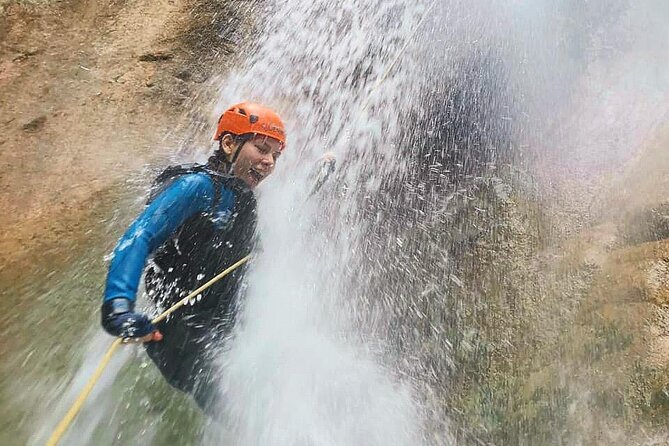
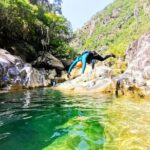
After the approach, the route shifts into the heart of Matacanes: a 10 km downriver stretch with nonstop variety. This is where you’ll encounter the canyon’s signature features—turquoise pits, natural water chutes, caves, and underground river sections.
This is also where the “icon” reputation starts to make sense. The canyon isn’t one single visual moment. It’s a sequence of changing scenes: open water areas, confined spaces that feel cooler and darker, and natural channels that guide the water (and you) toward the next step. If you like a place that feels like a system you’re actively learning, this section delivers.

Your Two Big Rappels (30 m and 18 m)
The route includes two rappelling descents, one at 30 meters and one at 18 meters. These are the kind of rappels that force you to slow down mentally and trust technique. Your guides’ job here is huge: clear instructions, attentive safety checks, and confidence-building pacing.
I’d treat these moments like skill checkpoints, not like “stuff to get through.” When you’re focused on breathing, body position, and following the setup, the drop becomes manageable. When you rush the headspace, it gets harder than it needs to be.
Natural Slides and Cave Sections
Between rappels and jumps, you’ll also experience natural slides. These aren’t just for fun (though they are fun). They’re part of how the canyon route connects points along the water system. Expect to move with the group, listen closely, and keep your body ready for sudden changes in water flow.
Caves and underground river sections add a different flavor. Lighting changes fast. Surfaces can be slick. It’s the kind of environment where you’ll appreciate having someone experienced guiding you through the order of moves and the safety routine.
The Jumps: More Than 20 Times From 1 m Up to 12 m
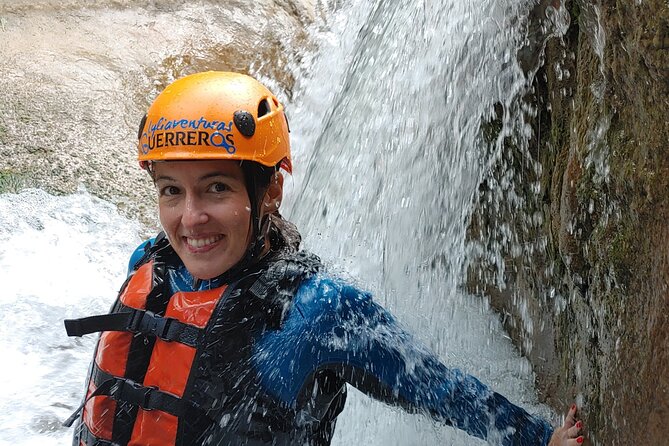
One of the headline features is the sheer number of jumps: more than 20 jumps, ranging from 1 meter to 12 meters. That’s the kind of activity that turns a canyon into an all-day challenge for both legs and nerves.
Here’s the practical way to think about it. You’ll likely start smaller, then face bigger heights as you progress. The jump itself is only part of the story. You also need the approach, timing, and landing awareness. Your guides keep you on track, but you still have to choose calm over panic.
If you’ve never done jumps from height before, don’t pretend you feel fine just because you can jump off a curb. Water landings require a different kind of mental preparation. The good news: because the route includes a range of jump sizes, you get repeated practice opportunities during the day rather than one scary one-and-done moment.
And yes, the turquoise pools help. Water color makes everything feel more unreal, even when your legs are already tired.
Final 4 km: Trails and River Crossings to Close the Circuit
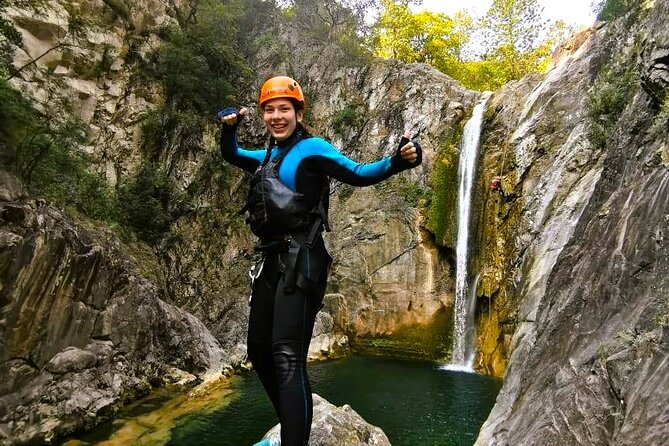
After the downriver section, you’ll finish with 4 km of trails and river crossings. This final phase is where a lot of people underestimate the day. By now, your body has done hours of effort, and the challenge shifts from adrenaline to endurance and careful footwork.
Trails mean you’ll navigate uneven ground. River crossings mean you’ll rely on stable steps and follow guide direction so you don’t slip or rush. This isn’t glamorous like the big jump photos, but it’s essential. It’s also where you get that satisfying feeling of completing the loop you started.
What the Day Feels Like in Real Life: Safety, Energy, and Staying Present
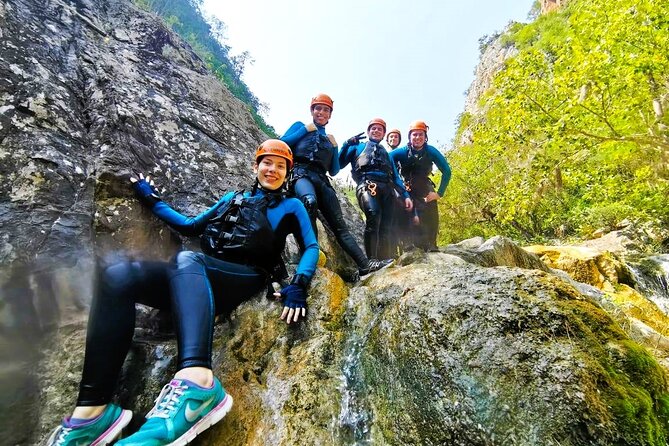
The strongest compliment I can give to this kind of canyon route is how much it depends on teamwork and calm execution. Lilly and Mike are specifically mentioned as being professional, upbeat, and focused on safety and enjoyment, and that matches the overall structure of the day. You’re never guessing. You’re receiving instructions, getting gear checks, and moving section by section with purpose.
Also, the day works because it mixes intensity with short transitions. You’ll do demanding sections (like the 30 m and 18 m rappels), then move and recover as the route flows downriver. That balance is why the experience can feel both thrilling and well-managed.
Still, I want you to respect the effort level. The trip requires strong physical fitness, and the canyoning style here involves stamina and resistance. If you go in thinking it’s only about one big highlight, you’ll probably feel sore and surprised halfway through.
Price and Value: Is $418.44 Really Fair for Matacanes?
At $418.44 per person for a roughly 10-hour day, it’s not a budget activity. But it also isn’t paying for “a nice walk.” You’re paying for a complete canyoning package: included canyon gear (neoprene suit, helmet, harness, life jacket), breakfast and dinner, and air-conditioned private transportation, plus expert guiding for rappels, slides, jumps, and water movement.
A practical way to judge value is to ask what you’d have to arrange yourself. If you tried to DIY canyoning, you’d quickly pay in gear rental, local knowledge, safety systems, transport, and instruction time. Here, those pieces are bundled. You’re buying reduced hassle and higher safety structure.
There’s also a group element. The trip caps at 24 travelers, and the smaller group size tends to help with coordination when you’re doing technical water sections.
Who Should Book This (and Who Might Skip This One)
This experience fits best if:
- You’re looking for an active canyon adventure, not a casual sightseeing walk.
- You have strong physical fitness and can handle a long day (around 10 hours) with lots of movement.
- You’re comfortable with water and can follow safety instructions under pressure.
- You want repeated big moments: two major rappels plus many jumps.
It might not be your best match if:
- You want a gentle introduction to canyoning. The route is intense, and rappelling experience helps.
- You’re unsure about rappelling. If it’s your first time, plan to take the beginner workshop if offered/needed by the program.
If you’re the type of person who likes learning by doing, and you can keep a steady attitude even when it’s tiring, Matacanes is a strong choice.
Should You Book Matacanes Canyon With Lilly and Mike?
I’d book this if you want the real deal: technical rappels, high-energy jumps, and canyon terrain that feels alive from the first water chute to the final river crossing. The included gear and meals reduce logistics stress, and the overall emphasis on safety plus clear instruction is exactly what you want when the day includes 30 m and 18 m descents and jumps up to 12 m.
I’d hesitate only if your fitness is shaky or you’re truly new to rappelling and you’re not willing to do the beginner workshop. For the right fit, this is the kind of day that sticks with you.
FAQ
What time does the Matacanes Canyon tour start?
The start time is 4:30 am.
How long is the tour?
It lasts about 10 hours.
Where is the tour located?
It’s in Monterrey, Mexico.
How much does it cost?
The price is $418.44 per person.
Is pickup available?
Pickup is offered, with recommendations on where and when to meet.
What’s included with the tour?
You get a neoprene suit, helmet, harness, and life jacket, plus breakfast and dinner, and you’ll have air-conditioned vehicle transport and private transportation.
How long is the full route?
The circuit is 19 km total: 6 km approach walk, 10 km downriver, then 4 km of trails and river crossings to finish.
What water activities and jumps are included?
You’ll do two rappelling descents (30 m and 18 m), natural slides, and you’ll experience more than 20 jumps into the water, from 1 meter up to 12 meters.
Is the tour only for experienced rappellers?
Previous rappelling knowledge is recommended. If it’s your first time, the option to take a rappelling workshop for beginners is noted.
What happens if the weather is bad?
This experience requires good weather. If it’s canceled due to poor weather, you’ll be offered a different date or a full refund.