REVIEW · LINGUAGLOSSA
Etna North 2900mt Sunset: Summit area & Craters of 2002
Book on GetYourGuide →Operated by SicilyInsideOut · Bookable on GetYourGuide
Etna at sunset feels like science class. This Etna North 2900m Sunset trip brings you to the summit area and the Craters of 2002, showing lava, volcanic sand, and raw volcanic terrain as the light fades. I like that you’re not just watching from below. You get up high on 4×4 buses and then finish with a viewpoint stop made for sunset.
The other thing I really like is the mix of ride and walk. You’ll leave the North-East crater area on foot, climb about 300 meters through scoria and volcanic bombs, and end at a viewpoint where the volcanic world looks close enough to touch. The one possible drawback: the overall pace can feel hectic, and the guide may start explaining or moving on quickly once you reach certain points.
In This Review
- Key points to know before you go
- Etna North at Sunset: Why 2900 Meters Changes Everything
- Getting Up the North Side: 4×4 Buses That Actually Go Places
- Piano Provenzana Start: Your Base Point in the Volcano Country
- The Craters of 2002 Rift: Where Lava and Volcanic Sand Show the Story
- The North-East Crater and the Observatory Zone
- The 300m Ascent: Scoria, Bombs, and a Viewpoint Built for Sunset
- Sunset From the Roof of Sicily: Lion and Bove in Clear Weather
- Licensed Volcanological Guide: The Real Value in the Details
- Price and Value: Is $89.50 Worth It for 3 Hours?
- Who This Tour Fits Best (and Who Should Skip It)
- What to Bring: Simple Gear That Matters at 2900 Meters
- A Quick Reality Check on Pace (The One Thing to Watch)
- Should You Book Etna North 2900m Sunset?
Key points to know before you go
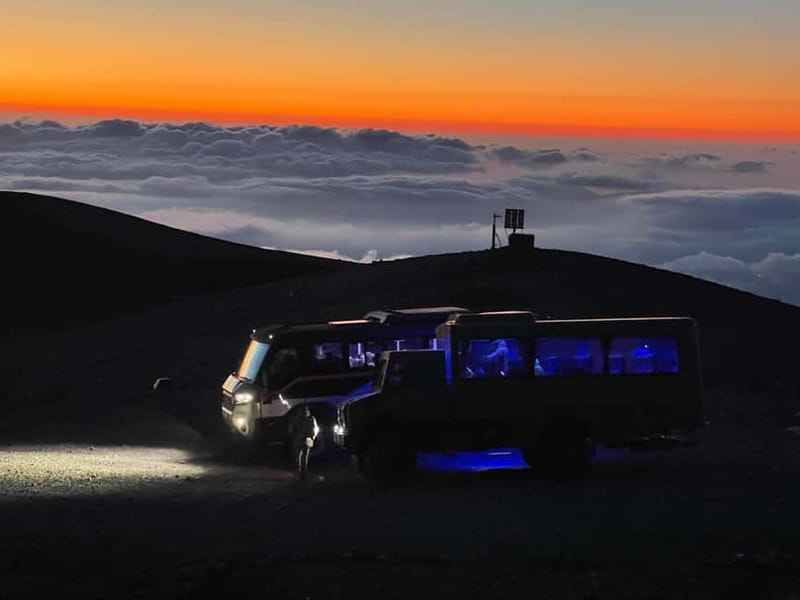
- North side sunset at altitude: You’ll aim for sunset from around 2900 meters with big open views.
- 4×4 access to the summit zone: Off-road buses save you from spending this whole trip stuck on a slow road.
- Craters of 2002 focus: You’ll see the rift area with lava and volcanic sand tied to the 2002 eruption.
- North-East crater area includes the observatory zone: The North-East crater dominates the landscape near where the volcano observatory is located.
- Short but real uphill walk: A climb of about 300 meters over volcanic scoria and bombs.
- Clear-weather visibility perks: In good conditions, you can see features like the Lion and Bove valleys.
Etna North at Sunset: Why 2900 Meters Changes Everything
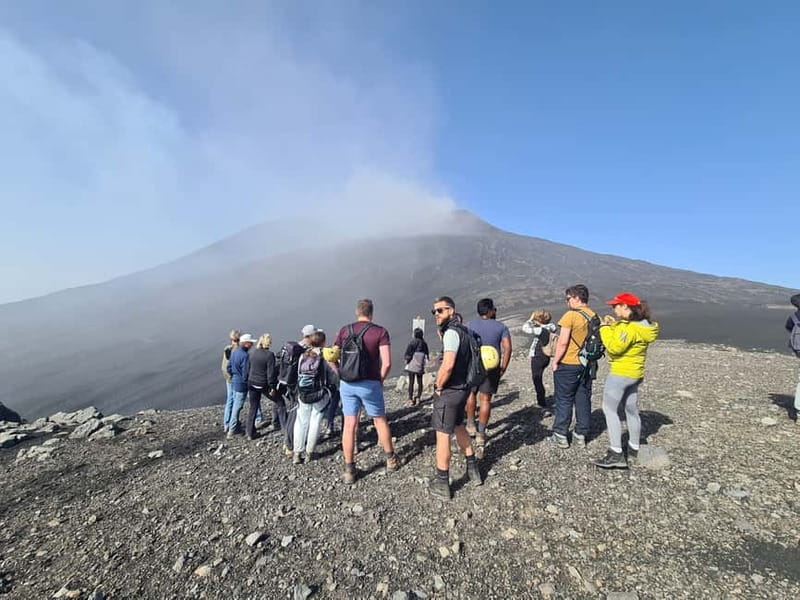
The magic here is simple: you’re high enough to feel the drama. Etna’s north side has a colder, harsher look than the coast, and that matters when the sun drops. The tour is built around reaching the summit area and watching the light slide across volcanic ground.
At 2900 meters, the air is thinner and the colors shift fast. Even if you’re not a geology person, the setting does the talking. Volcanic sand textures, dark lava, and the mix of rocky ground make it feel more like an active landscape than a museum.
I also like that the trip isn’t just a “photo stop and leave.” You get a viewpoint and time to watch sunset. That changes how you experience the place: you stop thinking about transport and start paying attention to what’s around you.
You can also read our reviews of more tours and experiences in Linguaglossa.
Getting Up the North Side: 4×4 Buses That Actually Go Places
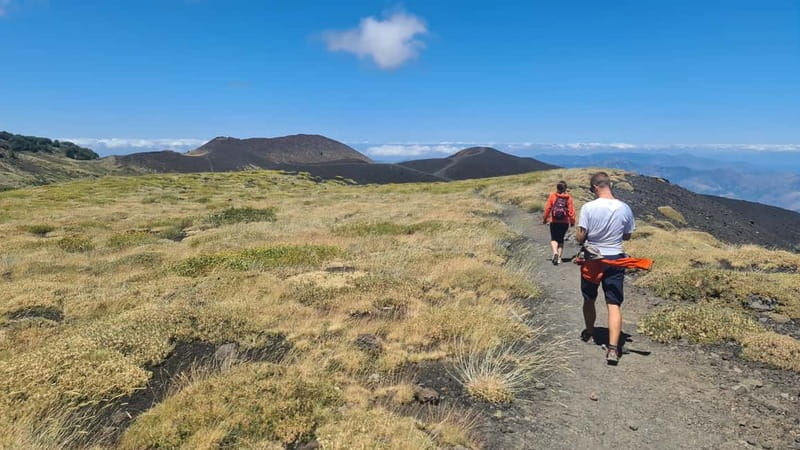
This is where the tour earns its money. The ride is round-trip by 4×4 bus, which means you spend less time fighting rough terrain and more time on the parts of Etna that you came for.
The itinerary is structured around off-road vehicles moving you to the summit slope framed by lava and volcanic sand along the rift created in the 2002 eruption. That matters because Etna’s high areas are not something you comfortably “wander” your way into.
I like the practical tradeoff: you don’t need to plan a long self-guided route or worry about how to get up there. The guide handles the “how do we reach this spot safely and on time” piece, so you can focus on the experience.
One note from a pace perspective: because you’re on a schedule and the group is moving between points, you’ll want to stay alert and ready to go when the vehicle pulls up.
Piano Provenzana Start: Your Base Point in the Volcano Country
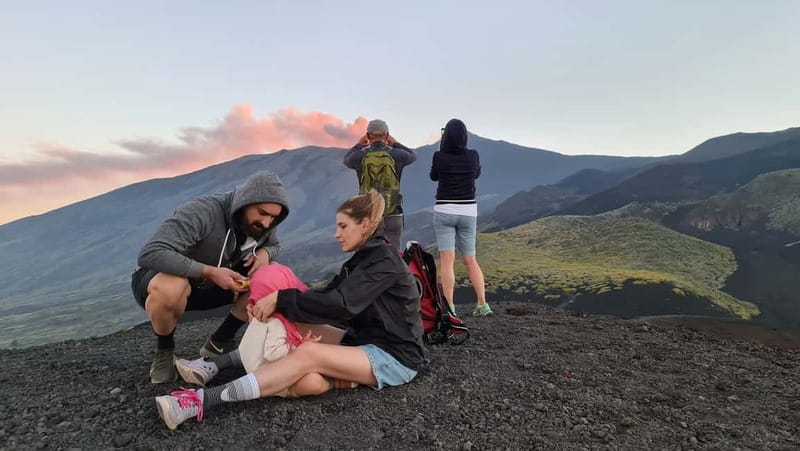
The tour starts at Piano Provenzana. It’s the kind of starting point that makes sense for Etna: you’re on the mountain early, before the day’s energy drains out.
From there, the plan follows a mountain trail and also uses the 4×4 vehicles to reach the higher volcanic slope. In other words, the trip is not one long continuous hike. It’s a mix of walking and vehicle time, which is smart when you’re dealing with altitude and uneven ground.
If you’re the type who likes to take a moment to orient yourself, arrive ready to focus at the start. At 2900 meters, small delays add up fast, and the rest of the day is arranged around sunset.
The Craters of 2002 Rift: Where Lava and Volcanic Sand Show the Story
One of the most interesting parts is the focus on the rift created in the 2002 eruption. The ride takes you to a high mountain slope framed by views of lava and volcanic sand along that rift. You’re not just passing by volcanic rock. You’re seeing the “evidence layer” that helps explain how the landscape was shaped.
Even if you don’t know the vocabulary, a licensed volcanological guide gives you the framework to interpret what you’re seeing. This is the difference between looking at rocks and understanding why the terrain looks the way it does.
This section is valuable for two reasons:
- You get the big-picture view of how the 2002 eruption changed the area.
- You see volcanic materials up close enough to notice textures, not just shapes.
The downside to expect: this is not a slow “wait for the perfect photo” stage. It’s structured, so you’ll want your camera and layers ready before you move.
The North-East Crater and the Observatory Zone
Next, you continue by off-road vehicles up to the North-East crater area, where the volcano observatory is located. The North-East crater dominates the region from this point, and the sense of scale hits in a way that’s hard to replicate from lower viewpoints.
The observatory detail is useful because it reinforces what you’re looking at. This isn’t a place people only visit for views. It’s a working science site, which adds weight to the guide’s explanations.
From here, the tour shifts from “riding through scenery” to “walking through the volcanic materials.” That change is where the trip starts feeling more physical.
I’d take this moment to slow down mentally. Look at the crater surroundings, then prepare yourself for the climb. Once you start walking across scoria and bombs, your attention narrows fast to footing and breathing.
The 300m Ascent: Scoria, Bombs, and a Viewpoint Built for Sunset
The climb begins on foot from the North-East crater area. You follow a path surrounded by volcanic scoria and bombs, and the total climb is about 300 meters until you arrive at the viewpoint around 2900 meters.
A few practical implications:
- You’ll feel the terrain. Scoria is loose and can be uneven.
- You’ll need steady pacing. Even if you’re fit, altitude adds effort.
- Footing is the priority. You’ll enjoy the scenery more if you’re not thinking about slipping.
This part is worth it because you’re earning the view. By the time you reach the viewpoint, the scenery isn’t something you saw quickly from a bus window. It’s something you stepped into.
And this is also why the tour works for non-geology lovers. The volcanic materials become the story. The ground itself is the exhibit.
Sunset From the Roof of Sicily: Lion and Bove in Clear Weather
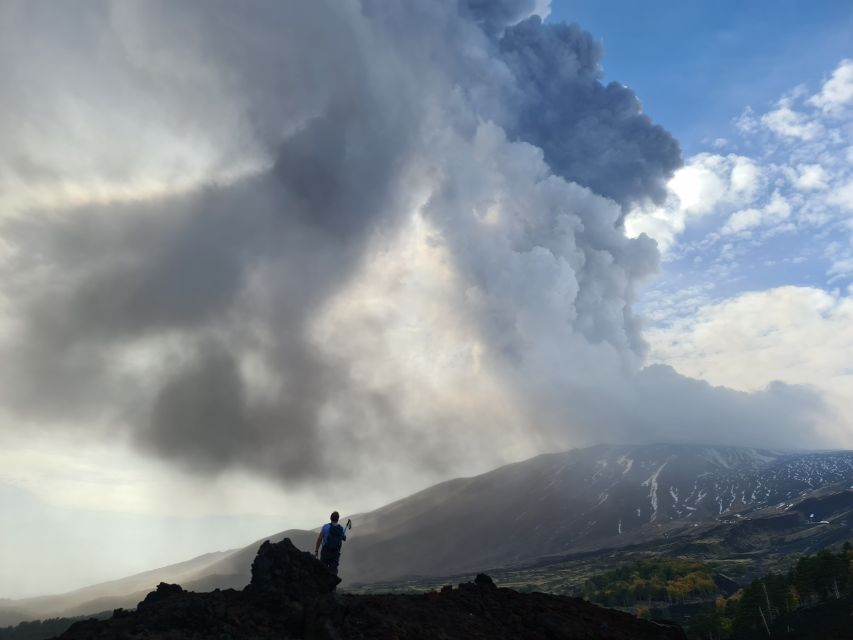
Once at the viewpoint, the tour stops so you can admire the greatness and uniqueness of the volcanic environment, matched with the spectacle of the view from the roof of Sicily.
The best payoff comes in clear weather. The tour notes that you can see both the Lion and Bove valleys in good conditions. That’s a big deal because it turns the sunset into more than orange sky over rock. It becomes horizon-based viewing, where the geology is part of a bigger landscape picture.
You’ll wait to watch the sun go down, then you’ll head back by crossing Piano delle Concazze and down to Piano Provenzana.
If you’re deciding what to prioritize, prioritize your comfort here. Sunset time is limited by schedule, but it’s also when you’ll want to feel good enough to stand, look around, and enjoy the light changes.
Licensed Volcanological Guide: The Real Value in the Details
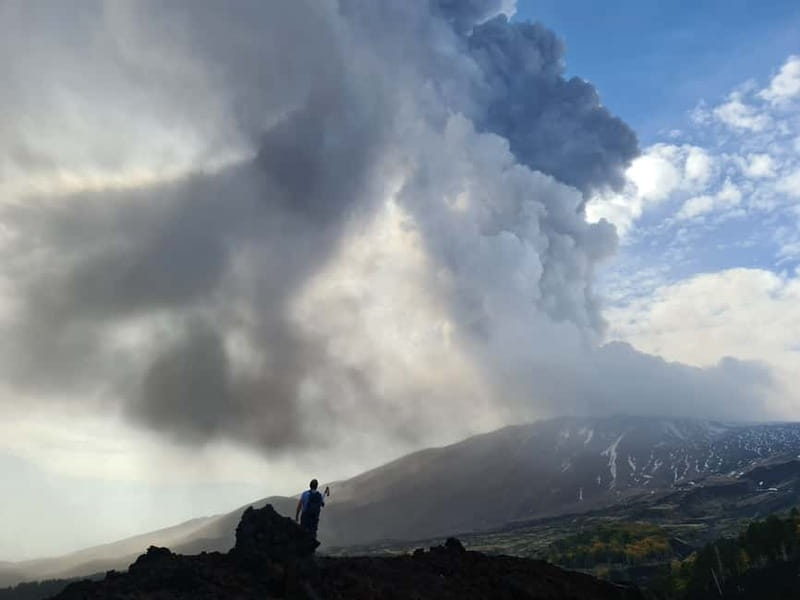
This trip includes a licensed volcanological guide, and that’s the core quality upgrade. A guide can do two things at once:
1) point out what you’re seeing, and
2) explain how it fits into the 2002 eruption story and the volcanic processes around you.
The tour is guided in Italian and English, so if you’re not comfortable in one language, you may still be able to follow along in the other. That flexibility matters on Etna, where the terrain moves fast and you don’t want to miss key explanations.
I also like that the “what you see” and “what it means” are tied to the actual spots you reach: rift area, North-East crater area, and the viewpoint.
Price and Value: Is $89.50 Worth It for 3 Hours?
At $89.50 per person for about 3 hours, you’re not paying for hours of walking. You’re paying for altitude access and expertise.
Here’s what your money covers (based on what’s included):
- A licensed volcanological guide
- Round-trip transport via 4×4 bus
- The structured route to the summit area and Craters of 2002
- A walk section with volcanic scoria and bombs, ending in a sunset viewpoint stop
Compared with DIY planning, the obvious value is the “getting there” part. Etna’s higher zones are not casual. This tour handles the route, the timing, and the safety-focused path decisions through rough terrain.
So, who gets the best value?
- People who want a guided volcanic experience without spending a whole day organizing logistics.
- Travelers who want sunset views but also want to learn something real while they’re there.
Who This Tour Fits Best (and Who Should Skip It)
This is for you if you love nature and breathtaking views, and you want a guided experience rather than a vague “look at rocks” walk.
It’s also a good fit if you like a balanced effort: you get vehicle time for the hard-to-reach segments, then a focused uphill hike for the most rewarding viewpoints.
But skip it if any of the following apply:
- You have respiratory issues
- You have altitude sickness concerns
- You’re pregnant
- You have heart problems or high blood pressure
That’s not just formality. At altitude with uneven ground, the physical demands can be real.
Also, plan around the rules: alcohol and drugs aren’t allowed, and you’ll want proper footwear (no sandals or flip-flops).
What to Bring: Simple Gear That Matters at 2900 Meters
The packing list is short, and that’s good. Bring:
- A windbreaker
- Long pants
Even in warmer months, higher altitude and volcanic slopes can feel windy. A windbreaker keeps you comfortable enough to stay at the viewpoint without rushing to move.
Wear the right shoes too. The tour explicitly doesn’t allow sandals or flip-flops, which is a big clue that you’ll be on rough, gritty ground.
If you run cold easily, consider extra layers even if it’s sunny at the start. The tour’s emphasis on wind and altitude makes it smarter to dress for comfort than for guessing the weather.
A Quick Reality Check on Pace (The One Thing to Watch)
Here’s the main drawback to consider: the experience can feel hectic, especially if you like lingering at every stop.
One issue noted is that the guide may start explaining right away at a point and may not wait until everyone is fully together. If you’re the slow-and-steady type, you might wish for more time to breathe and enjoy the nature between transitions.
My practical advice is to match your mindset to the tour style:
- Stay close to the front of your group.
- Keep an eye on the guide and when they’re moving.
- Use your energy at the viewpoint for the slow enjoyment part.
The viewpoint stop is the payoff. The ride-and-walk segments move with purpose.
Should You Book Etna North 2900m Sunset?
I’d book this if you want a sunset-focused Etna experience with serious altitude access and a licensed volcanological guide, plus a walk that feels like you’re stepping through the aftermath of the 2002 eruption.
Don’t book it if:
- you’re worried about altitude effects,
- you have respiratory, heart, pregnancy, or high-blood-pressure concerns,
- or you need a relaxed pace with long pauses at every photo spot.
Best decision tip: if you’re okay with a structured schedule and you dress for wind and uneven ground, this tour gives you exactly what it promises—4×4 access, a 300m climb, and sunset views from the summit zone.
If you’re chasing that mix of science, scenery, and timing, Etna North at sunset is a strong bet.