REVIEW · TENERIFE
Hiking Summit of Teide by night for a sunrise and a Shadow
Book on GetYourGuide →Operated by 10X. TENerife eXperience. · Bookable on GetYourGuide
Teide at night feels like a different planet. You start in darkness, climb to Spain’s highest point, then watch the world-famous volcano shadow stretch toward the ocean.
I like this experience because it’s built around timing, not just hiking. Two things I really value are the summit-focused planning (you’re guided to catch sunrise without freezing up too long) and the hands-on support from guides like Elena, who keeps the pace steady and the group moving safely. The one drawback to consider: this is a real high-mountain climb at altitude, so if you’re not comfortable with steep effort in cold, windy conditions, this won’t feel like an easy stroll.
In This Review
- Key highlights you’ll care about
- Why this night summit hike is so different
- The night-to-sunrise flow: what happens when the sky is still dark
- Pickup and getting ready (why it matters)
- The first climb phase: headlamps, steady pace, stars overhead
- Break time near the top: tea, snacks, and regrouping
- The photo and scenic window
- The final segment: last steps, then the descent choice
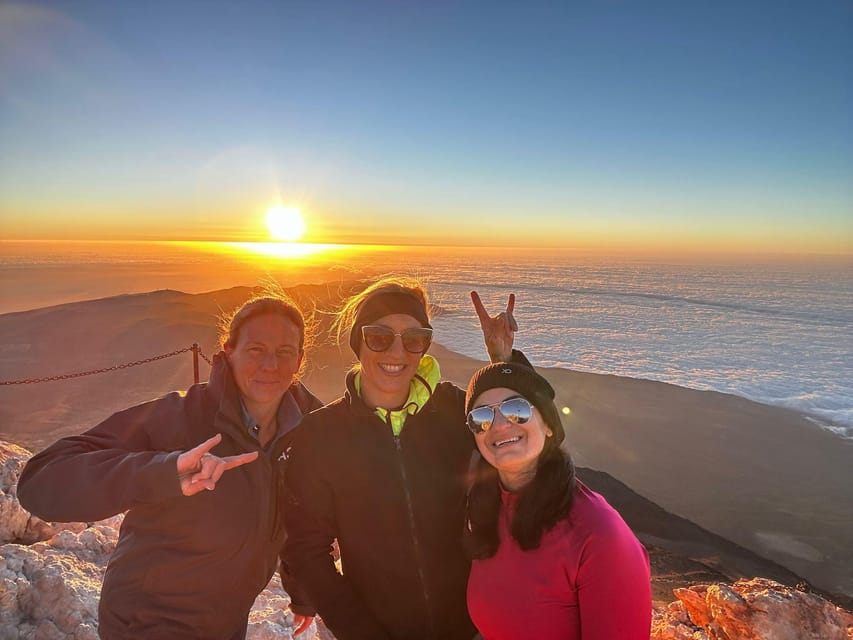
- The summit experience: sunrise and the Teide Shadow at 3718m
- Sunrise colors and what you’re actually looking at
- Teide’s Shadow: the main event for many people
- Milky Way and clear-night magic
- Timing, permits, and why the tour price can make sense
- Included gear vs what you must bring (so you don’t get stuck cold)
- What’s provided
- What you should pack yourself
- Who should book this Teide night hike (and who shouldn’t)
- What small-group guiding feels like in practice
- Should you book the Teide summit at night?
- FAQ
- How long is the Mount Teide night hike?
- What time do we start hiking?
- Is the cable car included?
- How many people are in the group?
- What gear is included, and what do I need to bring?
- Are crampons provided year-round?
- Who should not join the tour?
Key highlights you’ll care about
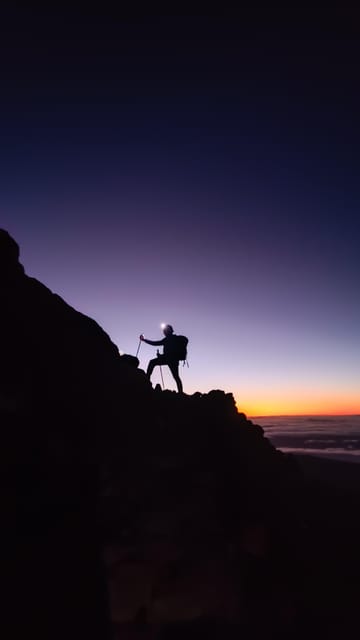
- A summit hike to 3718m that starts around 1am, timed for sunrise.
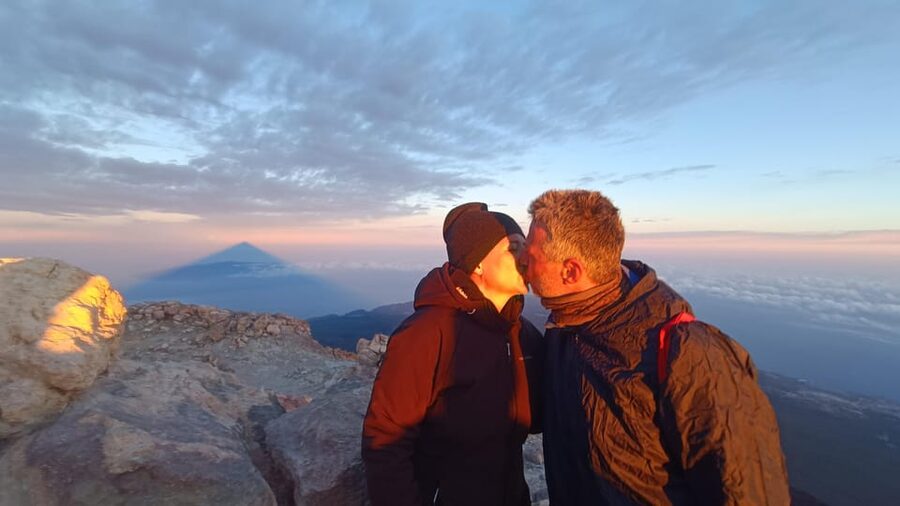
- Teide’s Shadow: a long, dramatic shadow cast over the volcanic ground and the Atlantic.
- Milky Way skies when conditions are clear at the top.
- Small group size (up to 8), so you’re not lost in a crowd.
- Gear that actually helps: headlamps, poles, warm blankets, hot tea, plus crampons from Nov–Apr.
- Elena’s “make it work” guiding style: pace checks, motivation, and lots of photo time.
Why this night summit hike is so different
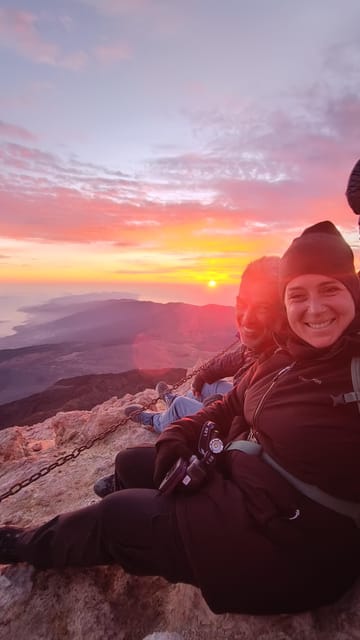
Hiking Teide by night isn’t only about reaching the top. It’s about the change you feel while you climb—going from night hush, to starlight walking, to dawn colors spreading across lava-like terrain. At 3718m, you’re high enough that the world looks stripped down and sharp.
The “Teide Shadow” part is what makes people remember it. As the sun rises, the mountain throws a silhouette across the ground and out toward the sea. It’s one of those nature effects that sounds like a gimmick—until you’re standing there watching it grow longer, darker, and more dramatic.
The other big reason this hike works: you’re not just winging it. Your guide leads the route, manages timing, and helps keep you moving at a pace that fits a mixed group. In real terms, that means fewer stop-and-start moments and more time enjoying the view.
You can also read our reviews of more tours and experiences in Tenerife.
The night-to-sunrise flow: what happens when the sky is still dark
Your tour runs about 10 hours total, but the key thing is that the start time shifts based on sunrise. That’s important on Teide, because the goal isn’t sunrise in theory—it’s sunrise from the summit at the right minute.
Pickup and getting ready (why it matters)
You’re picked up from several points in the south of Tenerife, including Los Cristianos, Costa Adeje, Acantilados de Los Gigantes, Callao Salvaje, and Playa San Juan. Exact pickup timing is confirmed with you, but it’s typically around midnight, and you should wait outside your hotel or apartment.
This matters because the climb begins when the air is cold and the sky is fully dark. If you arrive late or underdressed, you feel it fast up there—so it’s worth treating the pickup as part of the challenge, not an afterthought.
The first climb phase: headlamps, steady pace, stars overhead
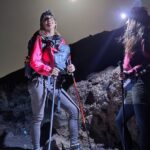
You start hiking with headlamps cutting a small corridor through volcanic gravel. That crunch underfoot can feel louder than you expect in the silence. As you gain elevation, the stars become more obvious, and the Milky Way can show up when the night is clear.
The guide’s job here is pacing and safety. The route involves a long climb—about 10km with roughly 1380m of elevation gain. You’ll want to conserve energy so the final pushes don’t leave you scraping for breath.
Break time near the top: tea, snacks, and regrouping
There’s a pause built in for tea and a picnic-style break. This is more than “food time.” At this altitude, it’s when you catch your breath, adjust layers, and mentally reset. Expect a short reset period (about 30 minutes) so you’re ready for the remaining hiking segment without feeling rushed.
The photo and scenic window
Later, you’ll have a dedicated period for sightseeing and a photo stop plus a short sunrise window at the summit area (about 30 minutes for sunrise-related viewing). This is where you’ll stand still, take photos, and watch the colors shift.
A quick reality check: the summit can be windy. So even if the light is perfect, you’ll want your gloves on and your plan for photos simple: one good setup, then move around so you don’t freeze waiting.
The final segment: last steps, then the descent choice
After the sunrise moment, the day doesn’t automatically become easy. There’s another guided hiking block (about 1.5 hours plus additional walking time depending on the exact timing). When you finish the climb portion, you have the option to descend by cable car for 23€ per person, with tickets purchased after reaching the summit.
Also plan for conditions. If it’s especially rough—cold, gusty, or uncomfortable—you might find the group adjusts the descent plan on the guide’s advice. The point is: follow the guide’s call and keep moving safely.
The summit experience: sunrise and the Teide Shadow at 3718m
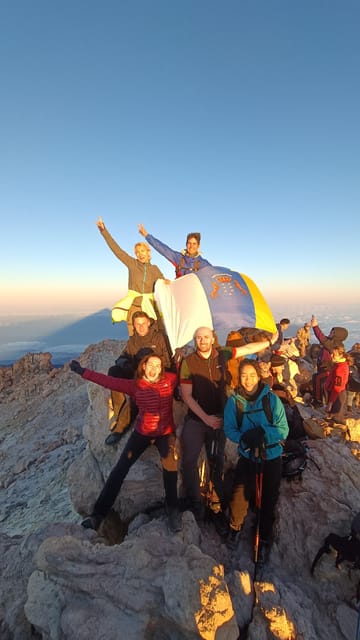
Reaching the summit (3718m) is the whole reason you’re here. It’s the highest point in Spain, and it changes how you experience the sunrise: not framed by buildings, but framed by emptiness—lava texture, sky, and distance.
Sunrise colors and what you’re actually looking at
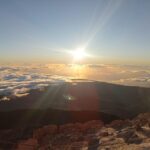
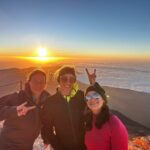
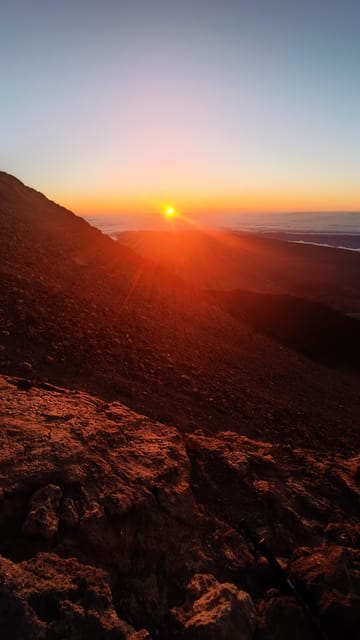
As dawn approaches, the horizon takes on gold and crimson tones. The air is thin enough that the sunrise feels crisp and immediate. You don’t just watch the sun come up; you watch the light reorganize the entire view.
Teide’s Shadow: the main event for many people
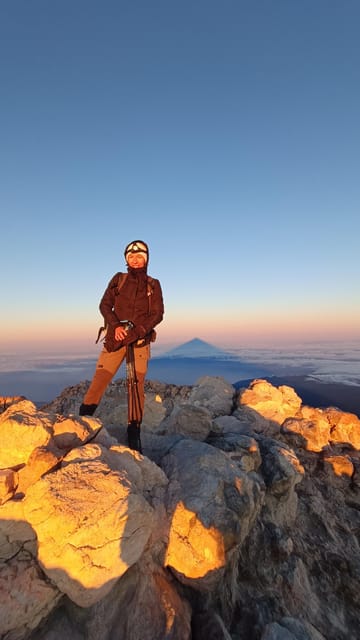
Then comes the “biggest shadow of volcano in the world” moment. Your eyes track it from the summit as it stretches across the volcanic surface and out toward the Atlantic Ocean. It’s difficult to compare it to anything common, because the scale is what surprises you.
If you’re thinking about photos, remember this: the shadow grows. That means your best shot might not be the first one. Leave a few seconds for the shadow to sharpen and lengthen before you lock into a single composition.
Milky Way and clear-night magic
If the sky is clear enough, you may see the Milky Way above during the night hike. This is one reason people prefer the early schedule. Once the horizon lights up, that deep star background fades fast.
A little tip that helps: keep your camera ready but don’t stare at screens constantly. Look up, then look back at your route. You want both the view and your footing.
Timing, permits, and why the tour price can make sense
At $203 per person, this isn’t a budget hike. But when you break down what you’re paying for, it starts to feel less random.
You’re getting:
- Guiding service
- Permits: two permits for each person (a key cost for Teide access)
- Headlamps, hiking poles, and warm gear items (like thermal blankets, plus tea and snacks)
- Equipment upgrades as needed: crampons from November through April
Add in the small group limit (up to 8). Fewer people usually means better pace control and more attention if someone needs a slower step or quick layer adjustment.
Two extra costs to know about:
- Transfer from the south is available but not included: 50€ total from one pickup location in the coastal strip from Los Cristianos to Los Gigantes.
- Cable car descent is separate at 23€ per person, purchased after reaching the summit.
So the “value question” becomes: do you want the planning, the access permits, and the guided safety net? If yes, the price is easier to justify.
Included gear vs what you must bring (so you don’t get stuck cold)
This hike gives you serious help, but you still need to show up prepared.
What’s provided
- Headlamps
- Hiking poles
- Thermo/thermal blankets
- Hot tea and some snacks
- Wind jackets and warm clothes if you request them (not guaranteed without asking)
- Crampons from November to April
- Guiding service and permits
What you should pack yourself
Plan for real cold and wind. Bring:
- Warm clothing
- Windbreaker
- Sunglasses and a sun hat (yes, at night—sun glare comes back fast at sunrise)
- Hiking shoes
- Sunscreen
- Water
- Gloves
- A charged smartphone
- Hiking pants
- ID card (a copy is accepted)
If you’re thinking about how to dress: layer up so you can remove or add a piece during the climb. On Teide, you can feel overheated for a few minutes, then freezing the next. That swings quickly with altitude and wind.
Who should book this Teide night hike (and who shouldn’t)
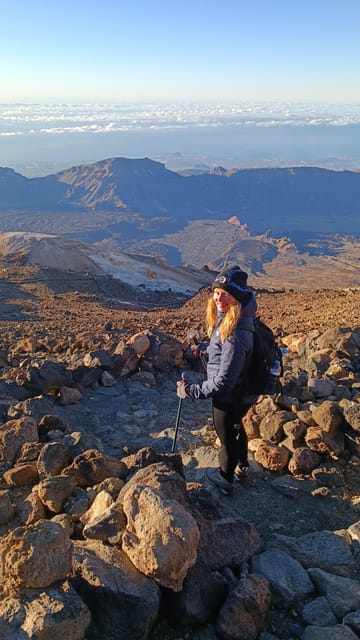
This hike is not a “see the sunrise” add-on. It’s a mountain climb—about 6–6.5 hours of hiking time within a 10-hour day, starting around 1am depending on sunrise timing.
It’s a good fit if:
- You’re reasonably fit and comfortable with steep uphill effort
- You like stargazing and early-morning photo moments
- You want a guided experience with safety focus and route timing
It’s not suitable if you:
- Are under 15 years
- Are pregnant
- Have heart problems, high blood pressure, or other pre-existing medical conditions
- Have had recent surgeries
- Have low fitness levels
- Planned a dive in the previous 24 hours
If any of those apply, skip it. At altitude, it’s not the place to “see how it goes.”
What small-group guiding feels like in practice
With a group limited to 8, you usually get a calmer experience than the big-van tours. The guide can check in regularly, adjust for slower walkers, and keep everyone moving in a realistic rhythm.
Guides like Elena are repeatedly praised for:
- Strong safety focus
- Pacing that matches the group
- Motivation when legs start to argue
- Timed summit arrival so you’re not stuck waiting too long in the cold
- Lots of photos so you don’t spend the entire climb trying to self-document
In some groups, Patrick appears as support as well. The theme is the same: guidance that feels personal, not mechanical.
And yes, you should expect photo time. There’s even a photo stop on the way, plus sunrise viewing time. Just don’t let photography ruin your breathing—keep the priority on steady steps.
Should you book the Teide summit at night?
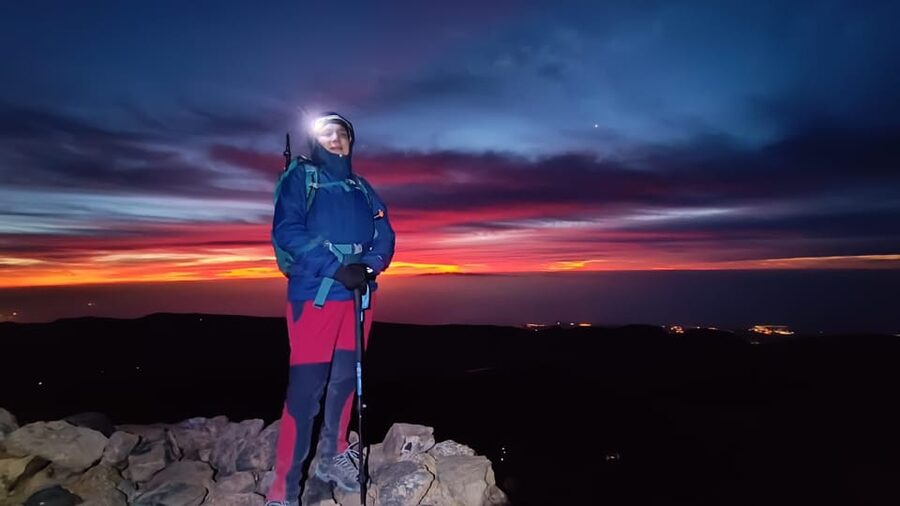
If you want one Tenerife experience that mixes real effort with a sky-and-volcano payoff, I’d say book it. The combination of sunrise from 3718m, Teide’s Shadow across the Atlantic, and night-sky views is the kind of “one-day memory” that sticks.
Book it confidently if:
- You can handle a long uphill hike in cold conditions
- You want permits and guiding handled for you
- You’re chasing the sunrise timing, not just a viewpoint
Skip it if:
- You’re not comfortable with altitude effort
- Cold/wind hikes make you miserable
- Any medical restrictions apply from the tour rules
One last tip: pack layers like you mean it. On Teide, your comfort and your enjoyment are linked. Dress for wind, bring gloves, and treat the climb as a slow build to an unforgettable payoff.
FAQ
How long is the Mount Teide night hike?
The total duration is about 10 hours, with the climbing portion taking around 6 to 6.5 hours. Starting times depend on sunrise timing.
What time do we start hiking?
Most groups start around 1am at night, depending on sunrise time. Pickup usually happens around midnight, and the exact pickup time is confirmed with you.
Is the cable car included?
No. The cable car descent is not included. It costs 23€ per person, and tickets are purchased after you reach the summit.
How many people are in the group?
This is a small group tour limited to 8 participants.
What gear is included, and what do I need to bring?
Included gear includes headlamps, hiking poles, thermal blankets, hot tea, some snacks, and permits. Crampons are included from November to April. You still need warm clothing, a windbreaker, hiking shoes, gloves, water, sunscreen, and your ID card.
Are crampons provided year-round?
Crampons are included from November until April. Outside that range, you should still be prepared with proper hiking footwear and warm layers.
Who should not join the tour?
It is not suitable for children under 15, pregnant women, people with heart problems, people with high blood pressure, people with pre-existing medical conditions, and those with recent surgeries. It’s also not suitable if you dived up to 24 hours prior. You can cancel up to 24 hours in advance for a full refund.