REVIEW · TENERIFE
Tenerife: Climb to the summit of Mount Teide with an official permit and guide
Book on GetYourGuide →Operated by Natura Xtreme Tenerife · Bookable on GetYourGuide
Teide’s summit is a serious altitude date. This guided climb to Pico del Teide is interesting because you get the official park permits and an accredited mountain guide, so you’re hiking legally instead of gambling. I especially like the way the pace gets adjusted when legs start to complain, and how guides add real Teide history and local mountain know-how (names like Alex and Christoph show up in past groups). One drawback to plan around: the cable car ticket is extra, and wind or weather can shut the cable car and the climb.
You’ll start in the Teide area near Paradores Cañadas del Teide, ride the cable car up to around 3,555 m, then hike from La Rambleta toward the summit. The total time is about 4 hours, with guided time plus a photo moment at the top—nice if you want the views without turning it into a half-day mission.
And I like that this isn’t just a “walk and hope” outing. You get accident insurance with rescue, first-aid support, and the process-heavy permit paperwork handled by the operator—though you’ll need to send your passport/ID details promptly.
In This Review
- Key things that matter on a Teide summit hike
- Why the official Teide permit is the whole point
- Meeting at Paradores Cañadas del Teide and the cable car rhythm
- The guided hike: Trail 10 to Pico del Teide (and what to expect)
- The summit moment: views, photos, and thin-air pacing
- The descent: back to the upper station without turning it stressful
- Guides, group size, and the pace you actually want
- What’s included (and what you still have to bring)
- Weather reality: wind, cable cars, and quick plan changes
- Value check: is $159 a fair price for a legal summit climb?
- Who should book this Teide summit climb
- Should you book this tour?
- FAQ
- Is the cable car ticket included?
- How long does the hike take?
- What permits are included for the summit?
- What details do I need to provide for the permits?
- What languages is the guide available in?
- What happens if the weather closes the cable car?
Key things that matter on a Teide summit hike
- Official Pico del Teide access permits handled for you (no last-minute permit scramble)
- A guide-led route using Trail 10 Telesforo Bravo with set timing
- Guides who mix route management with Teide stories (Alex and Christoph are specifically mentioned)
- Small, private-group feel and a pace that can match you
- Weather-dependent cable car risk that can change plans fast
Why the official Teide permit is the whole point
Mount Teide is Spain’s highest peak, and reaching the summit is one of those “yes, but can you do it legally?” travel questions. The big value here is that you’re not just getting a hike—you’re getting official permits to access Teide Peak and the procedures that go with them.
That matters because Teide National Park permit rules aren’t casual. The operator asks you for each participant’s first and last name, age, and passport/ID number so they can apply for access. If you like doing things the right way (and not wasting time), this setup saves you stress.
It also changes how the day feels. When you know the permit is sorted, you can focus on one goal: getting up safely, staying on the planned route, and enjoying the views.
You can also read our reviews of more tours and experiences in Tenerife.
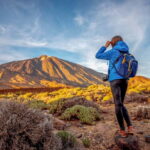
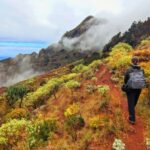
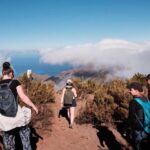
Meeting at Paradores Cañadas del Teide and the cable car rhythm
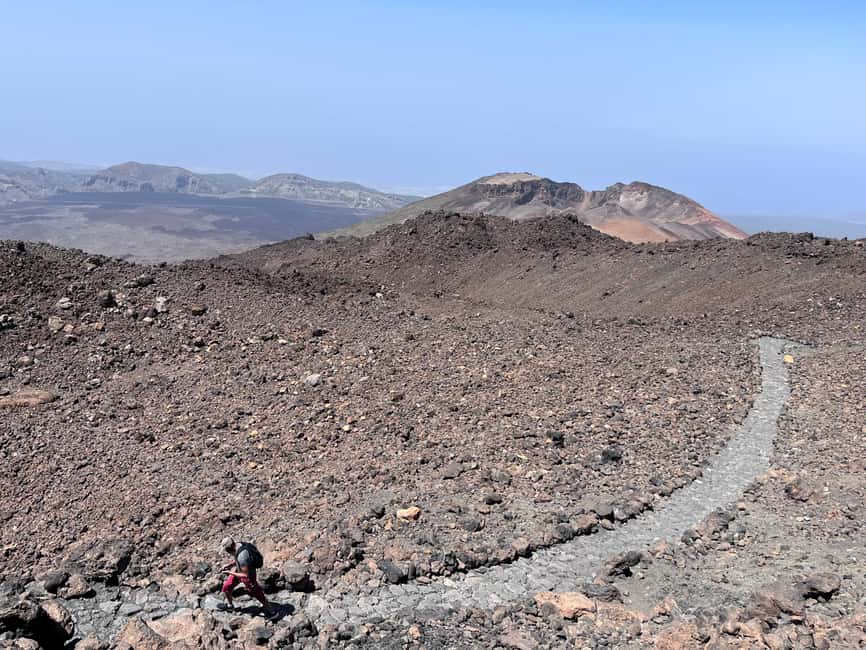
You meet by the cable car area at 9:15 am, and you’ll want to arrive about 15 minutes early. That timing is not random. The schedule assumes you’ll take the cable car first (about 8 minutes) to the upper station near 3,555 m.
Important detail: the cable car ticket is not included in the booking. You purchase it directly before the tour. That means you should budget a little extra time for ticket handling once you’ve confirmed.
From a practical standpoint, this cable-car-first approach is a win. It saves you from a long uphill grind at altitude. Instead, you spend the day hiking the final part where you really earn the summit payoff.
The guided hike: Trail 10 to Pico del Teide (and what to expect)
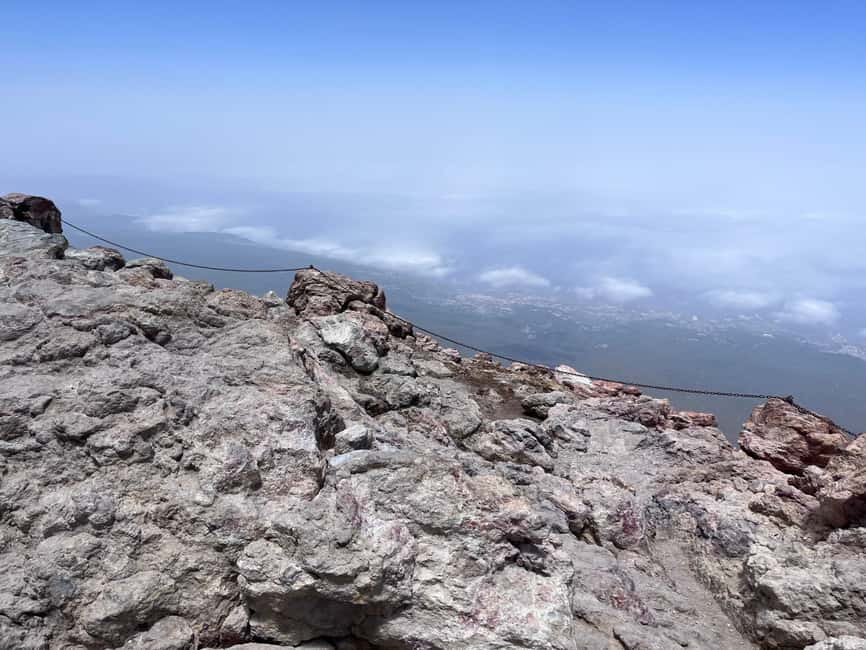
Once you’re up top, the day focuses on a guided ascent.
Here’s how the route typically runs:
- After the cable car, you move through Teide National Park with your guide.
- From La Rambleta, you hike along Trail 10 Telesforo Bravo for about an hour to reach the summit.
That one-hour push is long enough to feel it, but short enough that you’re not forced into a slow slog. It’s also the stretch where permits matter most—this is the part you need formal access for.
Along the way, you get a guided tour element plus time for scenic stops. In the included portion, you’re not just following footsteps. You also have route-and-terrain interpretation and a basic educational layer that helps you read what you’re standing on—volcanic ground, high-altitude conditions, and the “why” behind the rules (like staying on allowed areas and not touching plants).
One more reason this hike feels better than the DIY option: your guide can manage pacing. Past experiences mention a guide keeping a good climbing speed, and another account highlighted moral support and jokes when the climb became tough. That kind of adjustment makes a difference if you’re not used to high, exposed terrain.
The summit moment: views, photos, and thin-air pacing
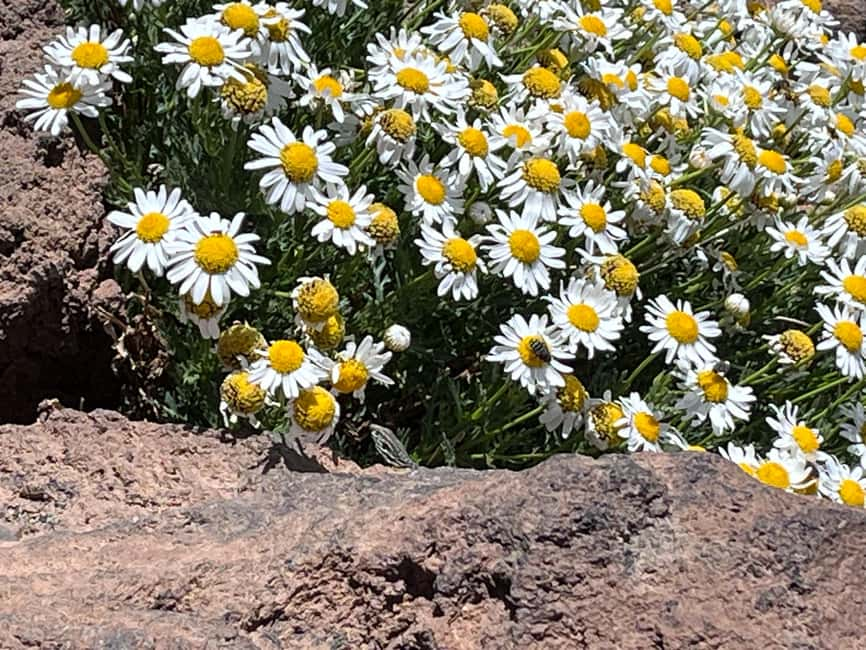
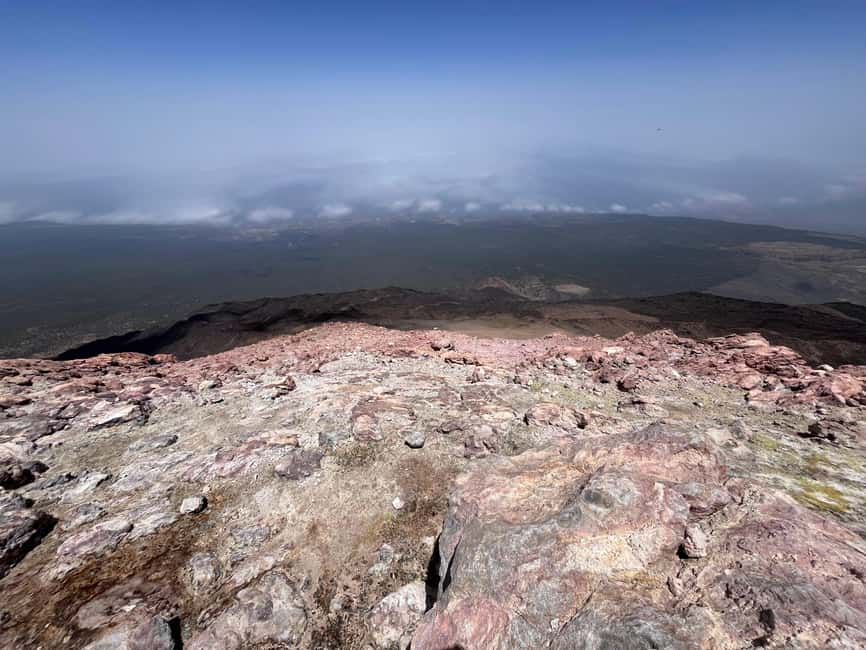
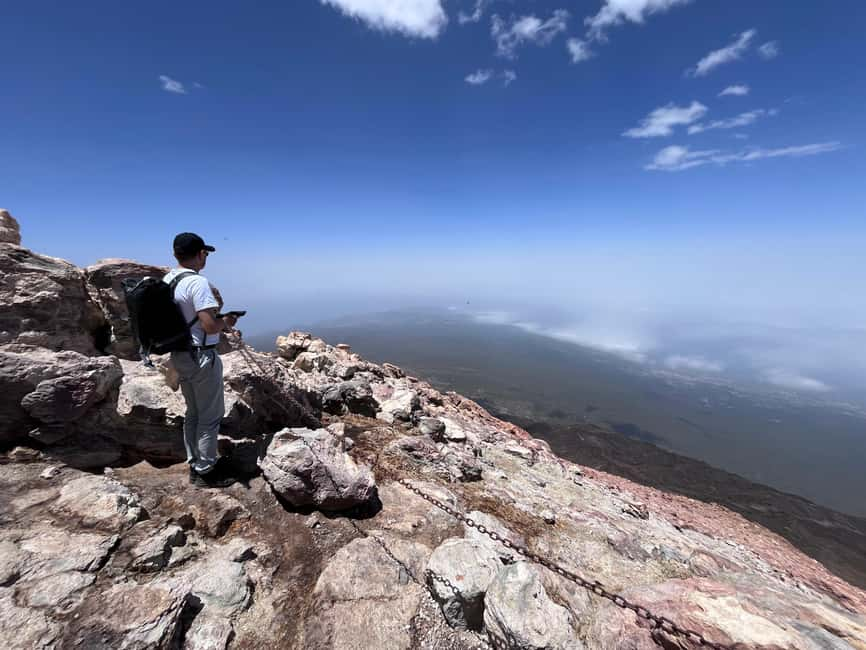
Reaching Pico del Teide is the payoff: wide views across Tenerife, and on clear days you can see other islands in the archipelago.
At the summit, your guide helps you get your bearings fast—where to stand for the best sightlines and how to handle the cold wind you often get at elevation. The day includes a guided summit experience plus photo time, and you’ll also receive a photo report afterward.
Now, a quick reality check that helps you enjoy the moment instead of rushing it: altitude can slow you down even if you’re fit. The climb may be “only” about an hour, but it still hits your breathing. The best approach is calm pacing—small steps, steady rhythm, and short breaks if needed.
If you’re prone to altitude discomfort, take the “not suitable” list seriously (more on that below). This isn’t the right place to test your luck.
The descent: back to the upper station without turning it stressful
After the summit time, you head back to the upper station at about 3,550 m for the return cable car. The descent route is basically the same idea in reverse: steady steps, manage your footing, and keep moving.
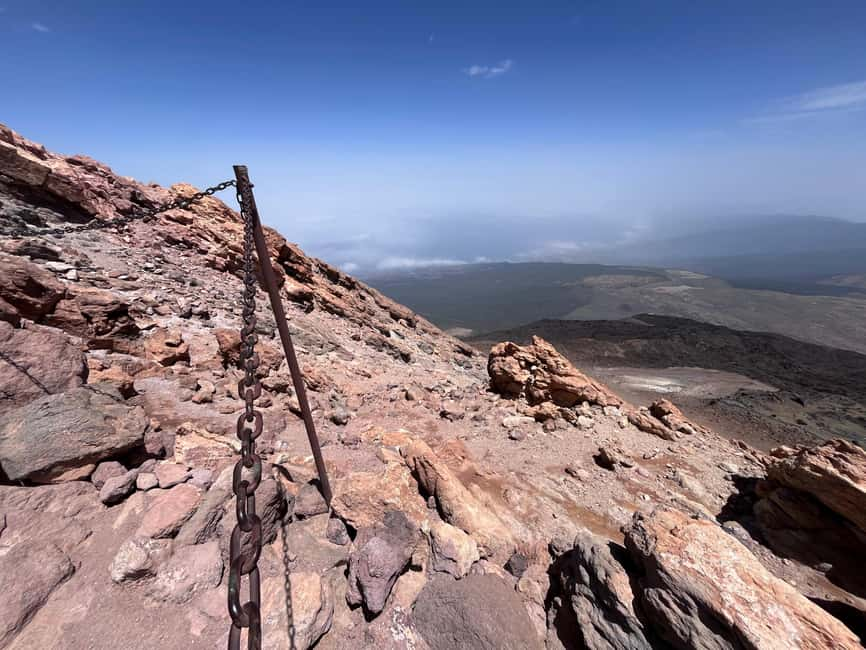
This is where having a guide helps most people. The ground in high volcanic areas can be uneven or loose. A good guide keeps you from overthinking it and helps you avoid that slightly panicky, trip-the-wires feeling.
Also, keep your energy for the return. It’s tempting to sprint down because the hardest part is done, but that can be when ankles start complaining. Go controlled, then enjoy the cable car ride down.
Guides, group size, and the pace you actually want
This is set up as a private group, and the group experience is part of the value. A smaller group means you can move at a pace that works for you, take photos without feeling rushed, and ask questions about the island.
In the feedback you can see two things people strongly liked:
- Guides who give practical info about Teide and Tenerife, not just generic facts.
- A pace that isn’t one-size-fits-all, with time for photos and conversation.
Names come up in the record: Alex is specifically mentioned as a guide who kept things interesting and offered encouragement when it got hard. Christoph is also mentioned for sharing Teide history and maintaining a climb pace that felt right.
So if you’re the type who likes to know what you’re looking at—volcano, terrain, weather patterns, rules—this tour format usually fits well.
What’s included (and what you still have to bring)
You’re paying for more than walking. The included items are built around safety and permit logistics:
- Certified mountain guide
- Accident insurance with rescue
- Official permits to access Teide Peak and the procedures
- Photo report
- First aid kit
- Route interpretation
Not included:
- Cable car ticket
- Food and drinks
- Hotel pickup
- Hiking boots or hiking poles
That last part is worth planning for. If you don’t own boots, the operator says boots can be rented. Poles aren’t included, so if you like them, bring your own.
What you should bring (this is straight-up essential at 3,500+ m):
- Passport or ID card
- Hat
- Sunscreen
- Water (plan on 1.5 liters per person)
- Hiking shoes
- Long pants
- Warm layer (a sweater or jacket)
- Personal medication
- Trekking gear
- Drinks (yes, water counts, but having something you like to drink helps)
Also note what’s not allowed: smoking, drones, alcohol and drugs, littering, open-toed shoes, feeding animals, and touching plants.
Weather reality: wind, cable cars, and quick plan changes
Teide is a mountain. That means weather isn’t a footnote—it’s part of the route.
This tour is subject to weather conditions and permit availability. If the cable car closes due to bad weather, the summit climb won’t happen. The operator states they’ll offer an alternative route.
Here’s the caution I’d put on your radar: one recorded booking describes a cancellation without prior notice and a day lost after driving, and another describes a wind-related cable car shutdown with late guide arrival after a reschedule. I’m not saying this is typical, but it’s enough to justify a practical move: plan your day with a little flexibility, and stay alert for updates the day of.
If you’re the kind of traveler with a tight schedule and zero tolerance for surprises, you might want to build in buffer time for Tenerife weather.
Value check: is $159 a fair price for a legal summit climb?
At $159 per person and roughly 4 hours on the clock, the value depends on what you’d otherwise do on your own.
If you DIY it, the hard parts aren’t the walking—they’re:
- getting the correct permits for summit access,
- managing timing with the cable car,
- arranging a safe, guided route at high altitude,
- and handling the paperwork requirements.
Here, you’re effectively paying for that whole system: guide + permit procedure + safety insurance + first-aid support + a guide who helps you handle the summit experience.
You also get a private-group format and a photo report, which adds real “I’m glad I didn’t do this alone” value when you’re at the top and want to remember it properly.
The trade-off is straightforward: you still need to buy your cable car ticket separately and bring your own hiking footwear and clothing. But for many people, the permit + guide bundle is exactly what makes the price feel fair.
Who should book this Teide summit climb
This fits best if you:
- want the official, legal route to Pico del Teide,
- like a guide who shares history and practical route info,
- can handle a moderate hike at high altitude for about an hour (plus walking time for the day),
- appreciate a calm, paced experience with photo stops.
It’s not suitable for:
- children under 16
- pregnant women
- people with mobility impairments
- people with heart problems
- wheelchair users
- people who did scuba diving within the last 24 hours
- people with altitude sickness
- people over 110 kg (243 lbs)
- people with low fitness
- people over 70
If any of those apply, don’t treat this as a “we’ll see on the day” activity. Teide’s altitude changes how your body works, and the tour’s limits are there for a reason.
Should you book this tour?
I’d book it if you want a summit hike done the right way: official permits handled for you, a certified mountain guide, and a route designed for getting to Pico del Teide without turning the day into a logistics headache.
I’d think twice if:
- your schedule is razor-thin,
- you hate weather-dependent plans (cable car closures are a real factor),
- you’re not ready to share passport/ID details quickly,
- or you fall into the tour’s “not suitable” health and fitness categories.
If you’re flexible by a few hours and you’re prepared with the right gear (boots, layers, 1.5 liters of water), this is one of the most practical ways to climb Spain’s highest peak in a safe, legal, guide-led way.
FAQ
Is the cable car ticket included?
No. The cable car ticket is not included and must be purchased directly before the tour.
How long does the hike take?
The itinerary includes an about one-hour hike from La Rambleta along Trail 10 Telesforo Bravo to the summit. The total experience is about 4 hours.
What permits are included for the summit?
The tour includes official permits and procedures to access Teide Peak, and the operator manages the permit access process for Pico del Teide.
What details do I need to provide for the permits?
You’ll need to send the first and last name, age, and passport or ID number for each participant as soon as possible.
What languages is the guide available in?
The live guide works in Spanish and English.
What happens if the weather closes the cable car?
If the cable car closes due to bad weather, the climb to the peak won’t be possible. The operator states they will offer an alternative route.