REVIEW · PRAIA
Santiago Island: 4-Hour Calabaceira Valley Hike & Guided Tour to Cidade Velha
Book on Viator →Operated by Bu Country Tours · Bookable on Viator
Old stones and baobab shade in four hours. This guided half-day outing from Praia pairs an easy walk through Calabaceira with the UNESCO old town of Cidade Velha, where Portuguese-era buildings still tell a big story.
I love the small group size (max 8) and the way the guide keeps the pace friendly for real humans, not just fitness models. I also love the mix of nature and culture: you learn about farming in Calabaceira, then step into churches, ruins, and the kind of colonial architecture you can’t see anywhere else on Santiago.
One thing to keep in mind: there’s no lunch included, and the Fortaleza Real de San Felipe entrance fee is an extra €5 per person. Plan around that so the day feels relaxed, not rushed.
In This Review
- Key highlights you’ll feel right away
- Getting from Praia to Calabaceira without wasting time
- Calabaceira Valley hike: easy effort, real farm country
- Iglesia Calabaceira and the baobab pause
- Cidade Velha: UNESCO sites packed into one guided loop
- Convento de São Francisco: faith and formation
- Rue Banana: a Portuguese-era first
- Igreja Nossa Senhora do Rosário: 1495 and Manueline style
- Pelourinho and Sé Catedral: where colonial power shows
- Pelourinho: white marble and the slave market
- Sé Catedral ruins: first cathedral in Africa by Portuguese
- Fortaleza Real de San Felipe: pirate-defense views
- Price and value: what $81.30 buys you
- Who this tour suits best (and who might want something else)
- Should you book this Calabaceira and Cidade Velha tour?
- FAQ
- How long is the Calabaceira Valley hike and Cidade Velha tour?
- What time does the tour start?
- Where do I get picked up and dropped off?
- Is the hike difficult?
- How many people are in a group?
- What’s included in the price?
- What is not included?
- What should I bring for the hike?
- What are the age requirements?
- What’s the cancellation policy?
Key highlights you’ll feel right away

- A 5 km, easy hike (about 2 hours walking) through Calabaceira’s fields and greenery
- Cidade Velha stops that cover the main sights fast: church, square, ruins, and fortress viewpoints
- Agriculture lessons from local farmers with examples like sugar cane, mango, cassava, and banana
- Charles Darwin’s baobab connection as you follow the trail in the valley
- A guide who makes the history make sense, with examples like Ailton and Maria bringing both nature and the town to life
Getting from Praia to Calabaceira without wasting time
This tour starts early, with pickup from your place in Praia or Cidade Velha, then you head out toward the southern side of Santiago. The whole experience runs about 4 hours, so it’s built for people who want a full taste of the island without losing a whole day to logistics.
Once you’re in the valley area, the day turns into a “walk, stop, learn” rhythm. You don’t just pass by sights—you pause at specific places, get context from your guide, and then keep moving. That structure matters on Santiago, because the distances between key stops can make an independent day feel like a marathon.
If you’re a first-time visitor, I like that the tour naturally combines two priorities: greenery and history. If you’re already comfortable with the island, it still works because the route is light on technical hiking and heavy on cultural payoff.
And yes, the vibe tends to be calm. With a group capped at 8 travelers, you’re not fighting for space at viewpoints or waiting forever for photos.
You can also read our reviews of more tours and experiences in Praia.



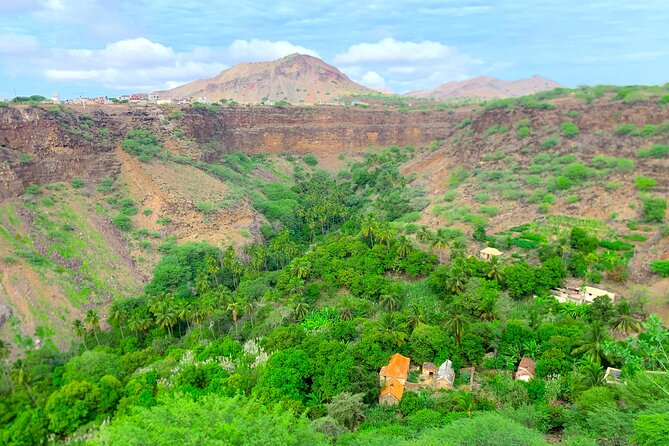
Calabaceira Valley hike: easy effort, real farm country
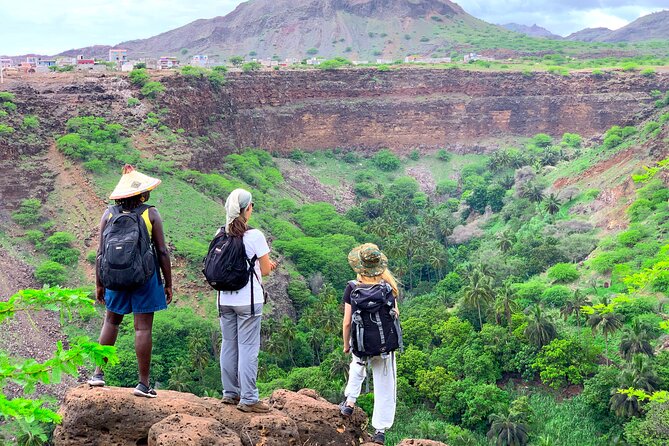
The walking part is set up as an easy trek, with a trail distance of roughly 5 km and about 2 hours of walking in total. The route is described as medium-quality, with a narrow beginning, but it’s considered safe. You’re also looking at about 3 m of elevation gain, though the area changes can still feel noticeable depending on heat and footing.
The big payoff here is what you see between the sights. Calabaceira isn’t just scenery—it’s working land. Your guide brings you close to local farmers’ fields, where you’ll hear about crops like sugar cane, mango, cassava, and banana. Even if you’ve seen these crops elsewhere, you’ll understand them differently when you’re standing in the fields and hearing how people grow them locally.
A special moment on this hike is the giant baobab tree connected to Charles Darwin. You’ll hear this Darwin link as you travel through the valley, which gives the tree more meaning than a simple photo stop.
Practical tip: plan on sun and dust. The tour strongly recommends hiking pants (especially August to November) plus decent footwear, a hat, sunscreen, and water. I’d treat this like a real short trek, not a casual stroll.
Iglesia Calabaceira and the baobab pause
Your hike begins after you travel from Praia. You’ll stop at Igreja Calabaceira, and that’s where the day starts feeling like a genuine journey through the valley rather than a checklist.
From here you follow greenery and simple trail sections, and you get the feeling of how the valley holds water, vegetation, and farming life side by side. That’s the point: this isn’t only about reaching Cidade Velha. Calabaceira is part of the story, and the walk makes it tangible.
The baobab reference is timed well. It shows up at a moment when the trail and vegetation have already set the scene, so the Darwin connection lands as something you can visualize in your head. You’re not just hearing a name—you’re seeing the kind of tree that would have stopped an explorer in his tracks.
If you’re sensitive to narrow paths, pay attention early in the route since the trail is narrow at the beginning. Nothing here is described as technical, but good shoes are still the difference between relaxed walking and constant caution.
Cidade Velha: UNESCO sites packed into one guided loop
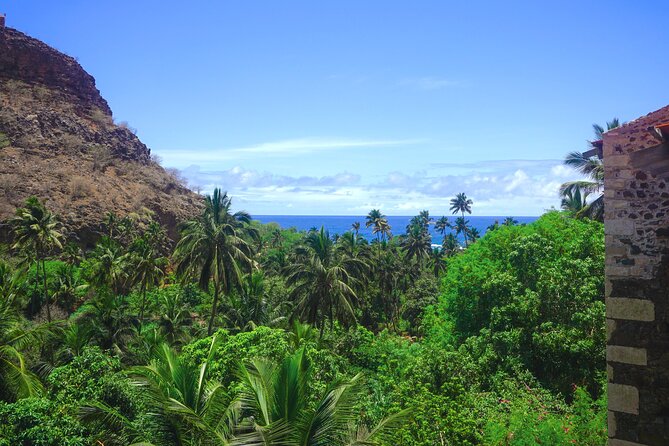
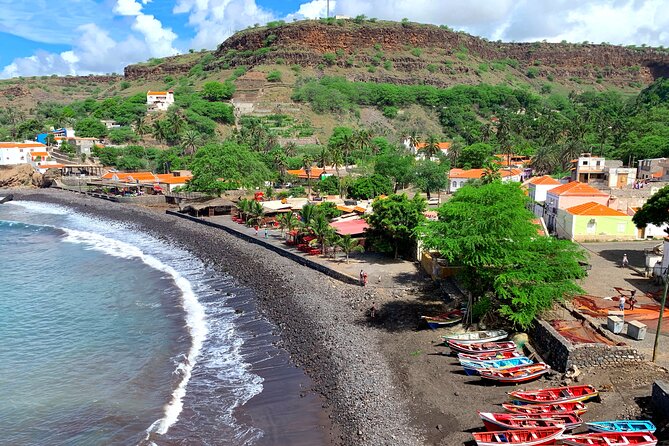
Cidade Velha is a UNESCO World Heritage Site for a reason, and this tour works like a smart time-saver. In about a day’s worth of sightseeing compressed into a few hours, you hit key colonial-era and religious sites that define the old town’s layout and power.
A big reason this feels valuable is the guide. In the best moments, the guide connects places that look separate on a map. Then suddenly they feel linked—by Portuguese influence, church power, and the systems that shaped daily life.
Here’s the sequence you’ll walk through, with what each stop adds to your understanding:
Convento de São Francisco: faith and formation
You’ll visit the Convento de São Francisco, built in the mid-17th century. This stop isn’t long, but it’s a useful reset. It shows you how religious buildings functioned not just as places of worship, but also for training and community formation.
Even if you’re not a history fanatic, convents like this give you a baseline for why the next buildings matter. They set the tempo of the town.



Rue Banana: a Portuguese-era first
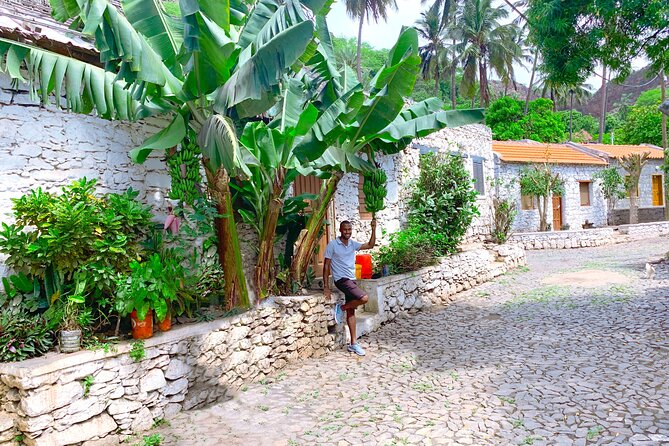
Next is Rue Banana, described as the first “urbanized” street built by the Portuguese in sub-Saharan Africa. That’s a striking detail because it frames Cidade Velha as more than a sleepy coastal town. The Portuguese left visible marks on planning and infrastructure.
If you like architecture trivia and place-based facts, this is one of those quick stops that sticks.
Igreja Nossa Senhora do Rosário: 1495 and Manueline style
Then you’ll reach the Church of Nossa Senhora do Rosário, said to be the oldest colonial church in the world, built in 1495. It’s in Manueline (Portuguese Gothic) style, which is the kind of design label that can mean little until you see the building.
This is your “oh, wow” church moment, because it anchors the timeline. The town feels less like random ruins and more like a chain of decisions stretching backward.
Pelourinho and Sé Catedral: where colonial power shows
After the churches, the tone shifts in a way that feels honest and a little heavy. The tour doesn’t shy away from what the Portuguese system did here.
Pelourinho: white marble and the slave market
You’ll stop at Pelourinho, built in 1512, and described as having been used as a slave market. It’s a short visit, but it matters. This is the kind of place where you can’t treat the stop like a photo-op only.
If you want the story behind Cidade Velha to feel complete, this is one of the stops you’ll be glad you didn’t skip.
Sé Catedral ruins: first cathedral in Africa by Portuguese
Next come the ruins of the Sé Catedral, said to be the first cathedral built in Africa by Portuguese influence. Even as ruins, the location tells you where power tried to take root.
This stop also helps you understand why the town is significant. The UNESCO value isn’t only in “pretty buildings.” It’s in how these buildings reflect historical reach.
If you’re traveling with limited time, this pair of stops—Pelourinho and Sé Catedral—helps you see the big theme: church, administration, and the darker mechanisms of the era.
Fortaleza Real de San Felipe: pirate-defense views

The day closes with the Fortaleza Real de San Felipe. It was built in 1587 to defend the city from pirate attacks, and you’ll get a view over the old town from the top.
This is the practical payoff of the tour: the final outlook makes you see the town’s layout and geography. Even though the visit is short, the viewpoint is often what ties the whole experience together in your head.
Just note the cost: there’s an extra €5 per person fortress entrance fee, and it’s not included in the tour price. I’d treat this as a “budget cushion” so you don’t get surprised when you’re there.
Price and value: what $81.30 buys you
At $81.30 per person, this isn’t the cheapest outing on Santiago—but I think it’s priced reasonably for what you get. The tour includes pickup and drop-off, transportation, a tour guide, and liability insurance. That’s a lot of “effort cost” handled for you, especially if you’re staying in Praia and trying to reach Cidade Velha and the valley in one smooth morning.
Most of the listed admissions are marked as free for the stops you’ll visit. The only clear extra cost mentioned is the fortress entrance fee of €5. Also, this is a half-day experience, so you’re not paying for a long full-day time commitment.
What you do not get is lunch. That’s the one genuine gap. If you need food to stay happy, plan on grabbing something before or after the tour, or at least bringing a snack and water so you’re not thinking about hunger at the wrong moment.
The tour also runs with a maximum of 8 travelers, which matters for value. In a small group, the guide can slow down, explain more clearly, and adjust when someone’s legs feel less cooperative than planned.
Who this tour suits best (and who might want something else)
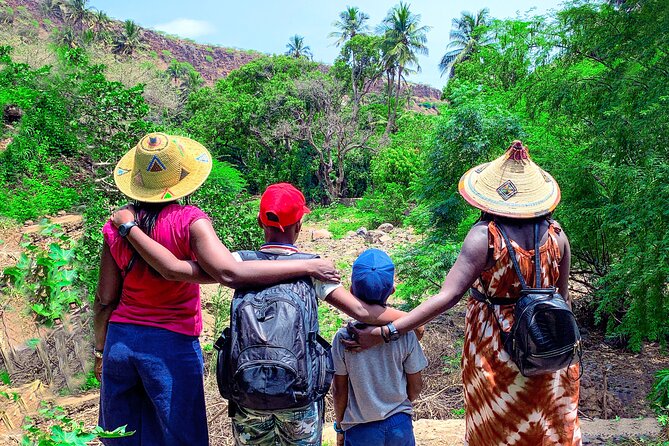
This tour works best if you want an efficient mix of nature + culture + history without intense hiking. The trail is described as easy, the walking time is short, and it’s built for most people.
It’s especially good for:
- First-timers in Santiago who want a clean intro to both rural life and Cidade Velha
- People who care about seeing multiple major historic stops without juggling transportation
- Travelers who want a small-group feel with a guide who can explain what you’re looking at
It might be less ideal if:
- You’re determined to spend a long, unhurried day deep in one place. This is focused and time-efficient.
- You need lunch included to feel comfortable. Since it’s not included, you’ll want a plan.
Age-wise, it’s for travelers over 6 years old, so families can often make it work as long as the child can handle about two hours of walking.
Should you book this Calabaceira and Cidade Velha tour?
If you like your travel days to feel like real experiences rather than checkboxes, I’d book it. The standout advantage is the pairing: you get the Calabaceira valley walk (including local farm talk and a Darwin-connected baobab) and then you get Cidade Velha’s key UNESCO sights in a tight, guided flow.
I’d book it even harder if you’re hoping for a guide-led explanation. From examples like Ailton and Maria—both praised for strong knowledge and making the experience memorable—you can reasonably expect the history to feel clear, not like random facts.
Just go in with two expectations: plan for no lunch, and budget the €5 fortress fee. Do that, and this tour is a smart half-day use of your time in Santiago.
FAQ
How long is the Calabaceira Valley hike and Cidade Velha tour?
It runs for about 4 hours total.
What time does the tour start?
The start time is 8:30 am.
Where do I get picked up and dropped off?
Pickup and drop-off are available in Praia or Cidade Velha.
Is the hike difficult?
The trail is listed as easy, with about 5 km walking and around 2 hours of walking time. The trail has a narrow beginning and is described as medium quality but safe.
How many people are in a group?
This experience has a maximum of 8 travelers.
What’s included in the price?
Included are pickup and drop-off, transportation, a tour guide, and liability insurance.
What is not included?
Lunch isn’t included. Also, there is a €5 per person entrance fee for the Fortaleza Real de San Felipe that is not included.
What should I bring for the hike?
Bring hiking pants (especially Aug–Nov), decent footwear, a hat, sunscreen, and water.
What are the age requirements?
The activity is for travelers over 6 years old.
What’s the cancellation policy?
You can cancel for a full refund up to 24 hours before the experience starts. If you cancel less than 24 hours before, the amount paid is not refunded.