REVIEW · MARRAKECH
“Summit of Mont Toubkal (4167m) in PC Economy
Book on Viator →Operated by Adrar Aventure SARL · Bookable on Viator
North Africa’s highest peak is a real climb. This 6-day Mount Toubkal itinerary turns base-of-the-mountains logistics into a steady plan, with pickup from Marrakech and a pre-dawn summit push when conditions are right. I love how the pacing is built for acclimatization, day after day crossing passes and changing scenery around the Toubkal massif. I also like the human touch shown in how the team handles questions and extra gear needs through guides like Lahcen and guides such as Abdul, Rachid, Mbark, and Ibrahim. One possible drawback: you still need to be comfortable with rough altitude hiking and nights that are simple (camping or basic dorm-style gites), plus you’ll want to plan around what happens if weather turns.
What really makes this trip worth considering is that it’s not just about reaching 4,167 m. You get a route through the High Atlas that feels like you’re slowly walking deeper into Berber mountain life, with villages such as Imlil, Tacheddirt, Amsouzart, and stops near Lake Ifni. The trade-off is that it’s physically demanding in the middle days, including scree and a narrow pass section on the toughest day, so this isn’t a casual weekend walk. If you bring the right expectations and a steady pace, you’re in good shape for one of the most satisfying summits in the region.
In This Review
- Key highlights before you lace up
- Why Toubkal hits so hard (in a good way)
- Route basics: 6 days, pickup from Marrakech, and what you pay for
- Day 1: Imlil to Tacheddirt and the first taste of mountain pace
- Day 2: Tacheddirt to Azib Likemt and the scree reality check
- Day 3: Amsouzart, big views, and a basic gite night
- Day 4: Lake Ifni and the one calm afternoon you’ll remember
- Day 5: Tizi n’Ouanoums to Nelter Hut and where strong legs matter
- Day 6: Pre-dawn summit to Marrakech plains in one long day
- Guides and safety: where judgment counts
- Price and value: is $674.68 fair for what you get?
- Who should book this trek (and who should think twice)
- Should you book Summit of Mont Toubkal with Adrar Aventure?
- FAQ
- How long is the Toubkal trek?
- What fitness level do I need?
- Does the price include meals and camping gear?
- What’s not included that I should bring?
- Is pickup available from Marrakech?
- Is this a private tour?
Key highlights before you lace up
- 8:00 a.m. start from Marrakech (and pickup offered) so you don’t waste time scrambling for transport.
- Acclimatization built into the route, with multiple high passes before summit day.
- Camping with tents and sleeping equipment included, plus real mountain nights by rivers and near the lake area.
- Lake Ifni stop, the only lake in the massif, with downtime that feels well earned.
- Summit logistics timed for early light, with a 2–3 hour summit approach if conditions are right.
- Guides known for careful decision-making, including strong summit success in tough visibility or snow conditions.
Why Toubkal hits so hard (in a good way)
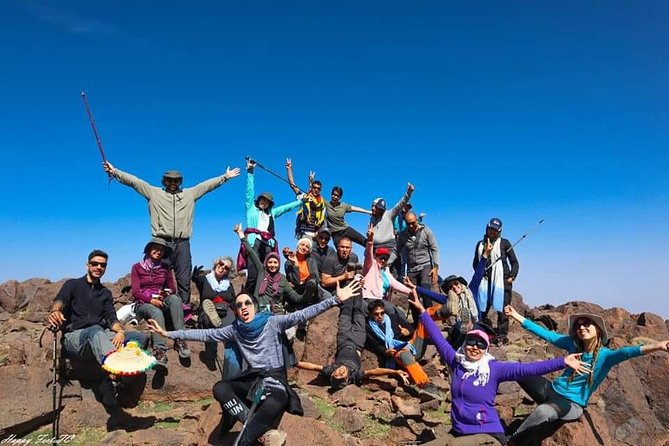
Mount Toubkal is the kind of mountain where you feel the scale right away. It’s the highest peak in North Africa at 4,167 m, and the route keeps you surrounded by taller companion peaks and dramatic ridgelines. Even if you’re not chasing technical climbing, altitude makes this a different sport than your usual hikes.
What I like about this trek format is that you’re not thrown straight into the steep stuff. You spend the early days climbing and descending through passes, which helps your body adapt, and it also gives you time to learn how your pace should feel on this terrain. Later, summit day becomes less of a shock and more of a plan.
Another big plus: this area is tightly connected to local life. You’re moving through valleys and villages used by Berber communities, and the route passes through small settlements that keep the focus on walking, working, and living close to the mountains.
You can also read our reviews of more tours and experiences in Marrakech.
Route basics: 6 days, pickup from Marrakech, and what you pay for
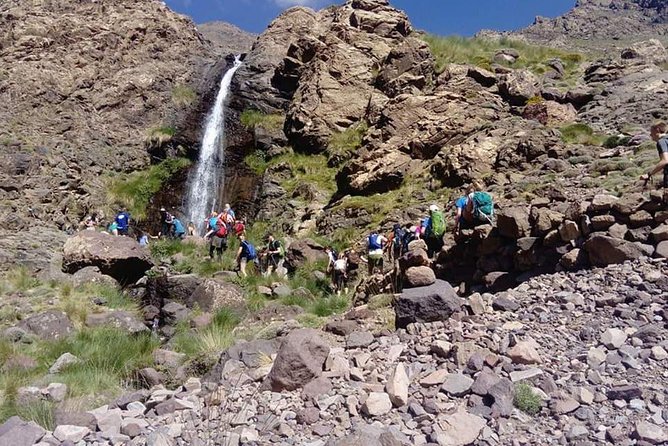
This is a private tour, meaning it’s only your group. That matters for comfort and flow, especially when you’re adjusting pace on steep or loose ground, or when you want questions answered quickly.
The schedule is set for a 6-day hike (approx.) starting at 8:00 a.m. from the Marrakech area. You also get an air-conditioned vehicle for transfers, and pickup is offered, which is a huge stress saver when you’re trying to start clean and early.
Your price is $674.68 per person, and the most practical way to judge value is to look at what you’re not managing yourself:
- Camps and sleeping equipment are included
- Meals are mostly covered (breakfast 6, lunch 6, dinner 5)
- All fees and taxes are included
- Insurance and 24/7 assistance are included
- You also get a mobile ticket
What’s not included is the one item that often surprises people: a personal sleeping bag. If you arrive thinking you can borrow one, you may be stuck. Plan on bringing your own, or rent/arrange it in advance through the team if that’s an option you’re exploring.
Day 1: Imlil to Tacheddirt and the first taste of mountain pace
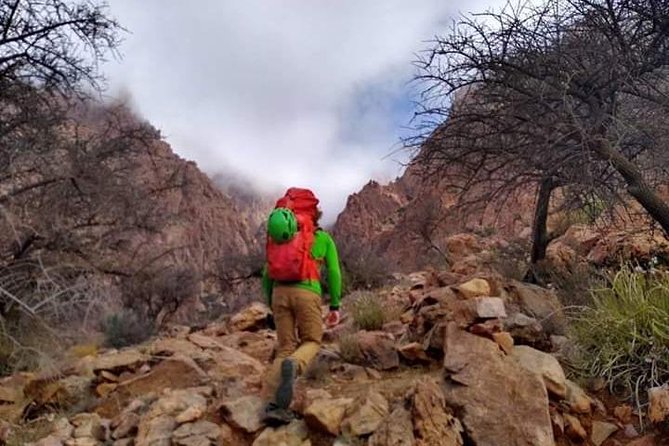
Day 1 starts with getting out of the city and into the hiking hub around Imlil. You travel via Asni, then begin at Imlil, which is one of the main starting points for trekkers. It’s busy in the best way: you’ll see steady movement of people coming down from the mountains and hikers preparing to go up.
From there, you meet your muleteer team and get your equipment loaded. Then you walk the valley toward Tacheddirt, about 8 km beyond Imlil, with the route beginning to climb. You cross Tizi n’Tamatert (2,279 m) before descending to Ouaneskra, then continuing to Tacheddirt, where nights are typically by the river near 3,000 m.
The practical win on this day is rhythm. Your legs learn the pattern early: climb, descend, breathe, and settle into a steady pace rather than sprinting uphill. The main drawback is that even on the “first day,” you’re already working at altitude. If you’re the type who goes too fast to “feel good,” this is where you’ll pay for it later.
Day 2: Tacheddirt to Azib Likemt and the scree reality check
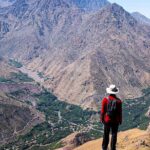
Day 2 is where the hike starts reminding you that Morocco’s High Atlas is about legs, patience, and footing. You begin at Tacheddirt and climb toward Tizi Likemt (3,555 m). This is a long, slow ascent, and the terrain includes loose scree, which can make each step feel unstable if you don’t keep weight centered.
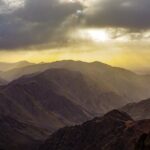
At the top, you get your first strong sense of the Toubkal massif and what the area actually looks like from above. Then you descend to Azib Likemt, where you camp for the night.
What you’ll likely love here is the payback of views after grind time. The possible drawback is simple: scree slows everyone down. If you have knee issues, take extra care on the descent and plan to move one step at a time.
Day 3: Amsouzart, big views, and a basic gite night
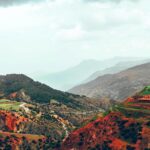
On Day 3, the route shifts into a longer day through changing scenery. You start with Tizi n’Ououraine (3,120 m), and the trail gives you additional viewpoints on the Toubkal massif—including the summit area, the east face, and the Ifni Dome (3,876 m).
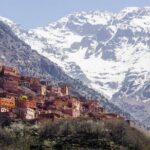
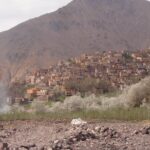
Then you walk toward Amsouzart, one of the standout villages in the region. Your night here is in a simple gite, described as dormitory style. That sounds rough on paper, but it often becomes part of the charm. You’re not there for comfort. You’re there for mountain nights, a hot meal, and rest so you can climb again.
The key consideration: you should expect “simple” rather than hotel-like. Bathrooms and bedding can be basic, so bring a mindset that works with the setting.
Day 4: Lake Ifni and the one calm afternoon you’ll remember
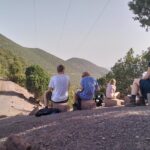
Day 4 is about a change in pace. You head west of Amsouzart toward Lake Ifni, and along the way you pass through several small villages. This is the kind of day where you can feel your body catching up to your ambition.
Lake Ifni is special because it’s the only lake in the massif. It’s a memorable sight surrounded by rugged mountain rubble. The route expects you to arrive around lunchtime, and then you get the afternoon relaxing by the shore before camping nearby.
This is the day I’d point to if you’re worried that you’ll feel “too busy” on a 6-day trek. It gives you downtime that’s still in mountain air, still at altitude, and still close enough to the route that you’re not wasting energy. The only real drawback is that you’ll still need to be mindful about cold at night, especially since you need a sleeping bag you bring yourself.
Day 5: Tizi n’Ouanoums to Nelter Hut and where strong legs matter
Day 5 is the tough one. You’re now fit and acclimatized, but the route asks for more commitment—especially on the steep section that includes a seemingly endless scree slope. This is where good trekking technique matters more than pushing speed.
You reach Tizi n’Ouanoums (3,664 m), described as a narrow ledge between rock formations. From there, you take a long zigzag descent to Nelter Hut, a mountain refuge where you spend the night. The route also notes an alternative of camping outside, depending on conditions and setup.
What you’ll likely love is the sense of progression: you’re moving toward the summit day with purpose. What you may find hard is that even when the elevation isn’t the highest number of the trip, the steep loose ground is exhausting in a different way. It’s also the day where you’ll want to keep your thoughts practical: small steps, steady breathing, and don’t take chances on footing.
Day 6: Pre-dawn summit to Marrakech plains in one long day
Summit day starts early—leaving before dawn. From camp, you follow a well-worn route to the top. If conditions are right, it’s described as taking more than 2–3 hours to reach the summit. That’s a key detail: you’re not just walking up slowly all day. You’re doing a concentrated climb in the dark or early light, then moving fast enough to get the view time you came for.
At the summit, the reward is big: a view across the Atlas range and the plains of Marrakech beyond. Then you descend fairly quickly to Sidi Chamharouch and Aremd, and you continue along the Mizane river back toward the Imlil path using a well-drilled route.
If you’re staying in Marrakech, you’re taken back by car at the end of the day. You’ll be tired, but the structure matters. A planned descent and a planned ride back means you don’t end up improvising the hardest part of the day.
Guides and safety: where judgment counts
This is a trek where leadership makes a difference. The mountain is demanding, but the bigger risk is when conditions change. The information you provided includes examples of harsh conditions like unexpected snow and very difficult visibility, where the guide’s timing and route judgment helped a full team reach the summit. That kind of decision-making matters because it’s not just about courage—it’s about knowing when to keep moving and when to adjust.
You’ll also notice the service side: guides such as Lahcen are described as being extremely helpful before the trek, including sorting questions and requests for renting extra equipment. On the trek itself, guides including Abdul and Rachid are repeatedly mentioned for support and patience, especially for first-timers or mixed-ability groups. Another guide, Ibrahim, is noted for terrain knowledge and local insight, which helps the hike feel less like a checklist and more like a real walk through a lived-in place.
Practical advice for you: if visibility drops, don’t fight the mountain by ignoring instructions. Follow the group plan, keep your steps controlled, and trust that the team is watching weather and timing.
Price and value: is $674.68 fair for what you get?
At $674.68 per person for a roughly 6-day climb, the value depends on whether you would otherwise have to build the whole trip yourself. Here, a lot is included:
- Camping gear and tents
- Sleeping equipment
- Most meals
- Insurance
- All fees and taxes
- 24/7 assistance
- Air-conditioned vehicle
- Pickup
- Private group setup
What you supply is mainly the personal comfort layer: you need a personal sleeping bag. That’s not a small detail if you’re sensitive to cold nights. If you’re budgeting tightly, spend time on sleeping bag choices and pack weight planning, because comfort at altitude directly affects your next day.
Also, private operation can be a hidden value. It means you’re not sharing decision-making or pacing with random strangers. If your group includes different fitness levels, that can help you finish the route more smoothly.
So, for most hikers who want a managed, lower-stress experience with strong support, the price looks reasonable. For ultra-budget travelers who want to assemble everything independently, it may feel expensive. But the included structure is the point here.
Who should book this trek (and who should think twice)
This trek is a good fit if you’re reasonably fit and can hike for multiple days with altitude. The route is said to not be technical outside winter months, so it’s not primarily a rock-climbing problem. It’s a stamina and terrain problem: steep walking, scree, passes, early mornings, and cold nights.
It’s especially suitable if you:
- want a guided, organized route from Marrakech
- like the idea of acclimatization through real hiking days
- value consistent meals and camp setup
- prefer private group pacing
You might think twice if you:
- have trouble on loose scree or narrow ledge terrain
- aren’t comfortable with basic lodging styles (camp and dormitory gite)
- struggle with very early departures and long hiking days
And keep an eye on season. One review example describes winter conditions requiring crampons, decent shoes, headlamps, and appropriate clothing. Your trek may be different by season, but that’s a good reminder: mountain weather can turn.
Should you book Summit of Mont Toubkal with Adrar Aventure?
If you want a well-run climb where the hard work is in the mountains and the logistics are handled on the ground, I’d say this is worth serious consideration. The combination of acclimatization days, a clear pre-dawn summit plan, and a team that’s described as careful and supportive is exactly what you want for a summit at 4,167 m.
I’d book it if you’re honest about your fitness and your comfort with basic mountain nights. I’d hesitate only if you’re expecting hotel comfort or you’re not ready for scree and long walking days.
If you do book, plan your packing around the one item not included: your sleeping bag. Then focus on trekking technique—controlled steps, steady breathing, and respect for weather. That’s how you turn “a tough hike” into one of those trips you’ll remember when you’re back eating something warm and ordinary.
FAQ
How long is the Toubkal trek?
It’s about 6 days.
What fitness level do I need?
The tour is for travelers with moderate physical fitness. It’s described as not technical outside of winter months, but the hiking is still demanding.
Does the price include meals and camping gear?
Yes. It includes camping tents and sleeping equipment, plus breakfast (6), lunch (6), and dinner (5).
What’s not included that I should bring?
A personal sleeping bag is not included.
Is pickup available from Marrakech?
Yes, pickup is offered, and you start around 8:00 a.m.
Is this a private tour?
Yes. Only your group participates.