REVIEW · BIG ISLAND OF HAWAII
Elite Volcano Hike From Kona/Kohala Resorts
Book on Viator →Operated by Kapohokine Adventures · Bookable on Viator
Live lava and lava-tube caves in one day. This Elite Volcano Hike turns the Big Island into an outdoor classroom, with National Park–certified guidance and real storytelling about what you’re standing on—think Mauna Loa/Mauna Kea country, then Kilauea’s terrain shaped by eruptions. I especially love the hands-on geology (you’re walking past multiple lava ages) and the no-fuss full-day setup with lunch and dinner included so you can focus on the hiking and the views. If you’re lucky enough to have a guide like Adam or Scatt, you’ll get clear explanations with a dry sense of humor that makes the rock talk make sense.
One thing to consider: this is not a casual stroll. The tour requires strong physical fitness, and the day adds up fast (one review mentioned over 20K steps), plus the weather can swing, including rain—so plan for effort and layers, not comfort.
In This Review
- Key highlights worth planning around
- What You’re Really Paying For: a 13-Hour Volcano Course with Meals
- Pickup from Kona/Kohala Resorts: How the Day Gets Moving
- Saddle Road to Maunaloa: Walking Past a Lava Timeline
- Kaumana Caves Park: A Lava Tube Cathedral Near Hilo
- The Scenic Drive Through Hilo and the KapohoKine Supplies Stop
- Hawaii Volcanoes National Park: Kilauea Caldera Views Plus a Real Hike
- The 2018 Eruption You Can Read: Crater Changes, Pit Depth, and Marks Left Behind
- Dinner at the Lava Café and the Evening Shot at Live Lava
- What to Pack: Layers, Rain Gear, and Shoes You Don’t Regret
- Who This Tour Suits Best (and Who Might Want a Different Plan)
- Should You Book Elite Volcano Hike From Kona/Kohala Resorts?
- FAQ
- FAQ
- How long is the Elite Volcano Hike?
- Do I get pickup from my Kona or Kohala resort?
- What meals are included?
- Is there admission included for the stops?
- How much hiking is involved?
- Is this tour suitable for people with limited mobility or small kids?
- Are service animals allowed?
- Does weather affect the tour?
Key highlights worth planning around
- National Park–certified volcanology narration that connects what you see to the bigger lava story
- A paved-to-caldera hike (about 2 miles roundtrip) through tree ferns, Sulphur Banks, and historic eruption evidence
- Kaumana Caves as a close-up look at a lava tube system that once carried lava within 1.5 miles of Hilo
- Saddle Road viewpoints across Mauna Kea and Mauna Loa, with a lava timeline from 1881 toward more recent flows
- Evening chances for live lava views, weather permitting, plus a sit-down dinner at the Lava Café
What You’re Really Paying For: a 13-Hour Volcano Course with Meals
At about $309.93 per person for roughly 13 hours, you’re paying for three big things: transportation from Kona/Kohala areas, guided science talk, and food. The meals matter more than they sound. A long day on the Big Island eats energy, and volcano-country weather can go from cool to warm fast—so having lunch and dinner handled keeps you from turning the day into a snack hunt.
The day also includes multiple “types” of volcano experiences: roadside geology, walking on lava flows, exploring a lava tube park, then finishing with a guided hike inside Hawaii Volcanoes National Park. That mix is where the value lives. A single highlight would be nice; a whole chain of them usually costs more in time and planning on your own.
Group size is capped at 100. That’s big enough for logistics, but not so huge that it feels like a cattle chute—especially since you’ll still be walking and stopping together with a guide who can steer you through what to look for.
You can also read our reviews of more tours and experiences in Big Island of Hawaii.


Pickup from Kona/Kohala Resorts: How the Day Gets Moving
This tour offers pickup from your Kona/Kohala resort area. You’ll need to contact the operator for the exact pickup location and time, and you’ll receive confirmation at booking. You’ll also use a mobile ticket.
For a day like this, pickup is the difference between enjoying the morning and burning it. Volcano country is spread out, and the tour’s structure relies on getting you to each stop without you figuring out timing and routes. If you’ve got the energy to drive and park yourself, you can save money on transport—but the tradeoff is time, hassle, and less time spent on the actual geology.
One more practical note: the tour is listed in English. If you want the guide’s volcanology explanations clearly, it’s a good fit.
Saddle Road to Maunaloa: Walking Past a Lava Timeline
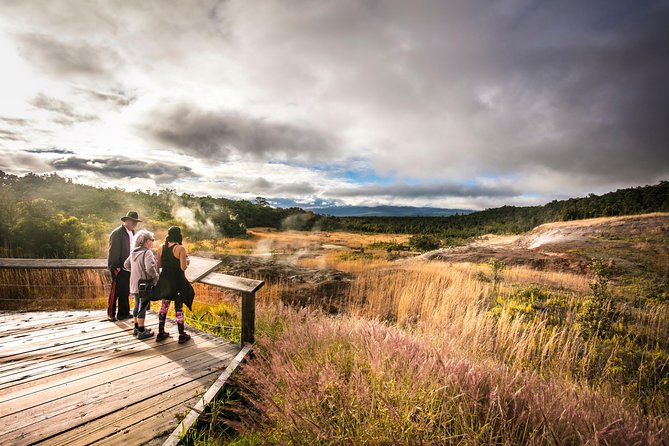
Stop 1 is where the tour starts teaching fast. You travel across Saddle Road between Mauna Kea and Mauna Loa—two of the largest volcano giants on Earth—then head out on foot to explore Kilauea lava flows. The walk is oriented around a range of flows, including older lava dating back to 1881 and reaching through to historic 2018 activity.
Why this works: you’re not just “seeing volcanoes.” You’re seeing how lava ages look different on the ground, and how plants and animals start using new surfaces over time. Your National Park–certified guide explains volcanology and geology along the way, and they’ll point out features you’d probably miss if you were just taking photos.
You’ll also get a natural sense of scale. Saddle Road is a corridor between massive volcano masses, so it’s easier to understand the Big Island’s shape when you’re actually moving across it rather than only looking from one viewpoint.
What to expect on this stop: a guided walk, narration, and a steady build toward the national park portion. Admission here is free, which is nice—more of your time is spent on the experience itself.
Kaumana Caves Park: A Lava Tube Cathedral Near Hilo
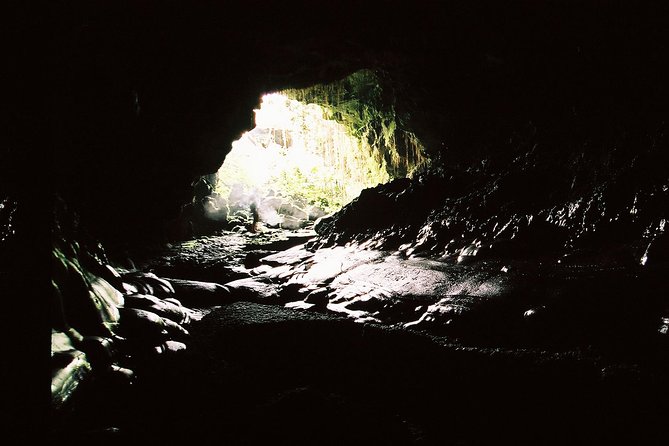
Next comes Kaumana Caves Park, part of a lava tube system. The tour’s angle here is close-up: lava traveled long distances and came within about 1.5 miles of downtown Hilo back in 1881. That’s a wild fact, and it makes the cave structure feel more real.
Inside, you’re looking at a cathedral-like space formed by lava once moving through underground channels. It’s the kind of place where your brain has to switch modes—from wide landscapes to underground geometry.
This stop is shorter, about 30 minutes. That’s a good pace. You’re not spending half your day in a cave, which matters because later you’ll be walking again in the national park.
Practical tip: wear shoes you trust. Cave ground can be damp and uneven, and you don’t want to spend the hike worrying about footing.
The Scenic Drive Through Hilo and the KapohoKine Supplies Stop
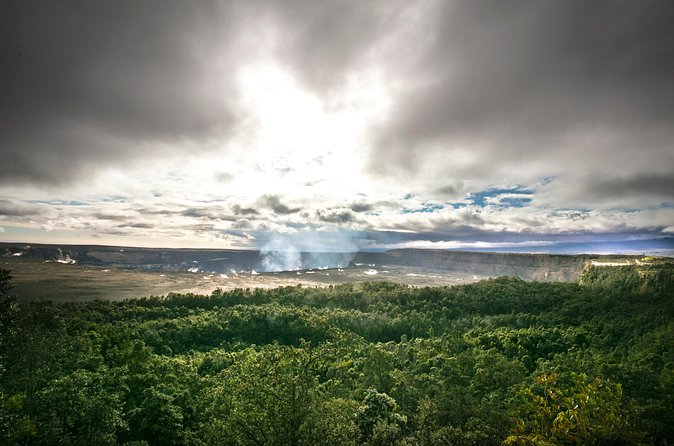
Between the caves and the main national park segment, you’ll drive through Hilo town and along the waterfront. It’s a mental reset from lava rock intensity—more “Hawaii life” scenery—before you go back into the volcanic focus.
You’ll also stop at the KapohoKine Adventures store to pick up supplies. The tour description doesn’t list exactly what supplies look like, but this is usually where you’re prepared for the hike segment and timing. Plan to be flexible with that part of your day and follow the guide’s instructions closely.
This portion also keeps the day flowing. You’re not just hopping from one photo stop to another—you’re getting the full arc of the island’s environment in sequence.

Hawaii Volcanoes National Park: Kilauea Caldera Views Plus a Real Hike
This is the crown jewel, and the day narrows into something concrete: Hawaii Volcanoes National Park. You start with a brief stop at the Kilauea Iki Overlook, then head toward the hike area down a paved road to Keanakakoi.
A key reason this tour feels special here is the way the terrain is still clearly marked by past eruptions. You’ll look at activity from the historic 2018 eruption, including how the road was buckled and how sinkholes formed. Those aren’t abstract facts—they’re part of the visible route and the route becomes part of the lesson.
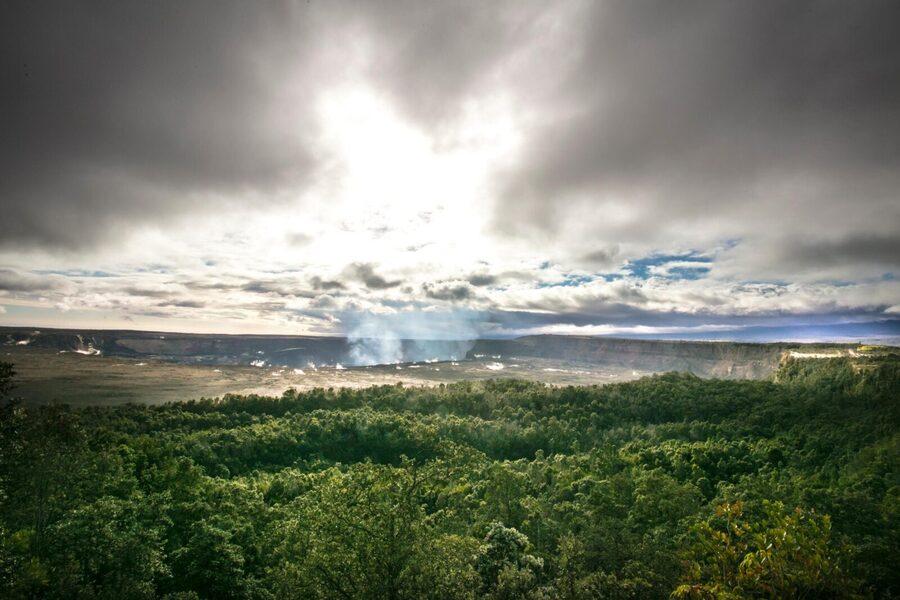
From there, you get birds-eye views of the Kilauea Caldera and Halema’uma’u Crater. You’ll also look toward the trail you’ll walk later in the caldera area.
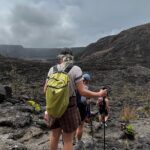
Now for the hike itself: it’s about 2 miles roundtrip and runs along a path used since 1846. That historical continuity matters. You’re walking something that’s been used for generations, but you’re doing it in a landscape repeatedly re-sculpted by eruption.
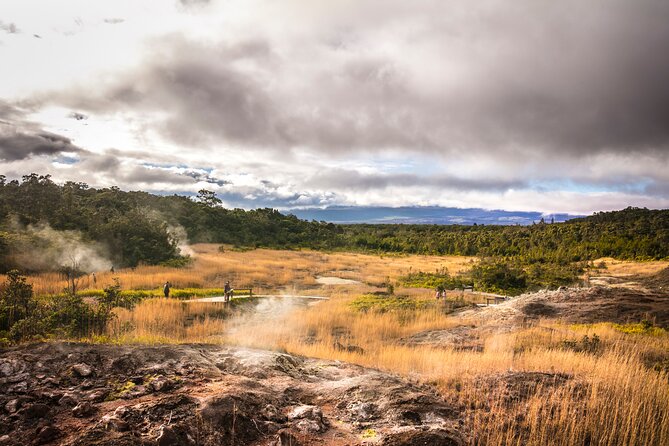
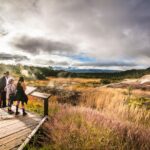
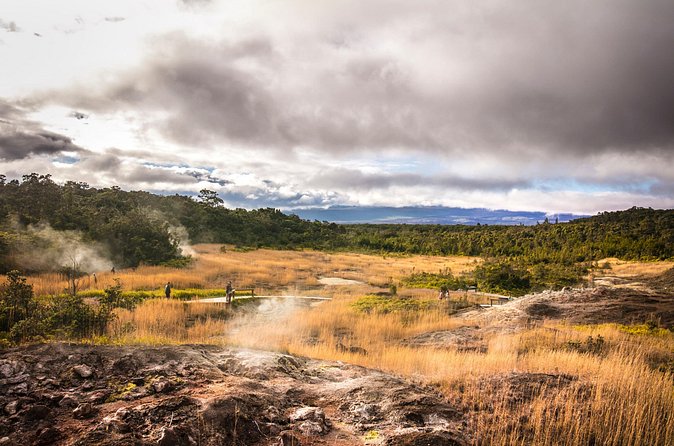
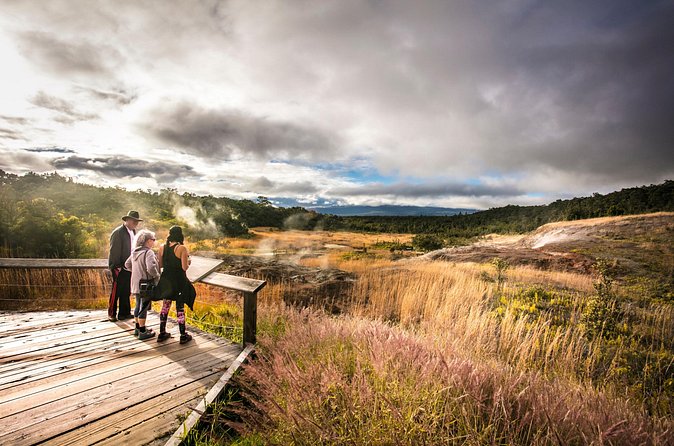
Your route takes you past Sulphur Banks and through ancient forests of tree ferns—some reported as old as 1,000 years. You’ll also have a chance to look for native birds, including yellow ‘amakihi and red ‘apapane.
If you’re the kind of person who likes specifics, this tour delivers. You’ll see huge boulders from ancient rock slides and eruptions, plus marks left by earlier visitors like Benjamin Boyd (a Scot) and John Webster (a California artist) from 1851.
The 2018 Eruption You Can Read: Crater Changes, Pit Depth, and Marks Left Behind
A lot of “volcano tours” stop at “wow, fire.” This one encourages you to notice how the ground records what happened.
When you reach the caldera floor, you’ll see a rock slide to your left that’s evidence of the 2018 eruption. Halema’uma’u Crater is in front of you, and your guide explains how the crater increased in size during the eruption with lava draining out, leaving behind a pit reported as about 1,000 feet deep.
That’s the kind of scale you feel in your body, not just in a sentence. You’re standing at the edge of a giant geological event, and the guide’s narrative helps you connect crater shape, draining lava, and the physical hazards that come with unstable ground.
This stop also adds a cultural layer. The tour includes a story about Mark Twain being rescued by native guide Alex Lancaster using this caldera trail. That’s one of those details that makes the landscape feel human, not just scientific.
Dinner at the Lava Café and the Evening Shot at Live Lava
After you return from the hike and get back to the Volcano House area, the tour turns toward views and downtime. The day isn’t only walking; it’s also built around the idea that you might be able to see active lava at night.
Dinner is included, and one of the most memorable parts for many people is the meal at the Lava Café. After a long day, that matters. You’re not racing to find food; you’re eating while the energy catches up with you.
Then comes the “if conditions allow” moment: live lava views from an active crater. In good weather, the night can be spectacular. In poor weather, visibility can be limited, and you might not be able to see the lava as clearly. That weather dependency is real—fog, rain, and cloud cover can change the whole feel of the evening.
What to Pack: Layers, Rain Gear, and Shoes You Don’t Regret
Wear hiking or walking shoes with solid grip. This is the sort of day where bad footwear becomes a problem you’ll feel all the way through.
Bring layers. Temperatures can swing from near freezing to warm in the same day, and that’s not just a comfort issue—it’s a safety one. If you get cold during a rain stretch, your body works harder and you’ll start moving less smoothly.
Plan for rain too. Hawaii can be wet, and the national park area can turn slick. If you’re the type who hates getting damp, treat this as your reminder to pack gear you’ll actually use.
Also, consider pace. Even though one part of the hike is described as about 2 miles roundtrip, the whole day stacks up. One review mentioned logging over 20K steps and nearly 6 miles. So don’t plan this as an “easy day.” Plan it as an active day.
Who This Tour Suits Best (and Who Might Want a Different Plan)
This experience fits best if you’re comfortable with long hours, sustained walking, and uneven or volcano-country footing. The tour requires strong physical fitness, and a full-day rhythm is built in.
It also works well if you genuinely like explanations. You’ll get volcanology and geology narration tied to what’s happening on the ground right now, plus the guide will point out flora and fauna details, like tree fern ages and specific native birds.
On the flip side, it’s probably not ideal for young children or anyone with mobility limitations. If you’re worried you can’t handle rain, long walking, and temperature swings, you’ll likely feel it more than you’d like. The tour’s structure makes it hard to “take it easy” halfway through.
If you want a more relaxed volcano experience, you might choose a shorter, less hiking-focused option. But if you’re in your active vacation mode, this is a strong pick.
Should You Book Elite Volcano Hike From Kona/Kohala Resorts?
If you want a day that’s equal parts hiking, science talk, and iconic volcano scenery, I’d say book it—especially because lunch and dinner are included, and the pickup saves you from logistical stress.
You should strongly consider skipping it if you:
- Don’t feel confident with a full-day active itinerary
- Hate rain or getting cold
- Need a lower-mileage, easier pace
- Are traveling with mobility limitations
If you do book, treat preparation like part of the tour. Solid shoes, layers, and rain protection will make the difference between enjoying the geology and white-knuckling the wet parts.
FAQ
FAQ
How long is the Elite Volcano Hike?
It runs about 13 hours.
Do I get pickup from my Kona or Kohala resort?
Yes. Pickup is offered from Kona/Kohala resorts, but you need to contact the operator for the exact pickup location and time.
What meals are included?
Lunch and dinner are included, so you don’t need to bring your own meals.
Is there admission included for the stops?
The tour includes admission as part of the experience. For example, Hawaii Volcanoes National Park admission is included, while other listed stops show free admission.
How much hiking is involved?
There is a hike in Hawaii Volcanoes National Park that’s about 2 miles roundtrip, plus additional walking through the day.
Is this tour suitable for people with limited mobility or small kids?
The tour requires strong physical fitness. It’s not recommended for young children or those who are mobility limited.
Are service animals allowed?
Yes, service animals are allowed.
Does weather affect the tour?
Yes. This experience requires good weather. If it’s canceled due to poor weather, you’ll be offered a different date or a full refund.