REVIEW · BIG ISLAND OF HAWAII
Big Island: Mauna Kea Summit Tour with Free Night Star Photo
Book on Viator →Operated by Hawaiian Eyes Tour · Bookable on Viator
Mauna Kea is cold, high, and wildly beautiful. This tour bundles the hard parts into one smooth night: you get summit access time for sunset, guided stargazing, and a free DSLR photo of you under the stars. My favorite part is the small-group feel and the included winter gear that actually helps at altitude; my only real caution is that bad weather and road closures can affect sunset and sky visibility.
You’ll start with pickup in Kona, Waikoloa, or Waimea, then ride up in a 4×4 van with a guide who keeps things organized and safety-focused. Along the way, you stop at the Onizuka Astronomy Complex to acclimate, eat a light meal, and switch into warm snow parkas, ski pants, and gloves before you head to the summit.
In This Review
- Quick reasons to choose this Mauna Kea night tour
- Why Mauna Kea works best with a guided 4×4 night plan
- Meeting points, pickup timing, and the 8-hour rhythm
- Onizuka Astronomy Complex: acclimate at 9,000 feet and warm up first
- Summit sunset at 13,796 feet: what you’re really paying for
- Night stargazing at Onizuka: telescope time plus constellation guidance
- What’s included (and how to plan for the cold anyway)
- Guide style and the photo bonus: why names matter up here
- Weather and moon phase: how to manage expectations without ruining the night
- Who this tour fits best (and who should look elsewhere)
- Should you book this Mauna Kea Summit Tour with Free Night Star Photo?
- FAQ
- FAQ
- How long is the Mauna Kea summit tour?
- Where are the pickup locations?
- How many people are in the group?
- What cold-weather gear is included?
- What food and drink do you get?
- What photo is included with the tour?
- What happens at Onizuka Astronomy Complex before the summit?
- How much time do you spend at the summit and at stargazing?
- Is sunset and stargazing guaranteed?
- What are the age and health restrictions?
Quick reasons to choose this Mauna Kea night tour
- Small group (max 12) for a calmer experience and more guide time
- Winter gear included (snow parkas, ski pants, gloves) so you’re not guessing what you need
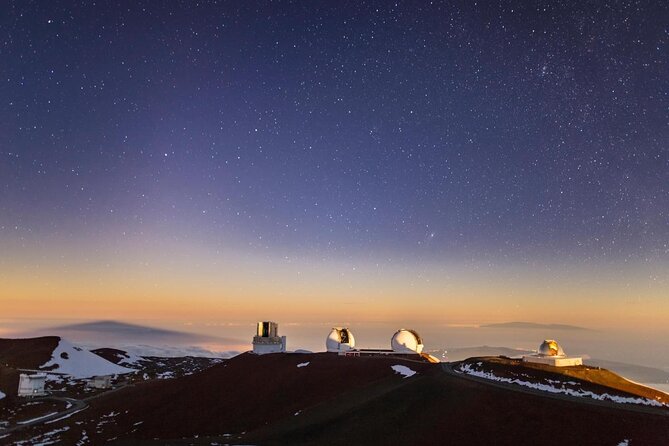
- Summit sunset + stargazing in one flow, with a telescope session after dark
- Free DSLR photos included, with results dependent on weather and moon phase
- Onizuka stop for altitude acclimation, plus a light dinner so you’re not cold and hungry
- Guided sky explanations using a refractor telescope and a laser pointer
Why Mauna Kea works best with a guided 4×4 night plan
If you’ve tried to plan Mauna Kea on your own, you already know the vibe: it’s remote, weather-driven, and altitude is not a minor detail. This tour takes that chaos and turns it into a managed schedule. You ride up in a 4×4 passenger van, you’re timed for sunset, and you’re not stuck figuring out logistics while you’re trying to stay comfortable at 9,000 feet and then 13,800 feet.
I also like that the guide handles the real-world stuff that matters up there. Road closures can happen, rangers can adjust access, and your time at the summit and stargazing location may shift based on conditions and how people are feeling. On a night like this, that kind of flexibility is not a luxury.
Finally, the stargazing part isn’t just a stop-and-look. You get a guided session with a telescope, plus a tool (laser pointer) to help you follow what the guide is pointing out in the sky. That turns the view from pretty into memorable.
You can also read our reviews of more tours and experiences in Big Island of Hawaii.

Meeting points, pickup timing, and the 8-hour rhythm
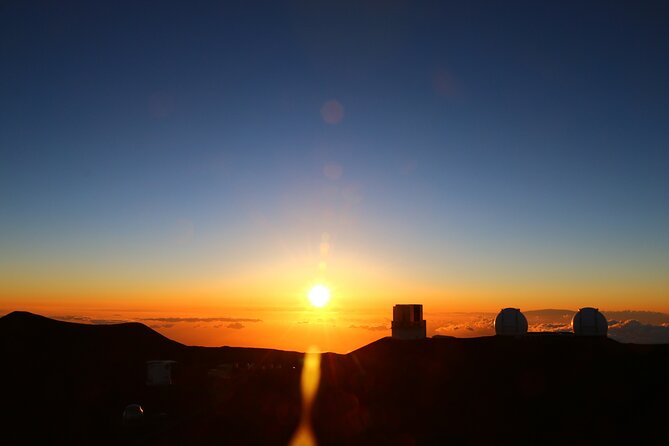
This is an all-day-in-your-body kind of outing. Plan for about 8 hours total. Pickups happen around mid-afternoon, but the exact time changes by season, so don’t assume a fixed clock. The group meets at one of three pickup points:
- Target, Kailua-Kona: meet in front of McDonald’s in the Target parking area (74-5453 Makala Blvd, Kailua-Kona)
- Queens’ Marketplace, Waikoloa: shuttle bus stop on the backside of the shopping mall, in a large lot near the NOT Starbucks (69-201 Waikoloa Beach Dr #201, Waikoloa)
- Gilbert Kahele Recreation Park, Waimea: (44-5400 Daniel K. Inouye Hwy, Waimea)
After the night session, you return to the pickup areas, starting from Waikoloa Resort.
A practical tip: you’ll likely spend a good chunk of that time in the van. One review called out an hour-plus drive time and bumpy roads. The good news is that you’re not dealing with navigation or parking in near-dark at altitude. Just settle in, dress for cold, and expect a ride that’s more rugged road than smooth highway.
Onizuka Astronomy Complex: acclimate at 9,000 feet and warm up first
Before you’re anywhere near the summit, you’ll stop at the Onizuka Astronomy Complex at about 2,800 meters (9,000 feet). This is where the tour becomes smart, not just scenic.
Here’s what you can expect at this stop:
- An early dinner and altitude acclimatization window
- Time to change into the winter gear (snow parkas, ski pants, gloves)
- A gift shop that’s open for souvenirs
- No on-site food or drink sales (so you’re eating what’s included)
This matters for two reasons. First, you’ll be at a height where your body can feel different fast. Second, it’s much easier to manage warmth and clothing here than to discover you’re underdressed at the summit. The tour builds in that buffer on purpose.
Also, the included meal is part of the comfort plan. You’ll get a dinner sandwich: BLT or vegan, and if you don’t request vegan in advance, it defaults to BLT. Hot drinks are included too (cocoa shows up in the real-world experience), which is exactly what you want before you head into the real cold.
Summit sunset at 13,796 feet: what you’re really paying for
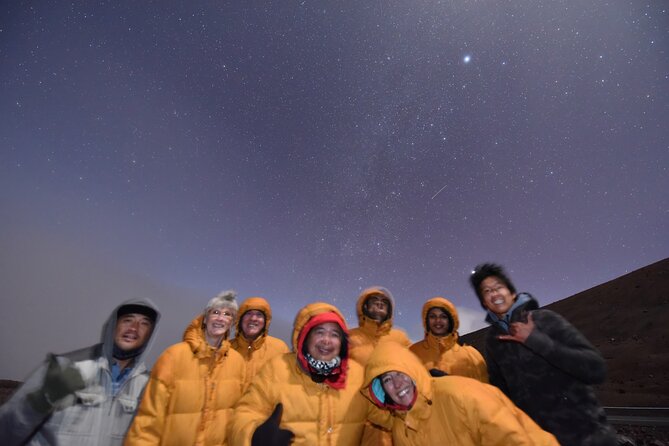
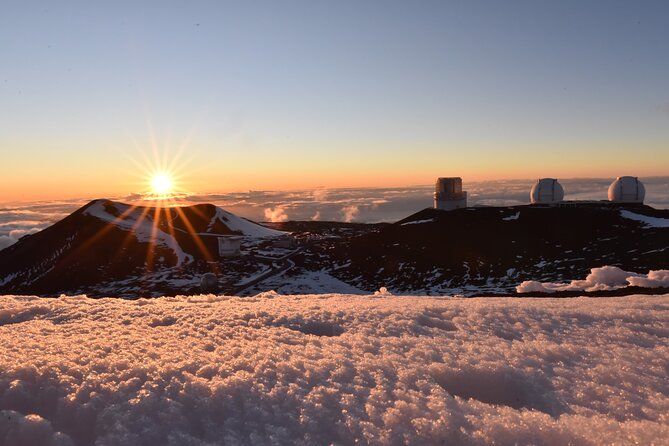
The summit stop is timed for sunset, and you’ll be at about 13,796 feet (4,205 meters). The tour is designed so you arrive in time to watch the light shift as the sky changes over the highest point in Hawaii.
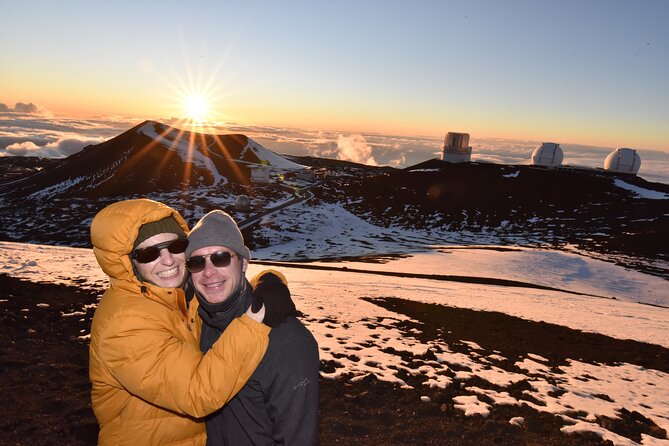
You get around one hour at the summit, plus a chance to view the observatories area. And yes, you should plan to do some posing. The guide takes DSLR photos during sunset and stargazing, and those photos are included at no extra charge.
Here’s the honest consideration: it’s freezing and windy up there, even if you’re comfortable at sea level. The tour provides heavy cold-weather gear, but you should still treat this like a true winter outing. Cold hands can ruin your enjoyment fast, so plan on keeping gloves on and moving slowly.
One more thing that affects your night: you might not get the perfect conditions. The tour notes that sunset and stargazing are not 100% guaranteed, and moon phase can affect how sharp stars look. That’s not a dealbreaker. It’s just the reality of astronomy nights.
Night stargazing at Onizuka: telescope time plus constellation guidance
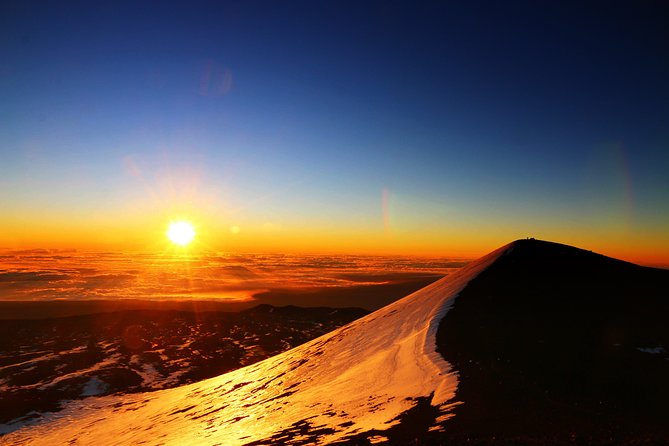
After sunset, you’ll head back down to the Onizuka Astronomy Complex area for stargazing. Expect about 45 minutes of guided sky time. The exact stargazing location can vary depending on weather.
This is the part where you stop admiring the sky and start understanding it. Your guide uses:
- A refractor telescope
- A razor pointer / laser pointer to help you track objects in the sky
- Explanations of stars, constellations, and planets
The experience is also designed around photos. You’ll get an astro photo with you in it as part of the included DSLR photo set. Just remember the fine print: the free star-photo bonus depends on weather and moon phase. If the sky is clear and the moon isn’t washing things out, your night gets extra magical.
I like that this session is guided. You won’t just point upward and guess. Someone is telling you what you’re seeing and why it looks the way it does, which makes you feel less like a tourist and more like you’re sharing the night with a local science nerd.
What’s included (and how to plan for the cold anyway)
This tour is priced at $280 per person, and the value is mainly in what they bundle. You’re not just paying for a seat. You’re paying for summit access time, transport, and a lot of comfort gear that would cost extra if you bought it yourself.
What’s included:
- Mauna Kea summit tour
- Admission fee for Mauna Kea
- 4×4 passenger van to the summit
- Winter gear: snow parkas, ski pants, gloves
- Dinner: BLT or vegan sandwich (request by day before or it defaults to BLT)
- Hot drinks (served during the experience)
- Astronomical telescope for the guided stargazing
- Free DSLR camera photo(s) of stars with you in it (weather and moon phase permitting)
What you should bring (based on the reality of this night):
- A willingness to dress for extreme cold.
- Layers under the provided gear help, because wind can bite.
- If you run cold easily, consider packing extra warmth even though the tour supplies winter gear. One guest even wished they had brought a heavier jacket.
And one more practical note: the tour advises that, if someone has altitude sickness or other conditions, the time at the summit and stargazing location may be adjusted. That’s not wasted time; it’s how you keep the night enjoyable for everyone.
Guide style and the photo bonus: why names matter up here
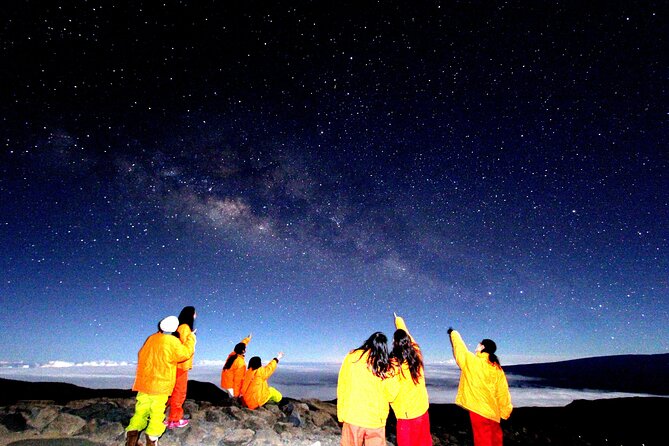
Up on Mauna Kea, the guide is your translator—between safety rules, altitude advice, sky science, and the schedule that depends on rangers and weather.
In the real world, the people running the tour show up as consistent pros. Guides like Wes and Chris come through in the way they handle timing, explain what’s happening during the drive, and keep guests updated if access changes. Another guide named James is mentioned for being informative and handling the experience thoughtfully.
What you’ll feel most:
- Clear instructions before you change clothes and head out
- Safety-minded driving on bumpy mountain roads
- Altitude tips to reduce the odds of a rough summit experience
- DSLR photo help, including group sunset photos and star photos with you
If photos matter to you, this is one of the more “worth it” elements. You’re not paying extra per image. The tour includes the DSLR photos, then sends them to you for free—again, weather permitting.
Weather and moon phase: how to manage expectations without ruining the night
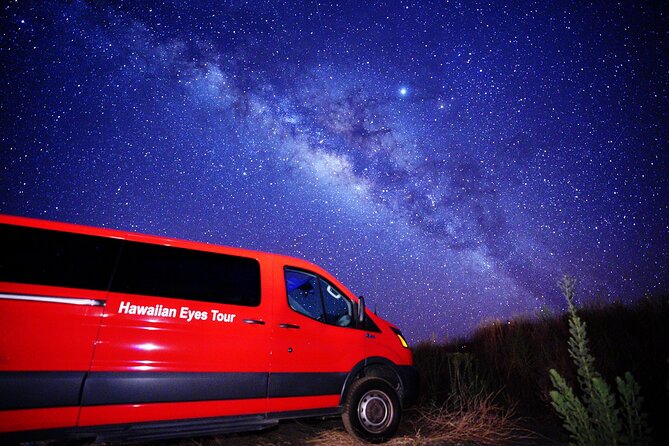
Astronomy nights are always conditional. This tour is upfront about that: in bad weather, sunset or stargazing are not guaranteed, and moon phase affects star visibility.
Also, access rules can change. The tour notes that rangers can close roads, which can affect summit time. When that happens, your guide adjusts the plan so you still get something worthwhile from the night.
Here’s how to make that work for you:
- Pick a date where you have flexibility during your stay (if you can).
- Keep your priorities straight: even under clouds, the experience still has value because you’re riding to a high place, acclimating, and learning the night sky.
- Dress for cold no matter what the forecast says at sea level.
If you’re traveling for a single perfect star photo, be realistic. If you’re traveling for a managed Mauna Kea adventure, you’ll likely feel like the tour does its job.
Who this tour fits best (and who should look elsewhere)
This isn’t a casual sit-by-the-window outing. It’s an altitude experience with a strict physical and age fit.
This tour is suitable for:
- People with moderate physical fitness
- Ages 16 to 75
- Weight 300 lb (136 kg) or less
- Anyone without respiratory issues like asthma (the tour specifically says it’s not recommended for respiratory problems)
If you’re older, have breathing conditions, or struggle with high-altitude changes, you should consider skipping or asking a medical professional first.
It’s also not ideal if you hate cold weather. Even with winter gear included, you’ll be outside during sunset and stargazing. The upside is that the tour supplies the key items that make cold survivable: snow parkas, ski pants, and gloves.
Should you book this Mauna Kea Summit Tour with Free Night Star Photo?
I’d book it if you want a guided, small-group Mauna Kea night that handles the logistics for you. The best reasons are practical: 4×4 transport, included summit admission, real winter gear, and guided telescope stargazing. Add the included DSLR star photos, and it turns into a complete package instead of a bunch of add-ons.
I’d think twice if you’re extremely sensitive to altitude, have respiratory problems, or you can’t tolerate cold and wind. And if you’re chasing one specific outcome—perfect sunset plus maximum star visibility—plan for the weather to have opinions.
If you do have flexibility, book it early enough in your trip that a weather swap (when needed) doesn’t break your schedule. Mauna Kea nights run on sky conditions, and this tour is designed to work even when the view isn’t exactly what you hoped for.
FAQ
FAQ
How long is the Mauna Kea summit tour?
It runs about 8 hours (approx.).
Where are the pickup locations?
You can be picked up at Target (Kailua-Kona), Queens’ Marketplace (Waikoloa), or Gilbert Kahele Recreation Park (Waimea). Return goes back to the pickup areas, starting from Waikoloa Resort.
How many people are in the group?
The tour has a maximum of 12 travelers.
What cold-weather gear is included?
You get winter gear including snow parkas, ski pants, and gloves.
What food and drink do you get?
You’ll have a light dinner (either BLT or vegan sandwich) and hot drinks are included.
What photo is included with the tour?
The tour includes free DSLR photos of the stars with you in them. Availability depends on weather and moon phase.
What happens at Onizuka Astronomy Complex before the summit?
At Onizuka, you’ll do altitude acclimatization at about 9,000 feet, change into winter gear, and eat an early dinner. The gift shop is open, but there is no food or drink sale.
How much time do you spend at the summit and at stargazing?
You get about 1 hour at the summit and about 45 minutes for stargazing after sunset.
Is sunset and stargazing guaranteed?
No. The tour notes that in bad weather, sunset or stargazing are not 100% guaranteed, and moon phase affects star visibility.
What are the age and health restrictions?
You must be at least 16 and not older than 75. The tour is not recommended for respiratory problems like asthma, and travelers should have moderate physical fitness. Weight is capped at 300 lb.