REVIEW · BIG ISLAND OF HAWAII
Volcanoes National Park: Guided, Small-Group Hike
Book on Viator →Operated by Volcanoes Hiking Guides · Bookable on Viator
Volcanoes National Park feels alive. This guided, small-group hike takes you into Kīlauea’s crater world with big views, real geology talk, and a pace that actually fits your group. It also mixes practical comfort (breakfast, snacks, trekking gear) with education that doesn’t read like a textbook.
I especially liked the chance to see active volcanic features up close: you start at the Kīlauea Visitor Center, then head into Halemaʻumaʻu Crater, where eruptions have been happening since Dec 23, 2024, about once every week or two. I also loved how the hike stays personal, because it’s designed for a small group and you can get flexible guidance—one guide I met by name, Jennifer, was known for tailoring the day to what people want, while another guide, Yvonne, is praised for volcanology stories and answering questions as they come up.
One consideration: it’s an ~8-mile, moderate-fitness trek. If you’re more comfortable with short walks or have balance issues on uneven ground, plan to bring your A-game and lean on the provided trekking poles.
In This Review
- Key highlights you’ll care about
- The sweet spot: a small-group crater hike with real guidance
- Starting at Kīlauea Visitor Center: setting up your whole day
- Halemaʻumaʻu Crater: active eruption views and the story behind them
- Kīlauea Iki: crossing a hardened lava lake for the full volcanic close-up
- Thurston Lava Tube: the most dramatic stop you can reach on a half day
- Native Hawaiian forest ending: the park isn’t only fire and stone
- Food, gear, and pacing on an ~8-mile trek
- Price and value: is $220 worth it?
- What to bring and how to plan your day
- Who this tour suits best
- Should you book this guided Volcanoes National Park hike?
- FAQ
- How long is the Volcanoes National Park guided hike, and how far will I walk?
- What’s included in the tour price?
- Do I need to buy a National Park pass or pay the Volcanoes National Park admission fee?
- What fitness level do I need?
- Is this hike private or small-group?
- What happens if the weather is poor?
Key highlights you’ll care about
- Halemaʻumaʻu Crater views with ongoing eruption activity (about weekly to every other week recently)
- Kīlauea Iki lava-lake crossing on hardened lava for a close-up volcanic feel
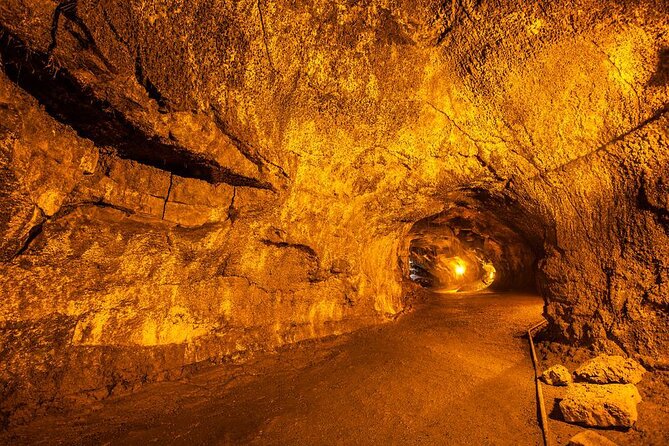
- Thurston Lava Tube as a major, photo-worthy stop partway through the hike
- Native Hawaiian forest time to balance the lava with living plants and wildlife
- Breakfast, gourmet lunch, and snacks plus backpacks and trekking poles included
- Small-group energy that can feel genuinely private with your guide and your party
The sweet spot: a small-group crater hike with real guidance
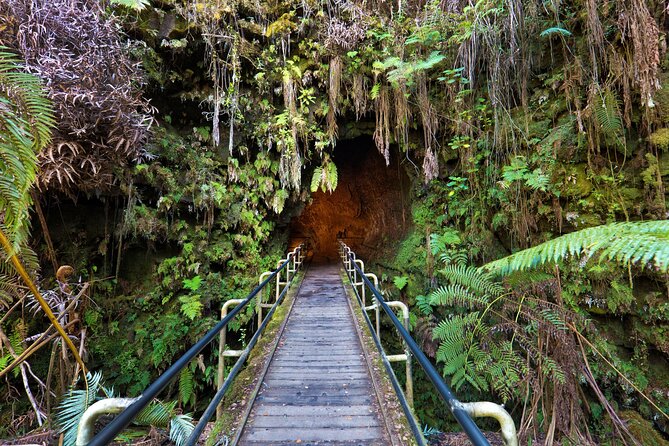
This isn’t the kind of park tour where you shuffle along and hope the guide’s voice carries. You’re in Volcanoes National Park with a focused guide, and the whole format is built around getting you to the places that make Kīlauea’s story make sense.
I like that the day is guided and structured, but not rigid. Guides named Jennifer and Yvonne are both described as adaptable—one tailoring the route to your interests, the other speaking in the language of people who want details. If you’re the type who asks why something looks a certain way, you’ll feel right at home.
You also get a sustainability-and-education angle, which matters here. Volcanoes National Park isn’t just “pretty.” It’s active geology, and the guide helps you understand what you’re seeing and why it’s safe (and when you should take your time).
You can also read our reviews of more tours and experiences in Big Island of Hawaii.

Starting at Kīlauea Visitor Center: setting up your whole day
You begin at the Kīlauea Visitor Center at 1 Crater Rim Drive in Volcano, HI. The tour loops back to the same meeting point, so you’re not trying to coordinate rides across the island just to finish a hike.
From there, the day is about building context fast. You start with Halemaʻumaʻu Crater, which is a perfect first act because it gives you a visual anchor for the rest of the trek. The guide also helps you understand the “why” behind what changes on the ground over time—useful on a day when the park’s most exciting features can vary week to week.
And yes, breakfast is included early. That small detail matters because crater days can start cool and change fast, and you don’t want to be thinking about food logistics while your legs are doing the work.
Halemaʻumaʻu Crater: active eruption views and the story behind them
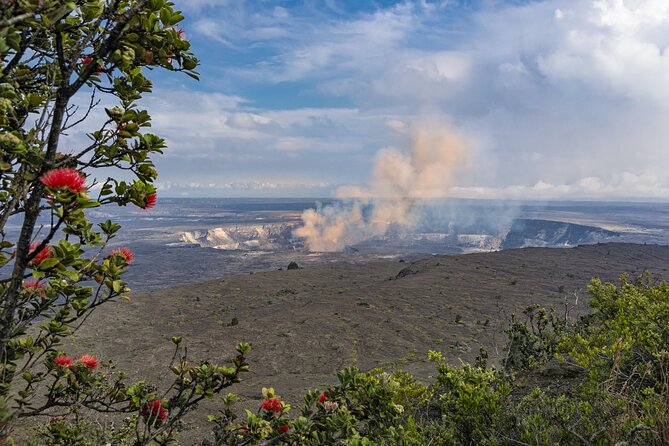
Halemaʻumaʻu is the opening highlight for good reason. The hike takes you into the area where lava activity has been happening since Dec 23, 2024, with eruptions occurring about once every week or two (so it’s not just a “historical” stop). Even when eruptions aren’t visible at every moment, the guide’s interpretation helps you connect the dots between what you’re seeing and how the system behaves.
This part of the hike is often where people feel the park’s scale. Craters can trick your sense of distance, and a good guide helps you avoid the common mistake of rushing to the best viewpoint without understanding the full setting.
One practical benefit: you’re not just walking from one landmark to another. You’re building a mental map. That makes the rest of the day feel more coherent—especially when you transition from one volcanic feature to the next.
Kīlauea Iki: crossing a hardened lava lake for the full volcanic close-up
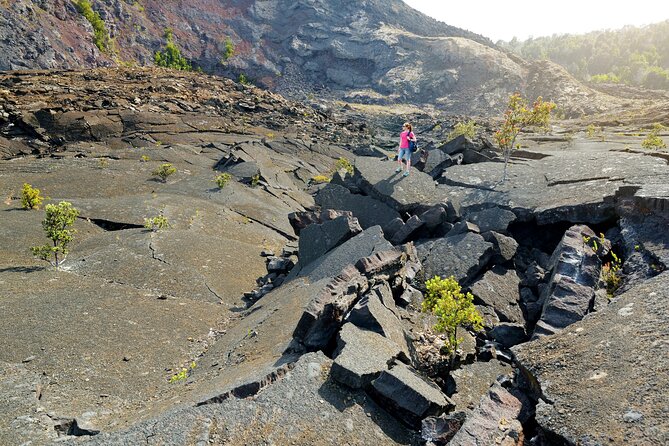
After Halemaʻumaʻu, the route continues toward Kīlauea Iki Crater. This is where the hike turns into a “hands-on” feeling without actually touching anything unsafe.
The big moment here is traveling across a hardened lava lake. That means your feet are on volcanic material that formed through eruption processes—so you get a close-up sense of what a lava flow leaves behind. You’re also moving through a crater environment where the air, sound, and light can feel different than outside the caldera rim.
Pacing is a key factor. Several guides are described as balancing a good hiking pace with the ability to adjust based on the group. That matters here because crater terrain can demand careful footing, especially when weather changes quickly.
If you enjoy learning while you walk, this is also where the guide’s storytelling pays off. People who love volcanology tend to get a lot from this section because it’s not abstract—it’s the park right under your boots.
Thurston Lava Tube: the most dramatic stop you can reach on a half day
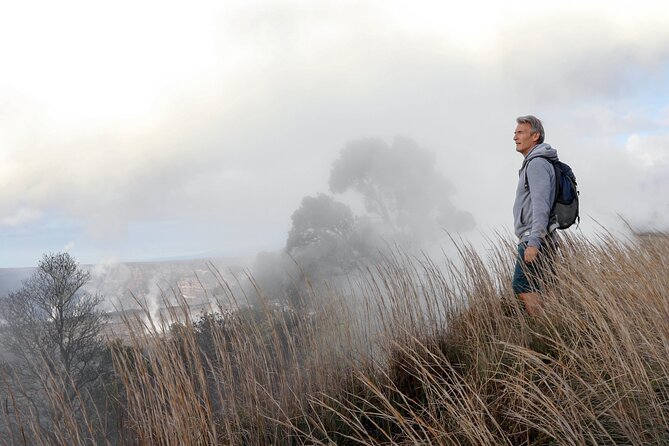
About halfway through the trek, you hit Thurston Lava Tube. This is one of Volcanoes National Park’s most popular attractions, and on this guided route it’s not just a quick look-and-go. You get context, what to look for, and how lava tubes form and what their shape can tell you.
This is also a nice “terrain break.” You’re still walking, but the experience changes from open crater areas to a more sheltered, textured volcanic feature. That can be a relief if you’ve been dealing with sun, wind, or shifting drizzle in the morning.
One detail that sticks out from guide experiences: lunch can feel like a reward because the day’s best features are timed so you’re not eating at a random time. Guides are known for making the lunch setting feel special, and at least one guide is specifically noted for bringing a homemade dessert (a chocolate chip cookie) as part of the meal. That’s the kind of small touch that makes a long hike feel like a trip, not a chore.

Native Hawaiian forest ending: the park isn’t only fire and stone
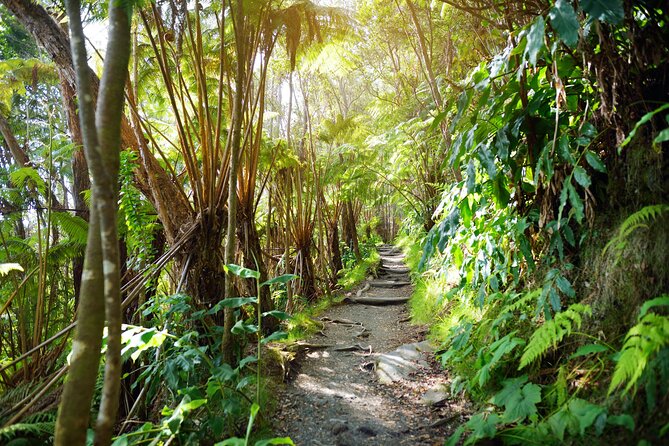
After the lava features, the hike moves into an enchanting native Hawaiian forest. This shift is more than scenic—it’s educational in a different way.
Instead of focusing only on eruption landforms, you get to see how native ecosystems survive and change in volcanic environments. The guide talks about flora and fauna (and how those living things fit into the bigger story), which gives your brain a rest from geology-only mode.
This forest portion also helps you end the day with calm. Lava days can feel intense even when you’re not moving fast. Having a quieter, greener finish makes it easier to absorb everything you learned earlier.
If you’re a nature-minded traveler, I’d put this ending at the top of the list for “why this hike is worth more than a quick crater photo stop.” It turns the day into a complete park experience.
Food, gear, and pacing on an ~8-mile trek
You’re out for about 6 hours 30 minutes, but the time feels spread out because the route has major stops. You’re not just grinding miles; you’re working in viewpoints, crater sections, and the lava tube, with breaks built in.
Included along the way:
- Breakfast
- Gourmet lunch (served as a picnic lunch in a stunning environment)
- Snacks
- Backpacks and trekking poles
Those last two items are underrated. Trekking poles help on uneven volcanic surfaces and can reduce fatigue when you’re walking on jagged or steep-feeling ground. Having backpacks means you’re not scrambling to carry everything in a daypack that may not have the right structure for comfort.
As for pace, the hike is described as manageable for people with moderate physical fitness. You should expect a real workout, not a casual stroll. The upside is that the guide can adjust timing to your group, so you’re not stuck in someone else’s training plan.
Weather also plays a role. You can see rain and sun in the same day here, and guides are ready to adapt. The key is packing smart and accepting that volcanic hiking can mean changing conditions.
Price and value: is $220 worth it?
At $220 per person, this is not a bargain-bin hike. But it’s priced for a guided, small-group day that includes a lot of the costs and hassles that self-guided hikers carry themselves.
Here’s what you’re paying for beyond the hike itself:
- A guide who interprets geology and history, not just directions
- Small-group or private-style attention
- Meals: breakfast, snacks, and lunch
- Hiking gear support (backpacks and trekking poles)
The park pass is separate. You’ll need the National Park Pass and there’s a Volcanoes National Park admission fee listed as $15 per person, plus another $15 for the pass. That means your total day cost will be higher than $220, so budget accordingly.
Still, for many visitors, the value comes from how much easier the day becomes. You don’t have to worry about route choices between craters, and you don’t have to guess what you’re looking at. If you’re going to spend hours in an active volcanic park, getting the “what am I seeing” piece right is worth real money.
What to bring and how to plan your day
The tour starts and ends at the Kīlauea Visitor Center, so plan your timing around being there on time. Confirmation is received when you book, and you’ll get a mobile ticket, which is convenient when you’re on a Hawaii travel schedule full of moving parts.
Beyond that, the data doesn’t list a full packing list, so I’ll keep it practical. Since this is an ~8-mile hike with uneven volcanic terrain and possible weather swings, wear sturdy footwear with good grip. Bring layers you can adjust quickly because crater areas can feel cooler or wetter than you expect.
Also, think about your questions before you arrive. If you’re curious about eruptions, crater formation, or how the lava tube works, your guide can turn those into real learning moments during the walk.
Who this tour suits best
This hike is a great fit if you:
- Want the best known volcanic highlights in a guided format
- Like learning as you move, especially about volcanology and park history
- Prefer small groups for better pacing and easier questions
- Appreciate included meals and hiking gear support
It may be less ideal if you:
- Want a short, easy nature walk
- Struggle with moderate hiking demands on uneven ground
- Prefer to move entirely at your own pace without guide direction
Should you book this guided Volcanoes National Park hike?
If your priority is crater-to-crater views without the stress of piecing together routes, I think this is a strong pick. The combination of active eruption context at Halemaʻumaʻu, a true walking experience across Kīlauea Iki’s hardened lava lake, plus the Thurston Lava Tube stop makes this feel like the park’s highlights in one day.
The best reason to book is the guide-led interpretation. When the guide is described as someone like Jennifer—flexible and tailored—or Yvonne—focused on volcanology stories and answering questions—you’re not just seeing places. You’re getting the meaning behind them, which is what turns a hike into a memory.
FAQ
How long is the Volcanoes National Park guided hike, and how far will I walk?
The hike is approximately 6 hours 30 minutes, and the custom route spans about 8 miles.
What’s included in the tour price?
The tour includes breakfast, a gourmet lunch picnic, snacks, plus backpacks and trekking poles.
Do I need to buy a National Park pass or pay the Volcanoes National Park admission fee?
Yes. A National Park Pass is listed as $15 USD, and there is also a Volcanoes National Park admission fee listed as $15.00 per person. These are not included in the tour price.
What fitness level do I need?
You should have a moderate physical fitness level for this hike.
Is this hike private or small-group?
It’s limited to your group, and it’s described as private, meaning only your group will participate.
What happens if the weather is poor?
This experience requires good weather. If it’s canceled due to poor weather, you’ll be offered a different date or a full refund.