REVIEW · CATANIA
Etna: Trekking to the summit craters at 3340 meters
Book on GetYourGuide →Operated by Sicilying S.R.L. · Bookable on GetYourGuide
Walking on Etna feels like stepping onto another planet. This guided trek climbs from the Rifugio Sapienza area to the summit craters around 3340 meters, with lunar-like terrain, big-sky views, and the sense of being close to an active volcano.
What I really like is the way the day mixes proper geology with hands-on hiking. You don’t just look at Etna from a distance, you walk the edges of central conduits and see recent lava terrain up close with a guide who keeps the story grounded.
One consideration: Etna is weather-driven, and the pace can be brisk. If conditions aren’t ideal, you might not reach every planned viewpoint, and you’ll still be moving for hours on steep, gritty ground.
In This Review
- Key highlights to know before you go
- Rifugio Sapienza to the summit: how the climb is paced
- Cratere Centrale dell’Etna: standing near the chasm and the new mouth
- Southeast crater and the sandy descent that changes the mood
- Barbagallo craters (2002/2003) and the canyon-like lava channel
- Valle del Bove: seeing a caldera you can actually walk around
- Price and value: what the €82 cable car and 4×4 really mean
- What to pack (and what not to bring) for Etna’s summit air
- Pace, difficulty, and who should feel confident on this trek
- Languages, group size, and how the day stays organized
- Should you book this Mount Etna summit craters trek?
- FAQ
- FAQ
- How long is the Etna trekking tour to the summit craters?
- Where do I meet for the tour?
- How high do you hike on Mount Etna?
- Is lunch included?
- What extra costs do I need to pay on site?
- What’s included with the tour price?
- What should I bring or wear?
- Is this tour suitable for children and people with health issues?
- What’s the cancellation policy?
Key highlights to know before you go
- Summit craters at 3340 m: you reach the height most people only see in photos
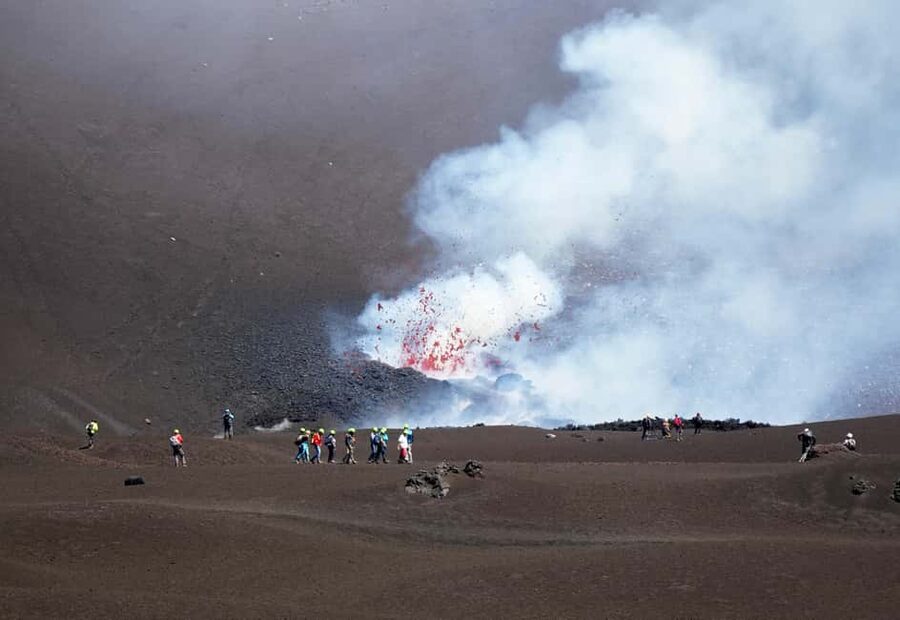
- Walk the crater rim: get views into the central area, including the chasm and the new mouth
- A real volcanology guide: explanations that match what you’re standing on
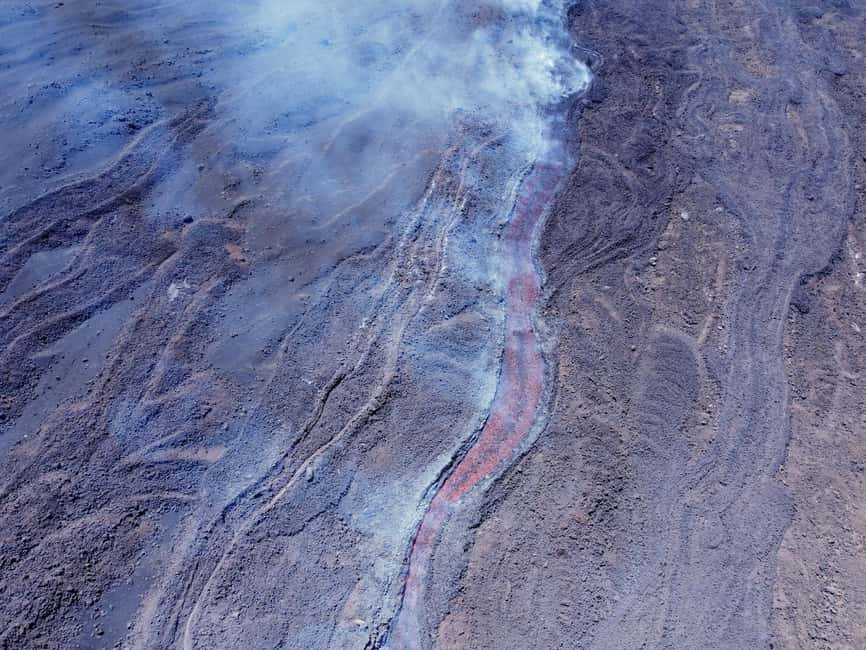
- Lava flow channel walk: you’ll enter a canyon-like passage formed by past eruptions
- Valle del Bove viewpoint: the caldera story is visible from the trail
- Gear included: trekking poles, protective helmet, and a windbreaker help on summit air
Rifugio Sapienza to the summit: how the climb is paced
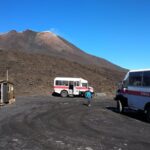
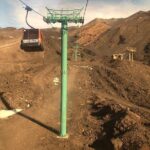
This trek starts at about 1900 meters in the Rifugio Sapienza area. You’ll first move by cable car to around 2500 meters, which is a big help because it saves your legs for the actual walking. Then you continue by 4×4 minibuses up to roughly 2850 meters.
After that, you’re on foot for the main push toward the summit craters. The big time commitment is the roughly 2-hour hike that climbs and threads across very recent lava flows, volcanic sand, and lapilli (small volcanic fragments). In plain terms, it’s not a smooth nature trail. Your footing changes often, and the ground can feel sandy underfoot even while the incline is steady.
Once you’re higher up, the air can feel sharper than you expect at 3000+ meters. The tour is designed for that reality: you get provided gear (helmet, poles, and a windbreaker), and you’re encouraged to bring layers and water. If you’re used to hiking on flat paths, plan to slow down a little. You’ll earn those views.
You can also read our reviews of more tours and experiences in Catania.
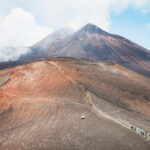
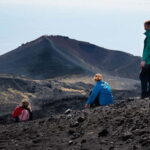
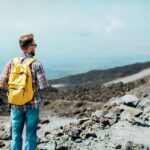
Cratere Centrale dell’Etna: standing near the chasm and the new mouth
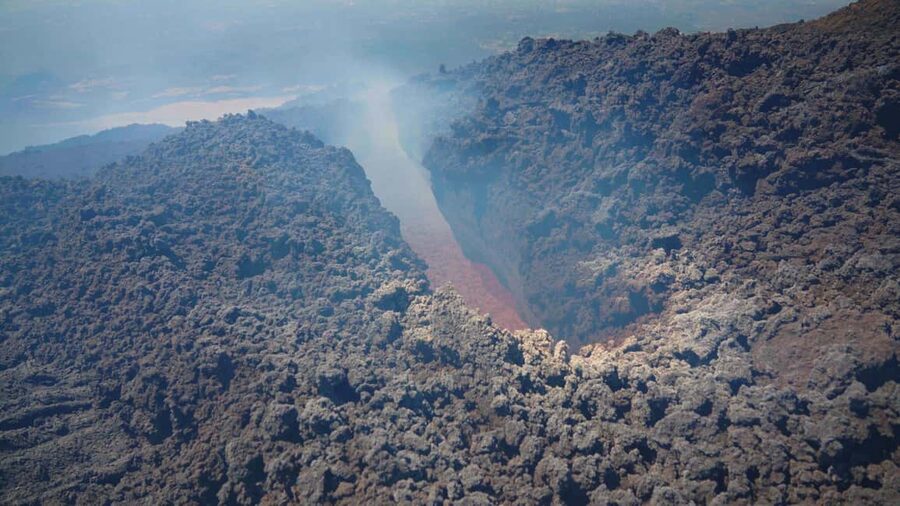
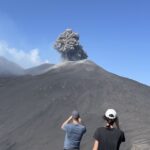
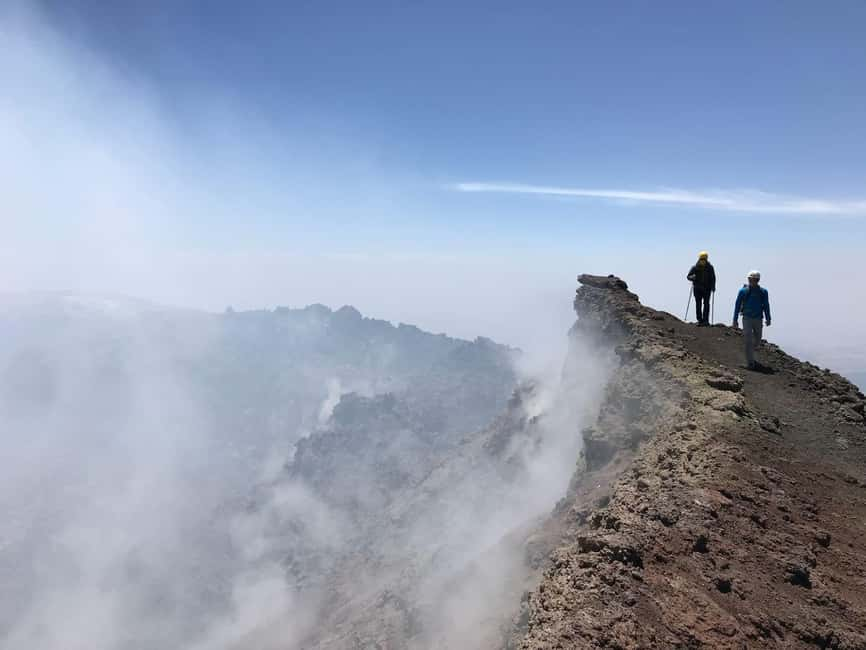
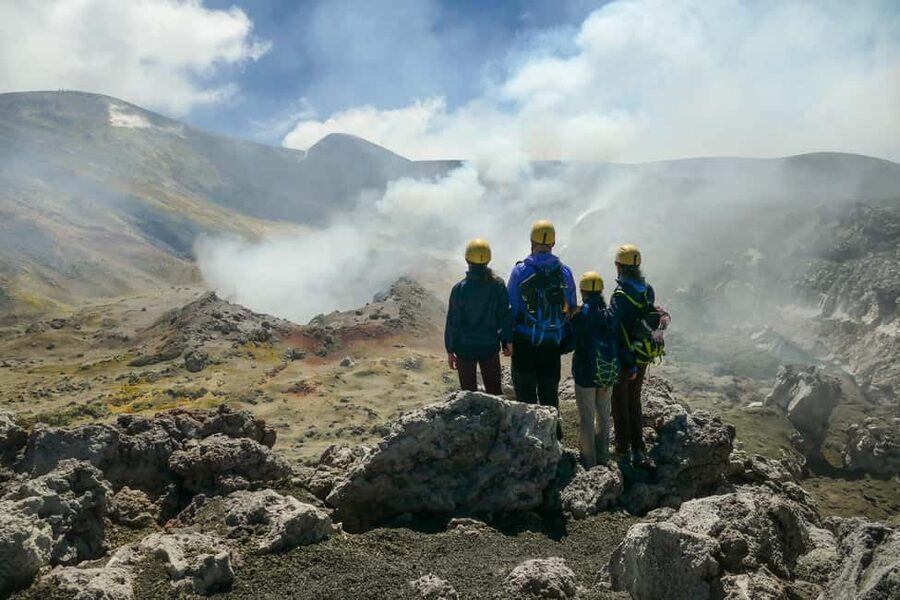
The heart of the experience is reaching the central crater area at around 3340 meters. When you arrive, you’re not just taking photos and leaving. You’ll walk along the edge of the central crater area so you can actually admire what’s going on there.
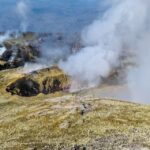
Two features get special attention: the chasm and the new mouth. Being near these volcanic conduits changes how Etna feels. From the rim, you can see how the terrain looks fractured, carved, and layered from past activity. The guide ties what you’re seeing to the way eruptions build and reshape the mountain.
This is also where you’ll feel the altitude and the wind more. Even when the sky is clear, the summit air can be brisk. That’s a big reason the included windbreaker matters. If you have a light shell, great. If you don’t, this setup is already doing some of the work for you.
The other practical point: crater-edge walking means you’re paying attention with your feet. Enjoy the scenery, but keep your balance. The photos will happen. Safe footing comes first.
Southeast crater and the sandy descent that changes the mood
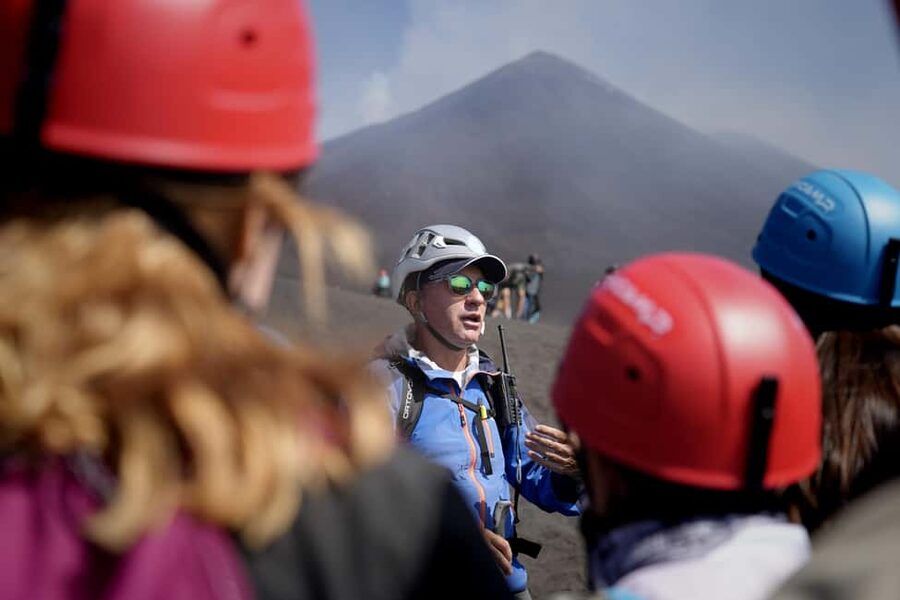
After the central area, you continue toward the southeast crater. This part matters because this sector has been the source of many of the eruptions in recent decades. In other words, you’re not hiking through random volcanic scenery. The trail is aimed at places that show how current activity shapes the mountain.
Once you’ve taken in the views and snapped the kind of pictures you’ll want to show at dinner, you start the descent. The route down includes a sandy slope, and it can feel different than the climb. Going downhill on volcanic sand often means shorter steps and a slower rhythm to avoid sliding.
You’ll quickly reach about 3000 meters, and that’s where the tour builds in time to refuel. You get a lunch break here. Lunch itself isn’t included, so plan ahead and treat this as your meal stop, not just a snack moment. If you’re thinking of skipping food because you’re excited, don’t. Your legs will notice.
After lunch, the day keeps going. Etna doesn’t do one dramatic moment and then politely end. The route continues into more eruption-related terrain.
Barbagallo craters (2002/2003) and the canyon-like lava channel
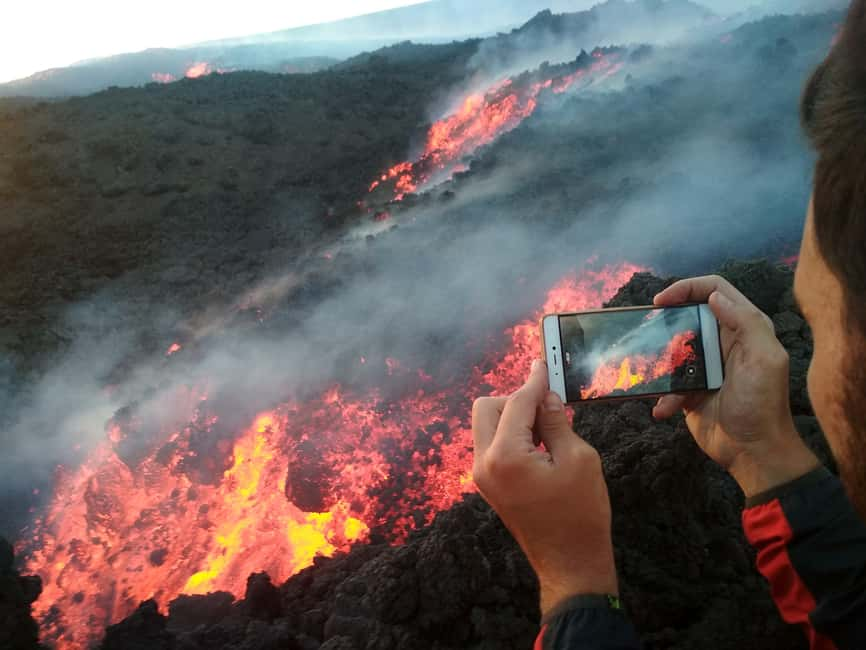
From the 3000-meter area, you descend toward the northern base of the Barbagallo craters, linked to the lateral eruptions of 2002/2003. This is one of those sections where the geology becomes very visible in the ground itself: you walk around the crater perimeter, then move toward the mouth of a lava flow channel.
The description of what you enter matters. You’ll descend to the mouth of a lava flow channel, basically a canyon formed by lava, and you’ll go into it as part of the walk. If you like the idea of a lava tube experience, this is where it shows up. You’re trading open-sky views for a darker, more enclosed feel where the rock and channel shape tells its own story.
Two things to keep in mind here. First, footing can be uneven. Second, temperatures can feel different in the channel than they do outside, even on the same day. The helmet is there for a reason, and it’s smart to keep it on as you move through the channel sections.
This part of the trek is often the most memorable because it shifts you from “viewing Etna” to “moving through Etna.”
Valle del Bove: seeing a caldera you can actually walk around
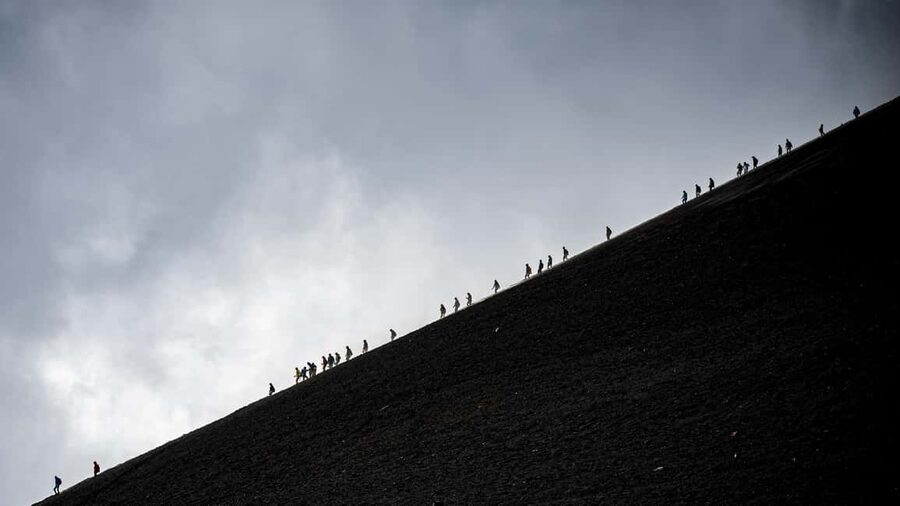
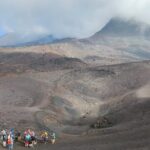
Next comes Valle del Bove, an ancient caldera that formed around 9,000 years ago when older eruptive centers collapsed. Instead of treating it like a distant fact, the route brings you to a viewpoint where the vastness makes sense.
This is a shorter stop area, but it’s intentionally placed before the final descent. You’ll have a brief pause for photos and guided context, then you continue toward a lateral crater created during the 2001 eruption. Even without technical training, you start to feel the pattern: lateral eruptions create their own tracks, their own scars, and their own terrain, separate from the main central activity.
After that, you finish your descent back toward where the transport connects with the cable car. The day ends where it began, at the practical starting point near Rifugio Sapienza.
Price and value: what the €82 cable car and 4×4 really mean
The tour price is listed at $77 per person, but the real cost picture has two layers.
1) What’s included in the $77: your guided hike, a volcanology guide, windbreaker, trekking poles, protective helmet, and insurance. You also skip the ticket line.
2) What’s paid on site: the round-trip cable car and the 4×4 vehicle. The adult price is €82, and for children up to 10 it’s €51.
So your total day cost depends on your age category and how much you expect to spend on lunch. Lunch is not included, and you should budget for it like a normal midday meal.
Is it good value? Yes, if you want the full “active volcano trekking” package without having to assemble logistics on your own. The included gear is not a throwaway detail. Trekking poles matter on uneven volcanic ground, and a helmet is the right kind of safety gear for walking near crater areas and channel passages. Add the guide, and the price starts to look like you’re paying for time, expertise, and equipment, not just walking.
If you’re comfortable arranging everything independently and you don’t want a guide, you could build a cheaper trip. But if you want meaning behind what you’re seeing, the guide-led structure is where the value lands.
What to pack (and what not to bring) for Etna’s summit air
This is a “layers and traction” kind of day. You’ll be at altitudes where weather changes quickly. You should plan for at least a light wind layer and warmer clothing underneath.
Bring:
- Long pants (required)
- Layered clothing
- A good supply of water, at least 1.5 liters per person
The tour provides:
- Windbreaker
- Trekking poles
- Protective helmet
- Insurance
Not allowed:
- Alcohol and drugs
Practical note: this trek is not the place for saving weight by skipping water. Even if you don’t feel thirsty early, the combination of altitude and physical effort can sneak up on you.
Pace, difficulty, and who should feel confident on this trek
This outing is rated for active adults, not for casual strollers. It’s not just the distance. It’s the terrain: steep stretches, volcanic sand, lapilli, and a descent into channel-like areas. If your knees don’t love downhill walking, you’ll want trekking poles and a careful rhythm.
Age and health filters are strict:
- Not suitable for children under 9
- Not suitable for pregnant women
- Not suitable if you have heart problems, altitude sickness concerns, high blood pressure
- Not suitable for people over 95
If you’re in good hiking shape and you can handle a multi-hour outing at altitude, you’ll likely enjoy it more. If you’re unsure, pick a slower option in the Etna region. This one is built to reach high points and keep moving.
Also remember: the day can shift with conditions. One of the strengths of the tour is that the guide can adjust if access changes, so you’re not left stranded. Still, don’t plan this as your only Etna option if the weather is questionable.
Languages, group size, and how the day stays organized
The tour runs with a live guide in English, French, and Italian. Group size can be private or small, which helps with pacing on rough ground and keeps the experience more focused.
Transport is handled in phases: cable car, then 4×4 minibuses, then walking segments. That structure matters because it reduces unnecessary climbs before the summit push. It also means you’re not constantly fighting logistics while your body is working hard.
Since tickets for the cable car and 4×4 are not included, you’ll want to be ready to pay that on site. The tour also notes that you skip the ticket line, which can save time on busy days.
Should you book this Mount Etna summit craters trek?
Book it if you want the classic Etna experience at real altitude, with the science explained while you’re actually standing on volcanic ground. The mix is strong: cable car and 4×4 get you high, then the walking earns you the summit craters at around 3340 meters, plus the crater-edge views of the chasm and new mouth, and the lava channel walk that feels different from normal sightseeing.
Skip it if you’re dealing with health limitations related to altitude, or if you’re expecting a gentle walk with lots of casual stopping. This trek asks for confidence on uneven terrain and the willingness to keep a steady pace.
If weather is iffy, don’t panic. Just be realistic. Etna can be selective, and the tour is designed for a hike that can adapt. And with the gear provided, you’ll arrive with the essentials rather than improvising at the top.
FAQ
FAQ
How long is the Etna trekking tour to the summit craters?
It lasts 6 hours.
Where do I meet for the tour?
Meet at the Rifugio Sapienza area. Park comfortably at the Rifugio Sapienza square and head to the Monte Gebel souvenir shop.
How high do you hike on Mount Etna?
You trek up to about 3340 meters at the summit crater area.
Is lunch included?
No. A lunch break is built in, but lunch isn’t included.
What extra costs do I need to pay on site?
You’ll need to pay for the round-trip cable car and 4×4 on site: €82 for adults and €51 for children up to 10 years old.
What’s included with the tour price?
You get the Etna hike, a volcanology guide, a windbreaker, trekking poles, a protective helmet, and insurance.
What should I bring or wear?
Bring long pants and wear layered clothing. Bring at least 1.5 liters of water per person.
Is this tour suitable for children and people with health issues?
It’s not suitable for children under 9, and it’s also not suitable for pregnant women, people with heart problems, people with altitude sickness, people with high blood pressure, or people over 95.
What’s the cancellation policy?
You can cancel up to 24 hours in advance for a full refund.