REVIEW · CATANIA
Mount Etna: Guided Trek 3,000 Meters to the Summit
Book on GetYourGuide →Operated by Etna Est · Bookable on GetYourGuide
Etna at 3,000 meters is a different kind of day. This guided trek takes you to the summit craters of Europe’s tallest active volcano with a volcanologist guide explaining what you’re seeing, mile by mile (and meter by meter). You also get a cable car ride up the volcano, which makes the hike feel like a focused mission instead of a full-blown slog from sea level.
Two things I especially like. First, you’re not just sightseeing from a distance: you hike among volcanic terrain and reach the high point where the 2001 Crater still fumes. Second, having a volcanologist guide turns the summit into a real lesson on how Etna works, not a slideshow of dramatic photos.
One consideration: conditions on Etna can change fast, and wind can be serious at altitude. The itinerary is flexible at the guide’s discretion due to weather and volcanic safety, so plan to go with the flow.
In This Review
- Key highlights worth caring about
- Etna at 3,000 m: why this summit trek feels different
- Meeting at La Terrazza Dell’Etna and the cable-car lift to altitude
- The summit-crater hike: reaching 3,000 m and walking on Etna’s surfaces
- The 2001 Crater stop: why the fuming detail makes the experience real
- Descent and lunch at 2,500 m: pacing matters on the way down
- What the volcanologist guide adds (and why it helps you remember Etna)
- Gear, fitness, and packing for cold wind and volcanic ash
- Price and value: is $113.29 worth a summit day?
- Who should book this Etna trek, and who should skip it
- Should you book this trek?
- FAQ
- How long is the Mount Etna guided trek?
- Where do I meet the group?
- Is the cable car ticket included in the price?
- Do I need to bring trekking poles?
- Is lunch included?
- What languages are the guides?
- Is the tour suitable for children?
- Can I wear contact lenses?
- What should I pack for the trek?
- What happens if weather or volcanic risk changes?
- What kind of fitness level is needed?
Key highlights worth caring about
- A guided climb to 3,000 meters on Europe’s tallest active volcano, with real summit-crater time
- Cable car up to about 2,500 meters, then hiking the rest of the way
- Stop at the 2001 Crater (around 2,700 m) where gases still rise
- A volcanologist guide who connects the views to volcanic processes and history in clear terms
- Gear included like helmets and trekking poles, plus insurance for peace of mind
- A guide-led pace that works for mixed groups, often with humor and clear safety instructions
Etna at 3,000 m: why this summit trek feels different
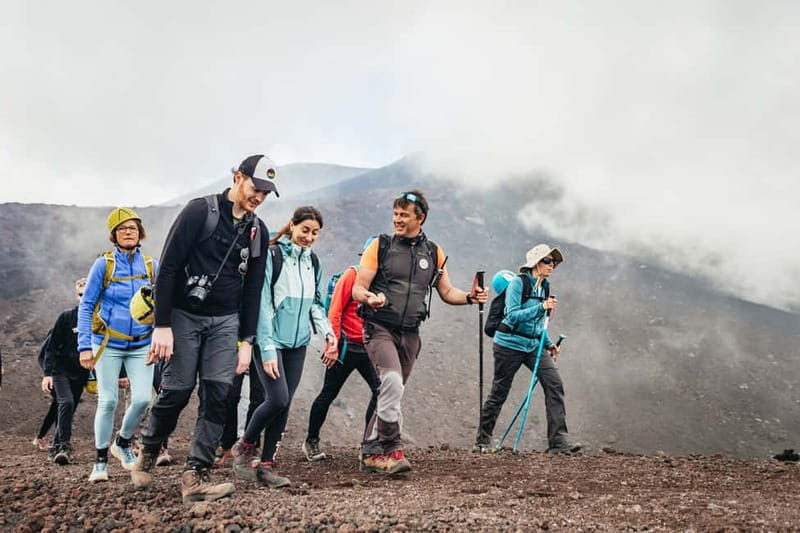
Mount Etna is not a museum volcano. It’s active, changeable, and occasionally a little dramatic. That’s exactly why this trek stands out. You’re reaching the highest zone where you can actually experience the “scale” of the volcano with your own legs and lungs, not just from a viewpoint bench.
The guided part matters too. A good volcanologist guide doesn’t just name craters. They help you read the terrain—where lava has flowed, what you’re walking across (rock, ash, older surfaces), and why gases and fumes aren’t random background noise. If you’ve ever seen a volcano in a documentary and thought, Okay, but how does this all connect?—this is the format that answers that.
At a practical level, it also keeps your day workable. A six-hour window means you can fit a true Etna summit experience into a Sicily trip without turning the day into an all-day endurance contest.
You can also read our reviews of more tours and experiences in Catania.
Meeting at La Terrazza Dell’Etna and the cable-car lift to altitude
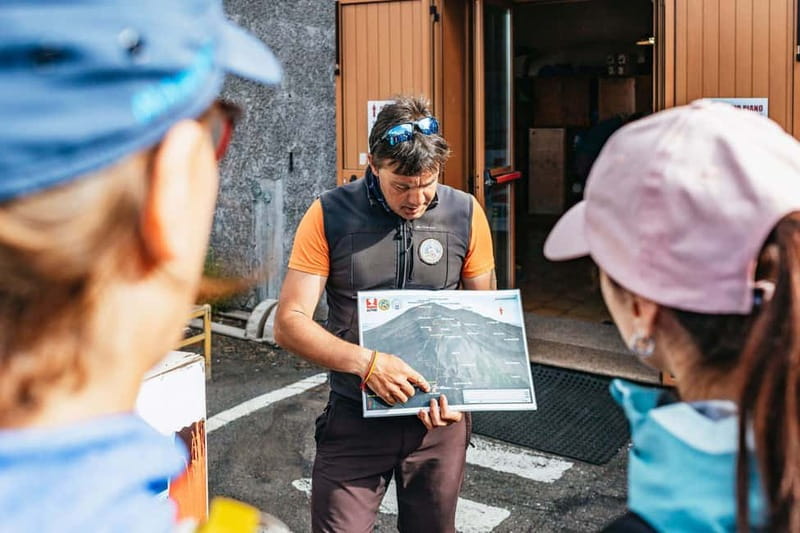
Your day begins at La Terrazza Dell’Etna. There’s usually a quick briefing before you head toward the cable car. This is the moment to listen up. The guide sets expectations for the terrain, how the group will move, and what to watch for as you gain elevation quickly.
Then comes the cable car portion. It’s a key value-add because it shifts the effort from “getting up the mountain” to “walking the interesting parts.” The route described here takes you up to about 2,500 meters, where you disembark and begin the trek toward the summit zone.
One small logistics note: the information provided says the cable car ticket is not included and should be paid on site (50 EUR). But it also lists a cable car ticket under included items. Because of that mismatch, you’ll want to confirm what’s covered in your exact booking confirmation before you go. In the real world, this kind of double-entry happens, and a quick check saves stress at the meeting point.
The summit-crater hike: reaching 3,000 m and walking on Etna’s surfaces
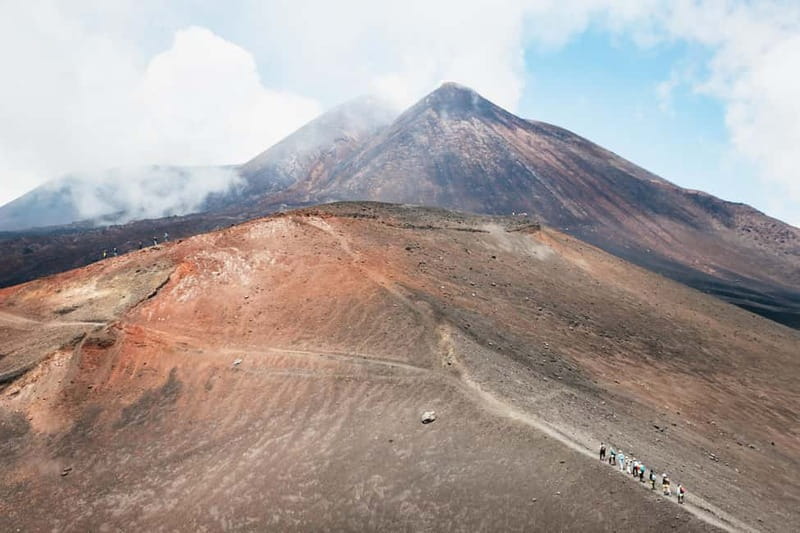
After the cable car, you hike upward toward the 3,000-meter zone. The described trek time is split into two hiking segments (about 2 hours, then 1.5 hours), with the day’s flow organized around getting you to the summit craters and then returning safely.
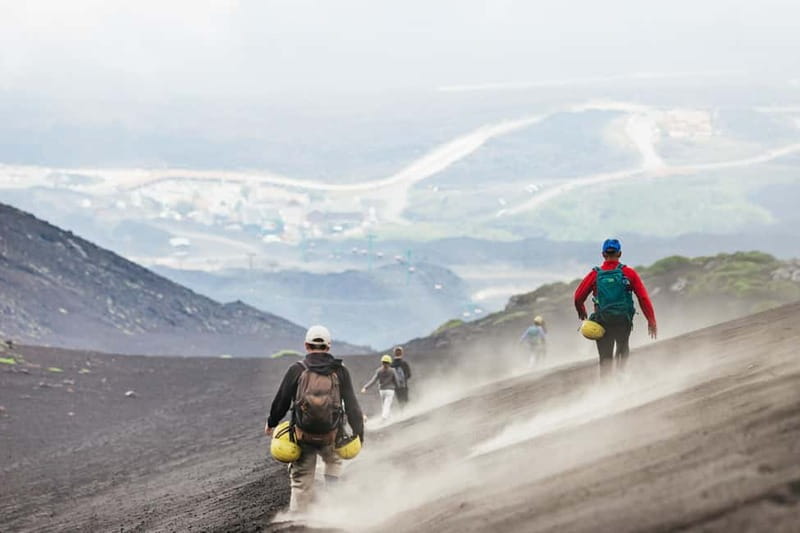
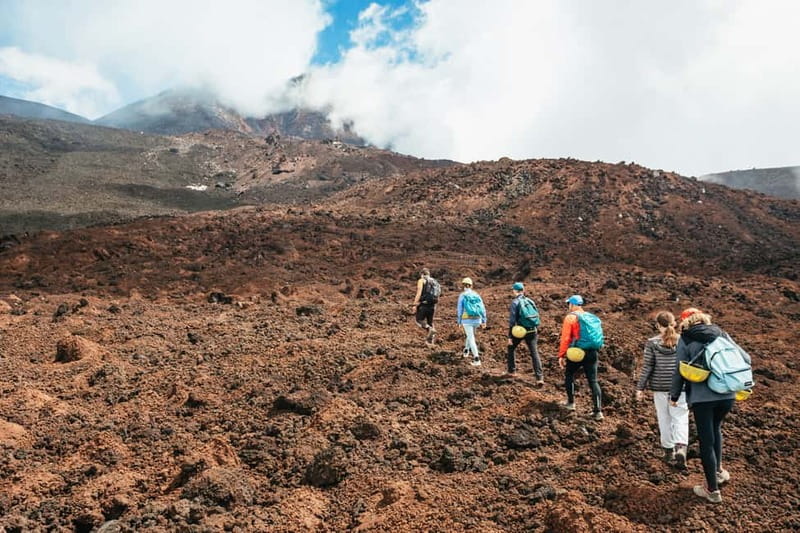
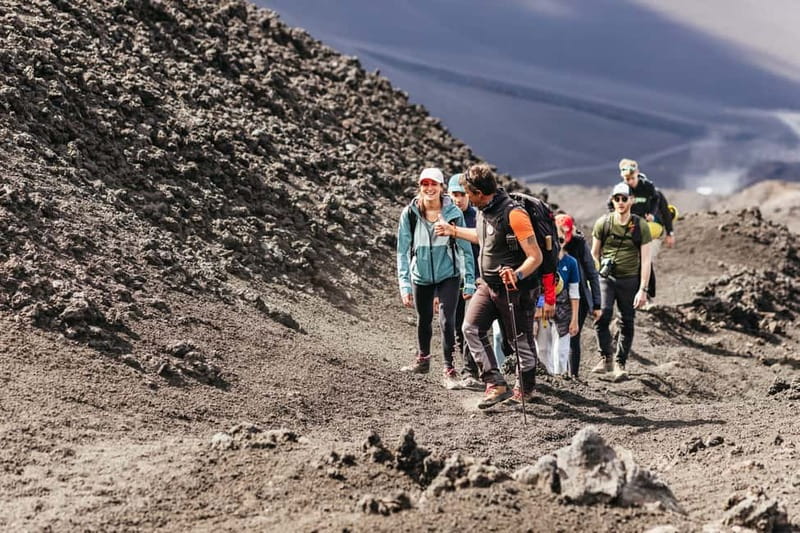
This is not a flat walk. You’re moving across volcanic ground where some paths can be exposed. You should feel comfortable walking on sand-and-rock type footing when there aren’t perfect trails. Trekking poles help a lot here, and you’ll have them provided.
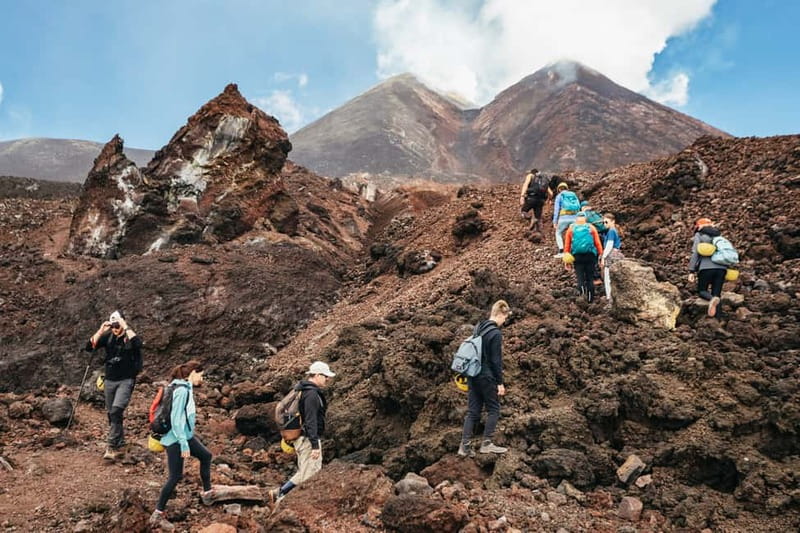
As you climb, the scenery shifts from familiar mountain hiking to something stranger. Volcanic fields can look like they were made by another machine: jagged rock edges, gray dust, and textured surfaces from old and more recent lava flows. The guide’s job is to translate that into something understandable: which surfaces are older, where activity seems to have changed the ground, and how the mountain’s behavior is tied to what’s happening under the surface.
The 2001 Crater stop: why the fuming detail makes the experience real
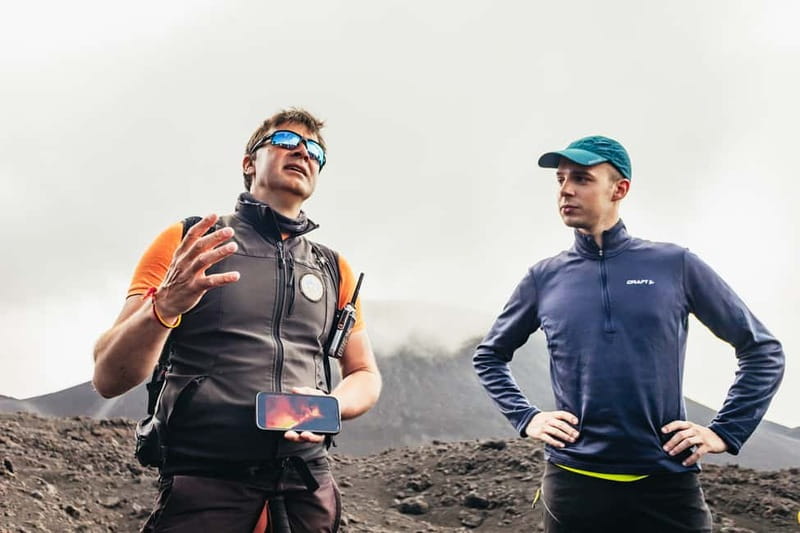
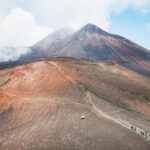
One of Etna’s best “still happening” moments is the 2001 Crater. You’ll stop there at about 2,700 meters, and you can see and smell the ongoing volcanic gases still rising.
This is more than a box-check. Seeing fumes at a crater you can stand near makes the geology feel current and alive. It also changes how you need to think about your body. The air up there can be sharp, and wind direction can affect how strong gases feel. I’d treat this like the moment to be ready, not surprised.
Practical tip: bring some kind of face covering or protective cloth if you’re sensitive to fumes. Sunglasses also help because brightness on volcanic rock at altitude can be intense.
Descent and lunch at 2,500 m: pacing matters on the way down
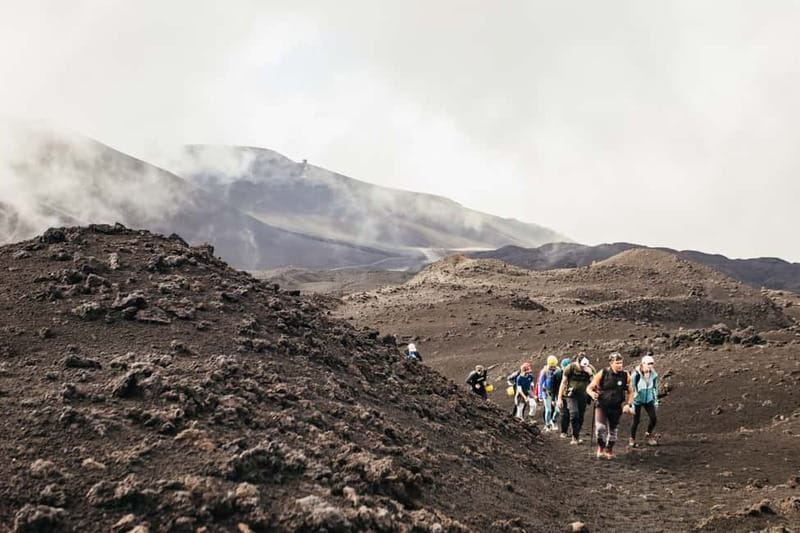
After you reach the summit-crater area, the day turns to the descent. The tour description has you heading back down to about 2,500 meters, with a break for lunch along the way. Lunch is not included, so you’ll want to bring something packed and simple.
The descent is where a lot of people feel the day shift from exciting to focused. Even if you handled the climb well, rocks can feel different underfoot on the way down. That’s where good hiking boots with high socks and trekking poles pay off. The goal isn’t to race. It’s to keep stable footing so you can enjoy the views instead of thinking about your ankle.
Once you’re back at the high-to-mid zone, you’ll finish the planned stops and then return by cable car to the meeting point at La Terrazza Dell’Etna.
What the volcanologist guide adds (and why it helps you remember Etna)
This is where the tour becomes more than scenery.
A volcanologist guide can point out what’s visible and connect it to how Etna evolves. That means you’re more likely to remember details after you leave: why certain areas look the way they do, how volcanic activity changes surfaces, and what crater activity means in plain language.
From what’s consistently praised, guides like Luca, Marco, and Manuel tend to do three things well:
- Set a pace that works for mixed groups
- Explain the terrain in ways you can actually picture later
- Keep the mood upbeat while taking safety seriously
You’re still physically hiking. But the guide turns it into a guided “reading” of the volcano. That’s the difference between Etna as a dramatic backdrop and Etna as a place you understand.
Gear, fitness, and packing for cold wind and volcanic ash
You don’t need mountaineering skills for this trek, but you do need the right basics.
Bring:
- Hiking shoes (trekking boots are the better choice)
- Sunscreen and sunglasses
- Warm clothing (wind at altitude can be chilly even in fair weather)
- A 10 to 20-liter backpack, plus at least 1.5 liters of water
- A snack and packed lunch
- Extra layers like a pullover and an anorak, and hat/gloves if you run cold
And here’s a big one: contact lenses are forbidden due to volcanic ash spread by the wind. If you wear contacts, plan on glasses.
You’ll get helmets and trekking poles. That’s a comfort factor, because gear you don’t have to rent or chase can make the day smoother.
One more thing: dress for wind. Even if the lower slopes feel mild, the summit area can feel like a different season. A windproof outer layer and something to cover your mouth/nose help a lot.
Price and value: is $113.29 worth a summit day?
At a listed price around $113.29 per person for a 6-hour guided summit trek, the value hinges on two things: what you’re getting included and what you’re avoiding.
You get:
- A guide
- Helmets
- Trekking poles
- Cable car ticket (with a note that cable car ticket may require paying on site—confirm your specific booking)
- Insurance
The biggest value isn’t the gear. It’s the access to the summit-crater area with a specialist guide. If you were to do Etna on your own, you’d still have to solve the hardest parts: understanding safety rules around active volcanic terrain, finding the right route, and having someone translate what you’re seeing.
Also, the group format matters. You’re not just hiking; you’re hiking with support and guidance, including adjustments when weather changes or volcanic risk requires it. That’s worth real money on a volcano.
If you’re budget-conscious: plan for the 50 EUR cable car payment if your confirmation says it’s on site. If your confirmation shows it’s already covered, great—then you’re paying only for what you expected.
Who should book this Etna trek, and who should skip it
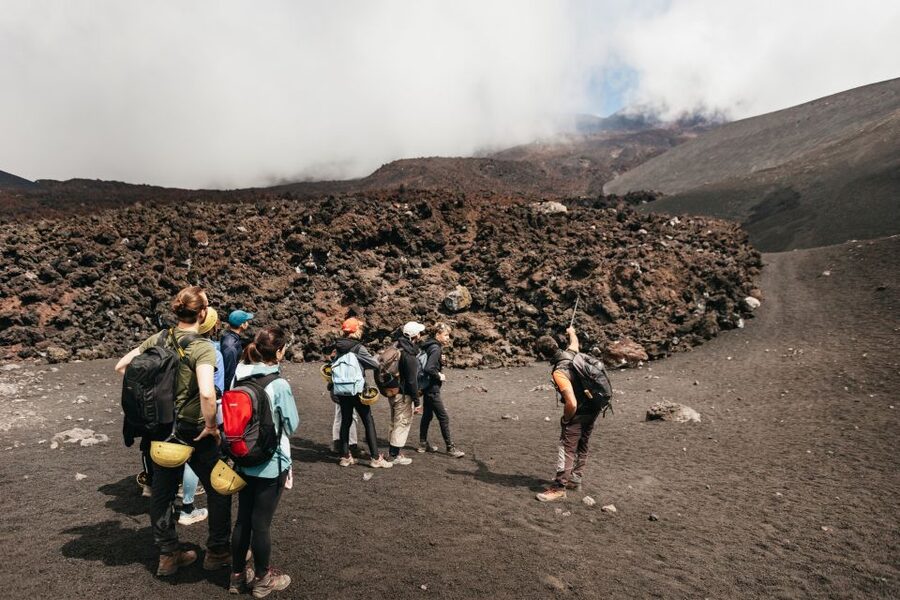
This tour is described as suitable for people with medium physical training who are used to walking on sand and rock when paths aren’t perfect. That means it’s best for travelers who enjoy walking and don’t mind uneven footing.
It’s not suitable for:
- Children under 10
- Pregnant women
- People with mobility impairments
- People with heart problems
- People with vertigo
- People with respiratory issues
If you have vertigo, altitude exposure and crater viewpoints can be a tough combo. If you have respiratory issues, the gas and ash environment is exactly the wrong setting.
For the right person, though? This is a top-tier Sicily experience because you get something many Etna trips only approximate: real summit-crater proximity and a guide who can explain what you’re standing on.
Should you book this trek?
I’d book it if you want Etna as a living, understandable place—not a quick photo stop. The combination of summit access, a volcanologist guide, and the included climbing support (helmets, poles, cable car) makes this one of the more efficient ways to experience Etna’s high-altitude craters in a half-day.
I’d think twice if:
- Wind and fumes bother you easily
- You wear contact lenses (you’ll need to switch to glasses)
- You’re managing vertigo, heart, or respiratory conditions
If you can handle a steady hike on uneven volcanic ground and you’re okay with an altitude-heavy day that might adapt to conditions, this trek is one of those trips that sticks with you long after Sicily’s coast fades from memory.
FAQ
How long is the Mount Etna guided trek?
The tour lasts about 6 hours.
Where do I meet the group?
Meet at La Terrazza Dell’Etna. The tour ends back at the same meeting point.
Is the cable car ticket included in the price?
The information provided is inconsistent: it lists a cable car ticket as not included (50 EUR paid on site) while also listing a cable car ticket under included items. Check your booking confirmation to confirm what you’ll pay.
Do I need to bring trekking poles?
Trekking poles are included, so you’ll have them for the trek. You may still find it comfortable to bring your own if you use them.
Is lunch included?
Lunch is not included. The schedule includes a break around the 2,500-meter descent section.
What languages are the guides?
The live guide is available in English and Italian.
Is the tour suitable for children?
No. It’s not suitable for children under 10.
Can I wear contact lenses?
No. Contact lenses are forbidden due to volcanic ash spread by wind.
What should I pack for the trek?
Bring sunglasses, sunscreen, hiking shoes, warm clothing, at least 1.5 liters of water, a snack, and a packed lunch. It’s also recommended to pack layers like a pullover and anorak, plus a hat and gloves.
What happens if weather or volcanic risk changes?
Schedules can change or be interrupted at the guide’s discretion if weather conditions, environmental causes, or volcanic risks present any danger.
What kind of fitness level is needed?
It’s suitable for people with medium physical training who are accustomed to walking on sand and rock when there are no trails, with some exposed path sections.