REVIEW · MOUNT ETNA
Mount Etna: Summit Guided Hiking Tour up to 3,400 m
Book on GetYourGuide →Operated by Sicilying S.R.L. · Bookable on GetYourGuide
Etna feels like another planet. This guided summit hike turns Mount Etna into a science lesson you can walk through, with standout cable-car views and guides like Eduardo and Giuseppe bringing the volcano down to earth. You’ll hike among lava flows and volcanic sand toward summit craters that feel close enough to touch—Europe’s highest active volcano, at real altitude.
Two things I really like: first, the moment the cable car rises and you start seeing the volcanic terrain spread out below; second, how the trained volcanology guides make the hike make sense, not just look cool. One thing to consider: this is physically serious terrain. Steep sections, loose gravel, and low-oxygen altitude mean you’ll want solid shoes and a steady pace—especially if you choose the 3,400 m route.
Here’s the good part: you can match the effort to your fitness. Go for a more moderate day up to 3,000 m with a trekking plan built around safety and steady steps, or push to around 3,400 m for the full rim experience. Either way, you’ll come away with that one-of-a-kind “how is this real?” Etna feeling.
In This Review
- Key points before you go
- Starting at Rifugio Sapienza: where Etna stops being a photo
- Getting up fast: cable car first, then the terrain turns raw
- Guided walking: why the guides make the difference
- Option 1: trekking up to 3,000 m and the Barbagallo Craters day
- Option 2: the 3,400 m summit rim hike to La Voragine and Bocca Nuova
- Valle del Bove stops: the viewpoint that makes the whole day click
- Price and value: what $65 really buys, plus the tickets you should budget
- What to bring (and what to avoid) for a real Etna summit day
- Strenuous terrain reality check: pace, feet, and oxygen
- Weather, safety changes, and how to plan your expectations
- My verdict: should you book the Mount Etna summit guided hike?
- FAQ
- How high do the hikes go?
- How long is the Mount Etna summit tour?
- What’s included, and what do I pay for on site?
- Where do I meet the guide?
- Is hotel pickup available?
- What should I bring, and can the tour be canceled?
- Quick answer: who wins on this tour?
Key points before you go
- Two summit options (3,000 m vs 3,400 m) let you choose your challenge level.
- Trained volcanic guides help you understand lava flows and crater areas as you walk.
- Cable car views give you a front-row start, even before the hiking really begins.
- Mandatory helmet and volcanic-safety rules keep the day focused on safe exploration.
- Valle del Bove viewpoints bookend the hike with dramatic perspectives.
- On-site tickets for lift/4×4 are a real add-on cost to plan for.
Starting at Rifugio Sapienza: where Etna stops being a photo
Your day begins around Rifugio Sapienza on Etna’s south side, at roughly 1,900 m. This matters because you’re already high before you start walking. The air feels different fast, and that sets the tone: this is a summit hike, not a stroll.
You’ll meet your guide at Bar Monte Gebel, on the right side of Rifugio Sapienza. If you booked pickup, you’ll also have a driver coming from your accommodation in Catania (optional, depending on your selection). It’s a nice convenience if you don’t want to wrestle with timing on your own.
One more practical note: the experience can be adjusted day-of. Weather, volcanic activity, and even seismic-related safety decisions can shift transport or plans. That’s not a dealbreaker—it’s just how Etna works.
You can also read our reviews of more tours and experiences in Mount Etna.
Getting up fast: cable car first, then the terrain turns raw
The first lift is by cable car, taking you up to about 2,500 m. Even if you’re not a “views person,” don’t underestimate how helpful this is. You’re not burning your whole energy battery before you even start hiking, and you get a sweep of the volcanic country as you rise.
On the day, you might also have a short bus/coach segment after the lift (quick transfer time), then a photo stop with guided talk before the hike really takes hold. That pattern is smart. It helps the group get organized, and it helps you understand where you’re headed and why.
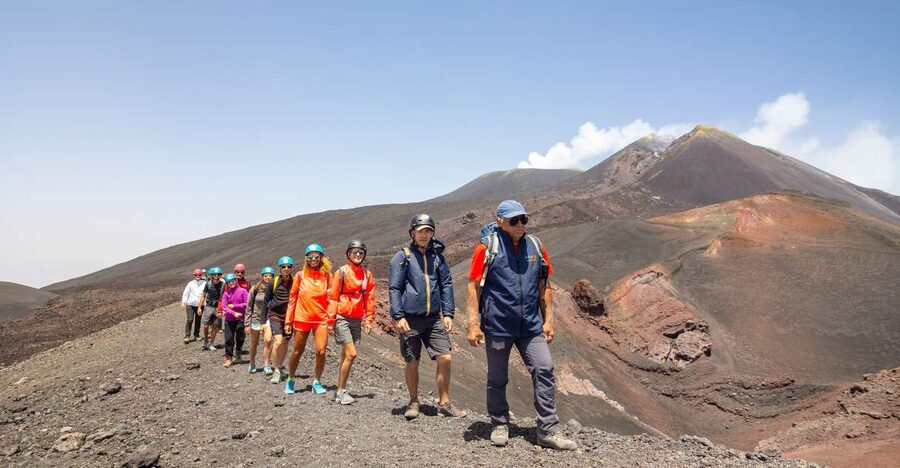
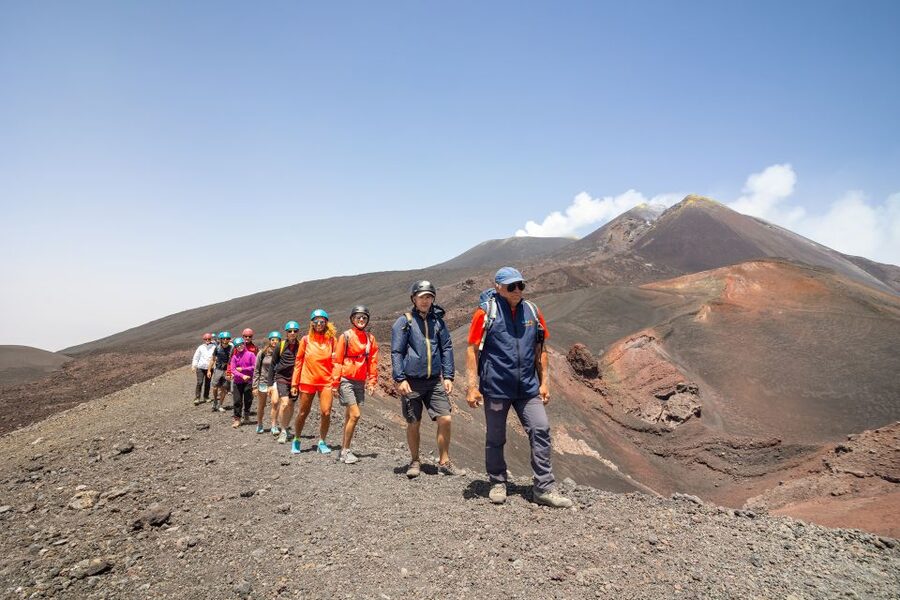
Then you hit the walking part: lava flows, ash, and volcanic sand. It can look surreal—like you wandered into a different planet’s parking lot—but it’s also why a guide is worth it. You’re moving through active-process terrain, and the guide helps you read it.
Guided walking: why the guides make the difference
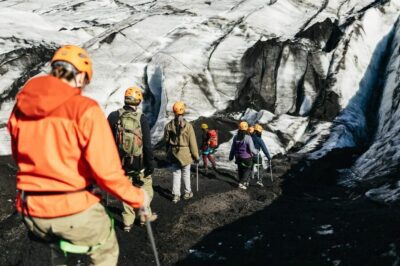
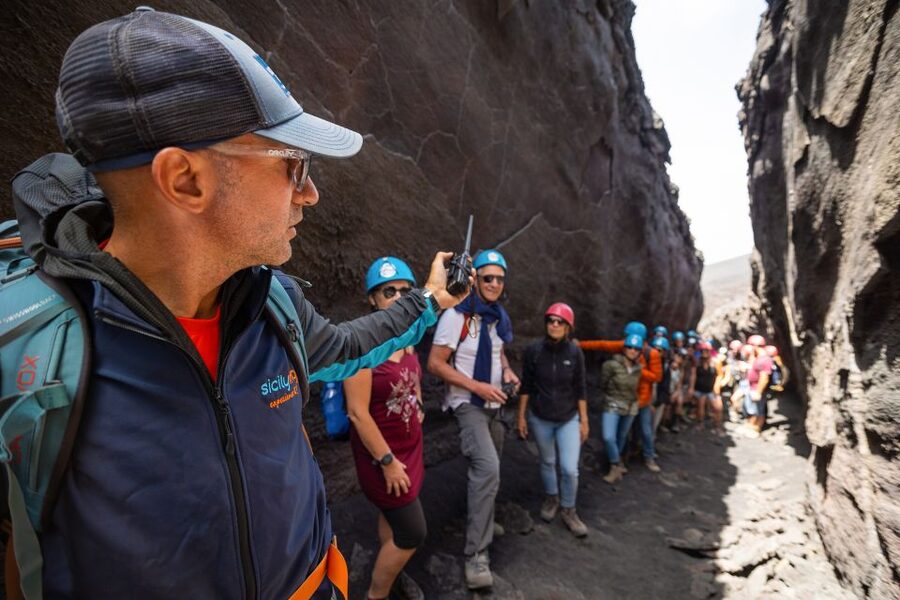
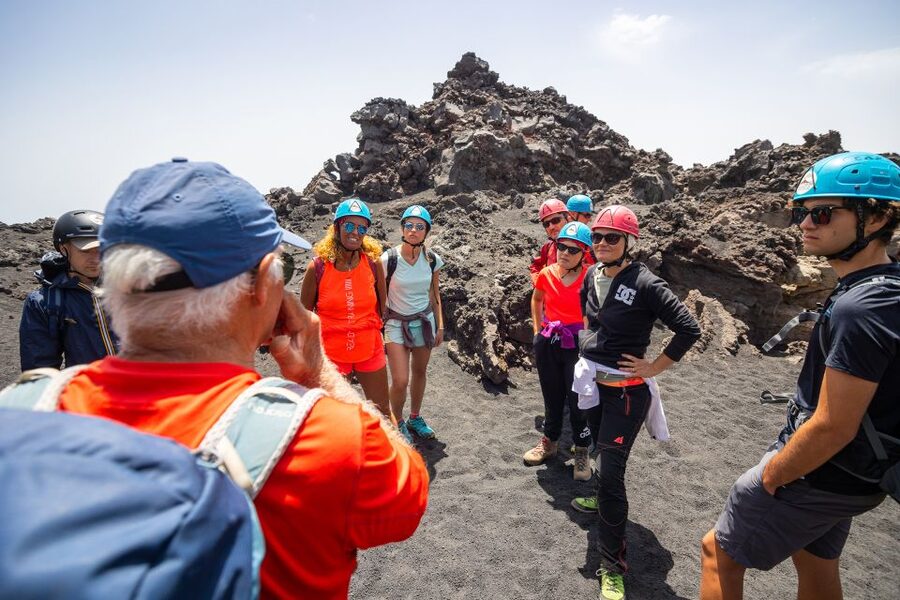
Etna summit hikes can turn into a “follow the leader” line. This one is built to be more than that. The guides are trained, and in real-world terms that means you’ll get explanations that connect what you’re seeing to what the volcano has done.
I also like that guides keep the group focused on pacing and safety. In the experience, I’ve seen guides like Eduardo and Giuseppe make a point of helping people stick to the plan, not just getting to the top. If you’re going solo or just want confidence in your steps, this kind of guidance makes the day feel calmer.
Gear support is part of the package too. Helmets are mandatory. Hiking equipment is provided based on availability, and you might find extras like walking sticks, plus hiking shoes/socks depending on what’s on hand that day. You still need to bring the basics—comfortable, grippy footwear and weather-ready clothing.
Option 1: trekking up to 3,000 m and the Barbagallo Craters day
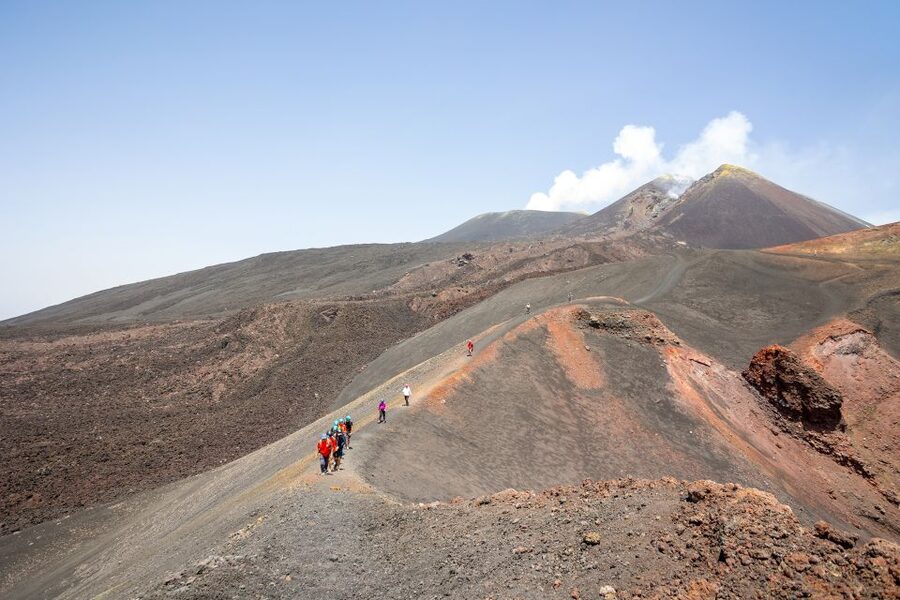
If you want a meaningful summit hike without going fully hardcore, the 3,000 m option is the best fit. The route still starts from Rifugio Sapienza around 1,900 m, then you take the cable car to about 2,500 m.
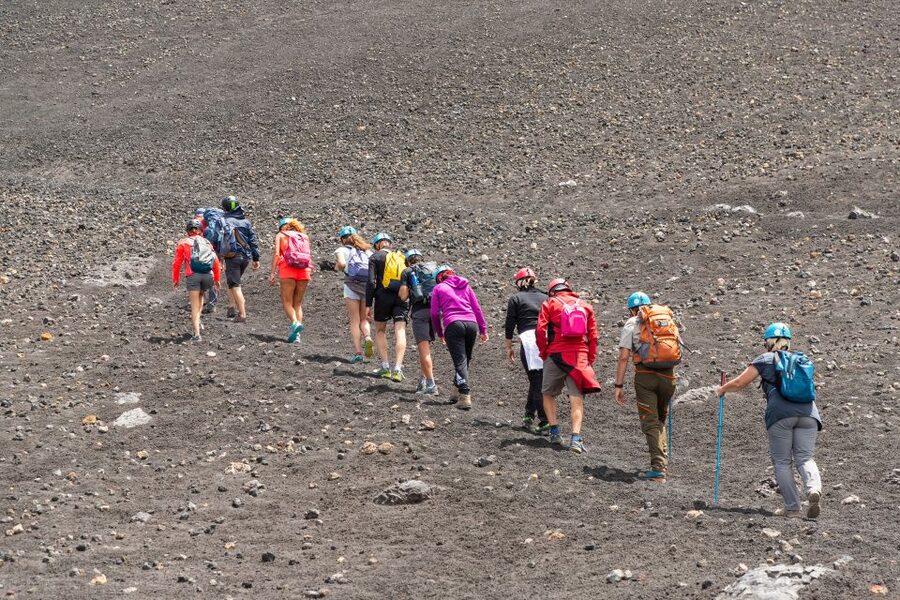
After that, it’s trekking on foot across lava flows from significant eruptions in recent decades. This is where the day starts to feel “real” in a good way. The ground underfoot isn’t uniform. You’ll step over mixed volcanic surfaces—some firmer sections, some looser sand—so you’ll naturally slow down and pay attention.
You’ll aim for the Barbagallo Craters at around 3,000 m. This is a great “summit feeling” point: close to the craters, high enough for big views, and still structured enough that the day stays manageable for most people who hike regularly.
The descent follows volcanic ash slopes to a viewpoint over Valle del Bove. That viewpoint stop is not just for photos—it’s your brain’s reward after the effort. Valle del Bove is one of those places where scale hits you all at once.
Who this fits best: hikers who want a serious day on Etna, but don’t want the extra altitude and physical demand of the full 3,400 m rim route.
Option 2: the 3,400 m summit rim hike to La Voragine and Bocca Nuova
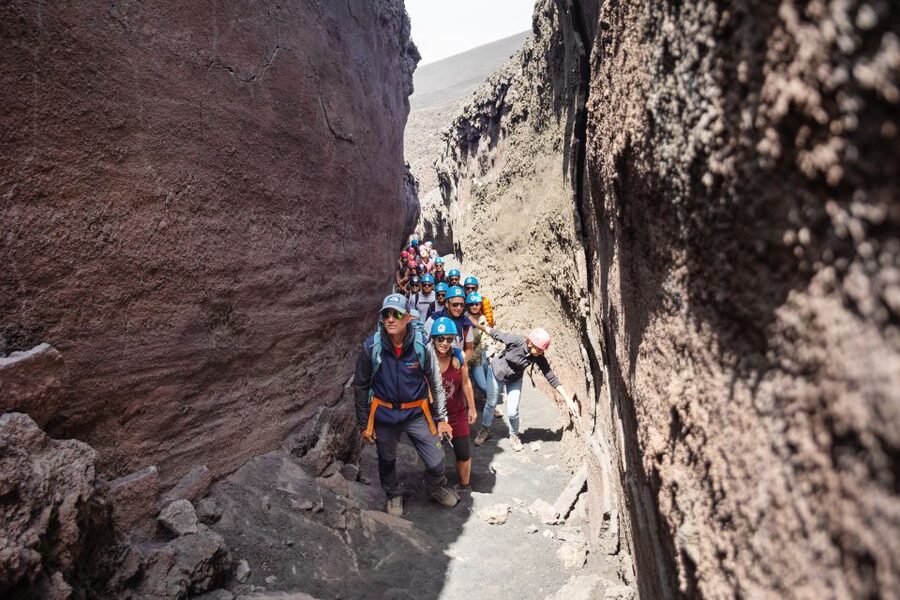
Want the full Etna experience? The 3,400 m option is more physically demanding, and the route reflects that.
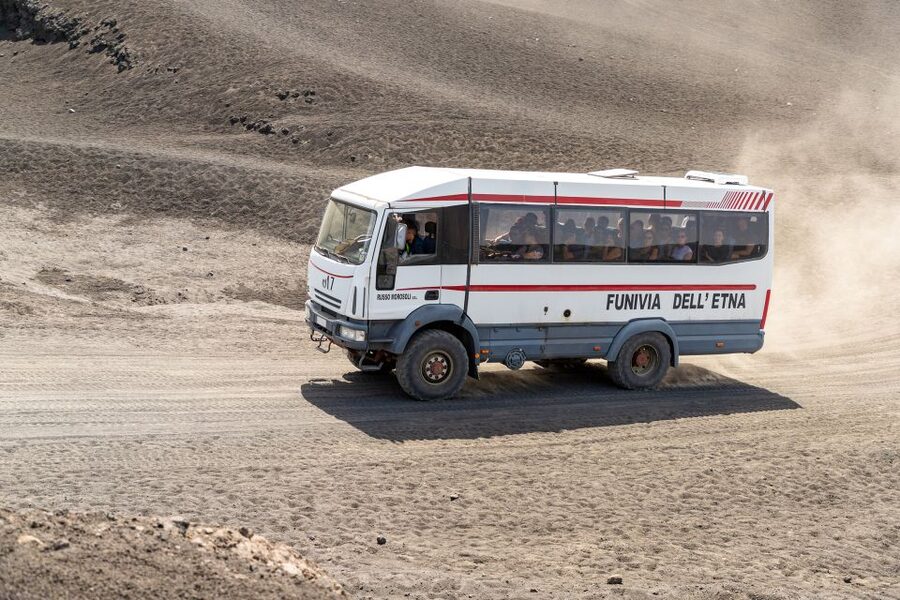
After the cable car to about 2,500 m, you’ll transfer higher using off-road 4×4 vehicles to about 2,850 m. That doesn’t remove the work—it just means you’re starting the final push at a higher altitude, with less time lost to ascent.
From there, the hike toward the central craters begins. After about two hours of walking across recent lava flows and volcanic sand, you reach the maximum altitude around 3,400 m, depending on weather and volcanic activity. This is the part where you feel the elevation. If you’re coming from sea level, plan for slower breathing and a steady pace.
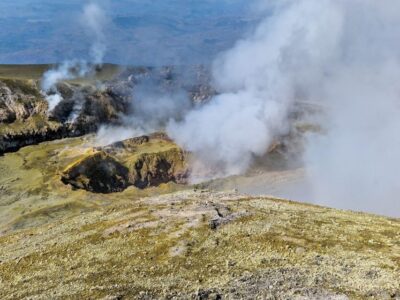
Then you continue along the rim between La Voragine and Bocca Nuova. These names matter because they’re tied to the crater system you’re viewing. It’s not just “top of the mountain”—it’s a guided walk along volcanic edges with direct sightlines.
The route also heads toward the Southeast Crater, with views over Sicily’s Ionian coast. That’s one of the big reasons to do the 3,400 m option: you get both crater proximity and a broader view of the island beyond.
The descent follows sandy slopes down to about 2,900 m before returning by cable car. Expect the downhill surfaces to be loose in spots. Your ankles will notice.
Who this fits best: people with solid hiking fitness who want altitude, crater-rim walking, and a longer stretch of more demanding ground.
Valle del Bove stops: the viewpoint that makes the whole day click
Whether you choose 3,000 m or 3,400 m, you get time built into the plan for Valle del Bove viewpoints. This area helps you understand what you’ve been walking through all day.
When you look over Valle del Bove from the viewpoints, the earlier volcanic surfaces stop being random. You see the crater-related terrain as part of a bigger system. It’s also a breathing moment—literally and mentally—after you’ve been stepping over volcanic grit.
In winter conditions, this part can feel extra stark. One of the real perks of a guided day is that the guide keeps the group moving safely through changing conditions. You’re not stuck guessing how to handle ash slopes or wind at altitude.
Price and value: what $65 really buys, plus the tickets you should budget
The listed price is $65 per person for a guided summit hike lasting about 5–6 hours. That’s not just “someone walks with you.” In the included list, you get a volcanology guide, hike support, helmet (mandatory), insurance, and optional hotel pickup if you choose it.
Here’s the honest part: the cable car (and sometimes the 4×4) tickets are extra and paid on site. The cost depends on your chosen route:
- For the 3,000 m trek: round-trip cable car ticket is paid on site.
- For the 3,400 m summit trek: round-trip cable car plus 4×4 ticket is paid on site.
Food and drinks are also not included, so plan a snack or bring lunch if that fits your style. In practice, a calm approach wins here. Eat early, drink water, and don’t wait until you’re too tired to think.
So is it good value? Yes—if you want a certified guide, crater access, and a day built for safety in a volcanic zone. If you’re comfortable navigating on your own and you hate the idea of on-site ticket add-ons, then it might feel expensive. But for most people coming to Sicily for a once-in-a-lifetime Etna moment, the structure is worth it.
What to bring (and what to avoid) for a real Etna summit day
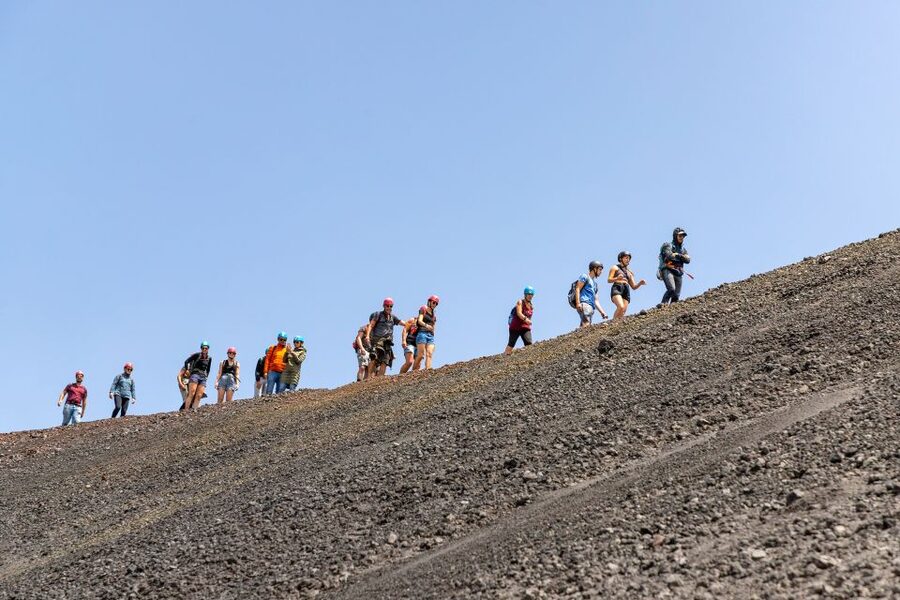
Bring the basics, then bring them like you mean it.
What you should bring:
- Comfortable shoes with grip (sports shoes can work; stability matters)
- Weather-appropriate clothing (altitude weather can change fast)
- Anything you need for staying warm or dry at higher elevations
What you should avoid:
- Assuming this is an easy hike. Even the moderate route includes steep and narrow terrain in places, with gravel that can shift underfoot.
- Underestimating oxygen changes. At altitude, even fit hikers often slow down. That’s normal.
Also, the tour is prohibited for people with asthma and for those with heart problems. It’s not suitable for people with respiratory issues and it’s not recommended for pregnant women. Children under 6 can’t join.
Strenuous terrain reality check: pace, feet, and oxygen
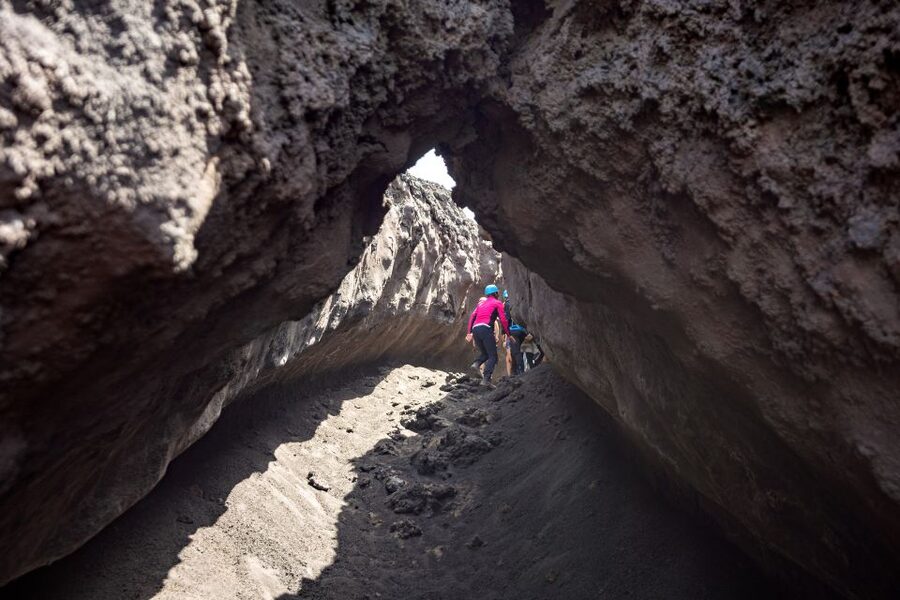
One of the clearest pieces of feedback is that the hike can be harder than the description makes it sound. The trails can be narrow, steep, and covered with loose volcanic gravel that gives way. In other words, good hiking shoes are not a suggestion.
Altitude also adds friction. If you’re traveling from sea level, plan to go slower than you normally would. Your legs can handle it, but your breathing may need adjustment.
Group size can vary by day. You might see groups around the 20-person range, and sometimes smaller groups too. Either way, the guided structure helps, especially if you’re not used to hiking on uneven volcanic ground.
Weather, safety changes, and how to plan your expectations
Etna is active, and that means safety decisions can change the day. This experience can be canceled in case of adverse weather. And for safety reasons, the itinerary may change depending on volcanic activity and weather.
The organizer also reserves the right to change transportation used to reach certain altitudes based on conditions on the day. That flexibility is part of how the tour stays safe. It also means you should keep your schedule flexible if possible.
Free cancellation up to 24 hours in advance is offered, and there’s a reserve-now option with pay-later flexibility. If your Sicily trip is tight, that flexibility helps you adjust if Etna weather decides to be moody.
My verdict: should you book the Mount Etna summit guided hike?
Book it if you want the real Mount Etna experience: crater proximity, trained volcanology guidance, mandatory safety gear, and a day timed so you can actually enjoy the views from Valle del Bove and the rim areas. Choose the 3,000 m route if you’re a confident hiker but don’t want the maximum altitude push. Choose the 3,400 m route if you’re fit, comfortable with steep/loose terrain, and you want the full rim walk.
Skip or rethink it if you have asthma, heart problems, respiratory issues, or if pregnant. And don’t book it expecting a gentle walk—this is a summit hike with volcanic grit and real altitude.
FAQ
How high do the hikes go?
You can choose a trekking option up to about 3,000 m (Barbagallo Craters) for a shorter day, or a summit trek up to around 3,400 m for the full crater-rim experience.
How long is the Mount Etna summit tour?
The tour runs about 5–6 hours, depending on the route and conditions.
What’s included, and what do I pay for on site?
Included: a volcanic guide, hike on Mount Etna, helmet (mandatory), hiking equipment based on availability, and insurance. Not included: the on-site round-trip cable car ticket (and 4×4 ticket for the 3,400 m option), plus food and drinks.
Where do I meet the guide?
Meet your guide at Bar Monte Gebel, on the right side of Rifugio Sapienza.
Is hotel pickup available?
Yes, pickup from your accommodation in Catania is available if you select that option. Otherwise, you meet at the meeting point.
What should I bring, and can the tour be canceled?
Bring comfortable shoes and weather-appropriate clothing. The tour can be canceled due to adverse weather, and plans can also change for safety reasons related to volcanic activity and conditions.
Quick answer: who wins on this tour?
If you’re here to hike Etna with confidence—crater views, a trained guide, and the kind of terrain that makes Sicily feel extra real—this is a strong pick. Choose your altitude based on your fitness, and treat loose volcanic gravel and low oxygen as part of the deal.