REVIEW · MOUNT ETNA
Mount Etna: Volcano Craters Hiking Tour
Book on GetYourGuide →Operated by Guide Vulcanologiche Etna Nord · Bookable on GetYourGuide
Etna feels alive at arm’s length. This 5-hour Mount Etna volcano craters hike gets you close to fumaroles and recent lava flows, with a licensed guide keeping you in the safe zone.
I love the hands-on intensity of volcanic heat underfoot as you walk past steaming lava and black rock. I also love the way guides like Andrea Montemagno, Vincenzo, Fabio, and Nikkos explain what you’re seeing in plain language, with frequent stops to catch your breath and get the geology right.
One drawback: conditions at the top can be harsh. Wind, cold, and sometimes snow make the crater-edge walking feel more serious, and if you get dizzy easily, you’ll want to think twice about this one.
In This Review
- Key things that make this Etna tour worth your time
- Volcano-crater hiking on Etna: why it feels different from a standard day tour
- Getting up there: cable car, then walking into crater country
- Barbagallo Crater stop: the guided warm-up before the real crater edges
- Fumaroles and steaming lava: where the volcano gets personal
- Southeast Crater base and the 2002 craters: the views come with altitude reality
- Valle del Bove return and the descent: knees, snow, and a calmer finish
- Price and value: what $28 gets you, and what your day actually costs
- What to bring (and what to skip) for 3,000 meters on active terrain
- Who should book this Mount Etna craters hike—and who should not
- Should you book Mount Etna’s volcano craters hike?
- FAQ
- How long is the Mount Etna volcano craters hiking tour?
- What altitude do you reach on this tour?
- Is the cable car ticket included?
- Do I need to pay an extra fee for the scientific part?
- What’s included in the tour price?
- What languages do the guides speak?
- Where do I meet the group?
- What should I bring with me?
- Who is this tour not suitable for?
Key things that make this Etna tour worth your time
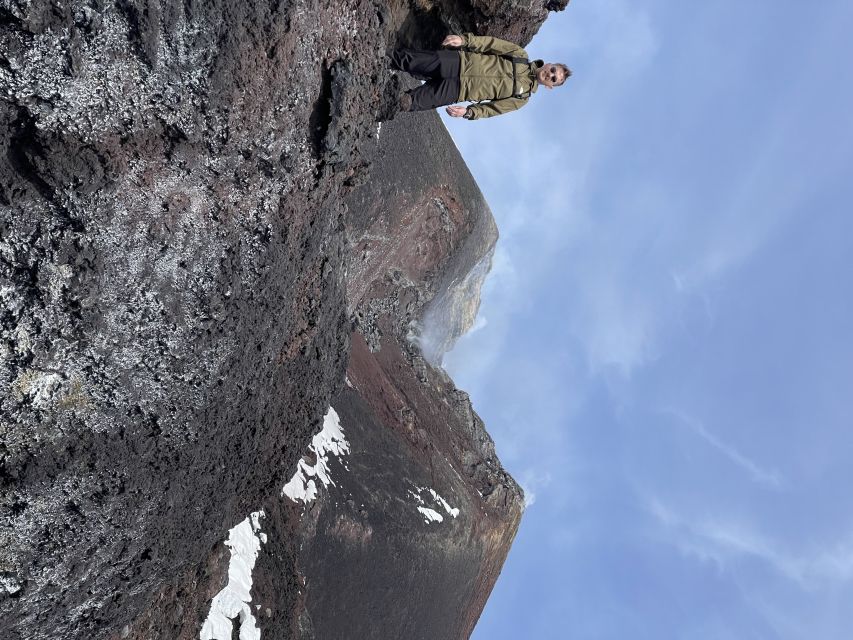
- Crater-edge views with real safety rules: You stay away from the danger zone, guided at high altitude up to 3,000 meters.
- Fumaroles up close: You even touch hot gas emissions while your guide explains what’s happening belowground.
- Recent eruptions, not just souvenirs: You pass still-steaming lava banks from the most recent activity.
- A small-group feel: Many days run small (around 10 people), though group size can vary (sometimes closer to 20).
- Guides who manage wind and terrain: On icy or snowy days, they steer you over the safer lava sections and keep the pace.
- Budget for the add-ons: The headline price is only part of the total; cable car tickets and the scientific fee are paid on-site.
Volcano-crater hiking on Etna: why it feels different from a standard day tour
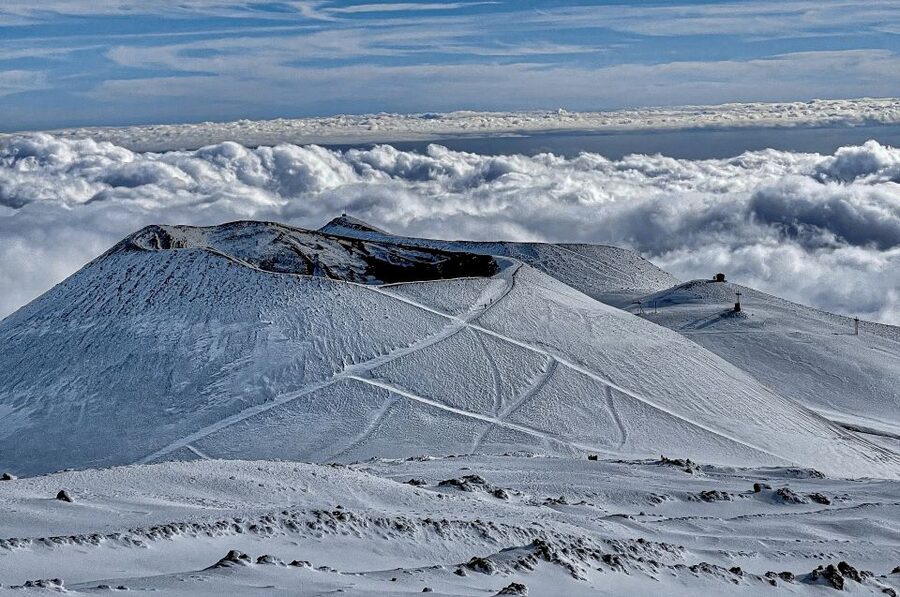
This isn’t a bus-and-picture kind of Etna trip. You climb from the Etna base area by cable car, then your day turns into a real walk across lunar-feeling volcanic ground. You’re not just looking at the volcano. You’re moving through it, at altitude, with your senses turned on.
The big win is how the experience mixes awe with explanation. You’ll get geology and volcanology context while you’re standing near fumaroles, steaming rock, and crater areas like the Southeast Crater and the 2002 craters. That’s the difference between a cool view and an Etna you actually understand.
And yes, it’s dramatic up there. You might get a few minutes of wide-open sky and crater views, then you’ll move on because wind can be intense at the ridges.
You can also read our reviews of more tours and experiences in Mount Etna.
Getting up there: cable car, then walking into crater country
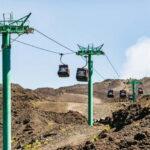
Your day starts at Etna Guides Official in the parking lot in front of the Esagonal Bar (about 1,900 meters). You’ll transfer for roughly 20 minutes, then get into the higher start zone. The cable car ride takes you up to about 2,500 meters.
After that, you begin the hike. The route is designed for people who can handle altitude and uneven ground. The tour also notes a special authorization for scientific purposes, which allows the group to pass the usual altitude limit (2750 meters) and push to around 3,000 meters with the guide—only if the group isn’t dealing with major altitude sickness.
Practical takeaway: you’re going higher than you might expect from a 5-hour tour. Plan for cold fingers, windburn, and a slower pace than on normal hikes.
Barbagallo Crater stop: the guided warm-up before the real crater edges
Early on, you move through the Barbagallo Crater area with a guided tour lasting about 2.33 hours. This section is where your guide sets the tone: how to walk safely on volcanic surfaces, what to watch for in the rock, and how to spot features like fumarole zones and lava flow patterns.
Even if you’re fit, don’t treat this like a cardio session only. The guides build in stops and explanations, and that helps you keep your footing and your head clear. One thing I really like about this type of guided Etna hike is the rhythm: hike, learn, hike again—rather than a nonstop grind to the summit.
If weather is wintery, expect snow to affect sections of the route. The tour notes that you may not be able to see every feature (like certain canyon areas) if buried.
Fumaroles and steaming lava: where the volcano gets personal
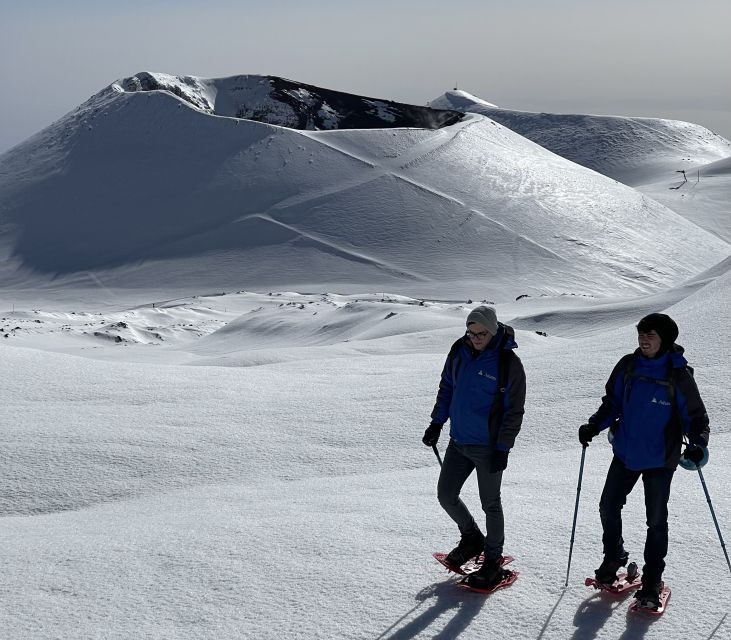
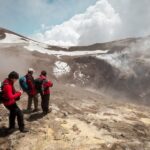
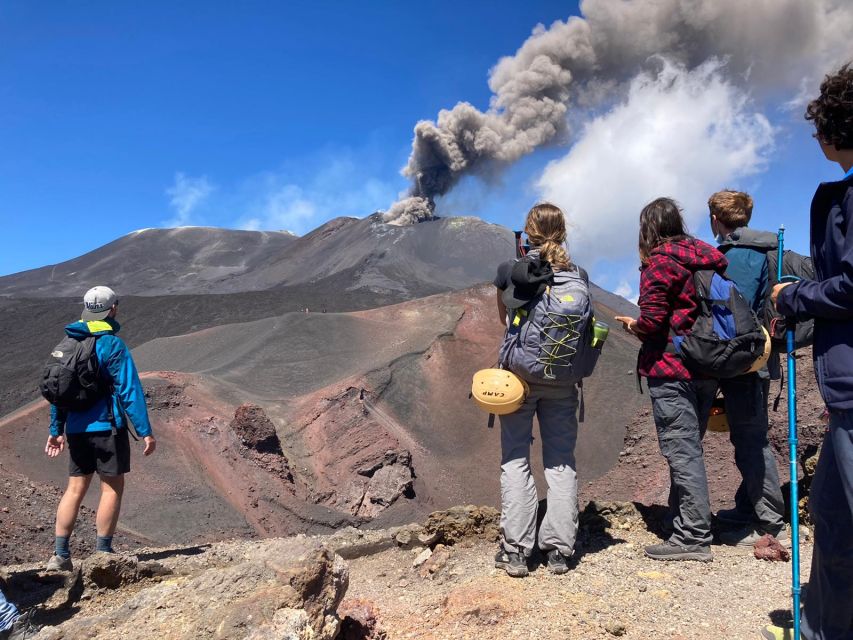
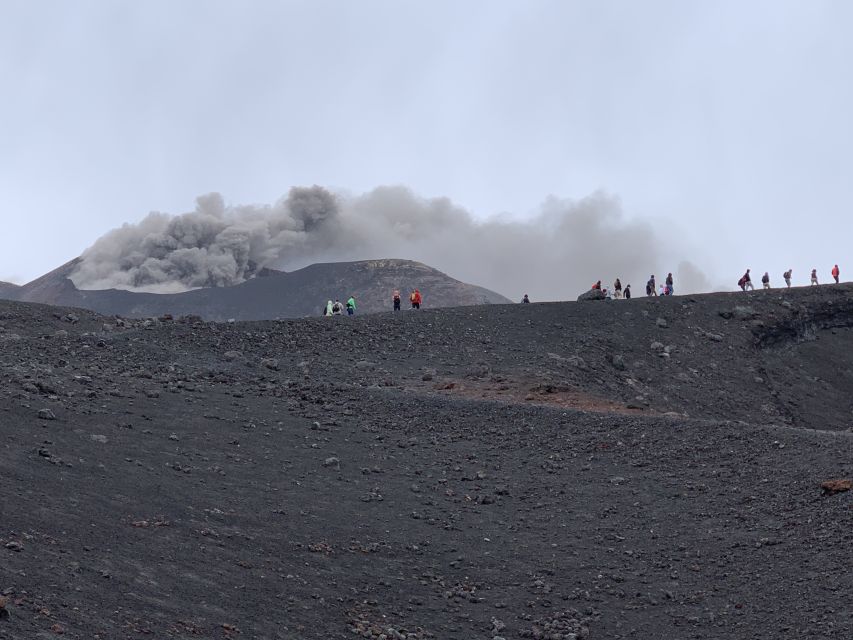
As you go higher, you’ll hit the core wow moments: fumaroles spewing hot gases and banks of still-steaming lava from the most recent eruptions. This is the part that makes the tour feel hands-on.
You’ll walk across volcanic rock that can be hot enough to feel underfoot. Your guide will also take you close to hot gas emissions and show you what you’re looking at. That’s why the safety emphasis matters. You’re staying away from the danger zone while still getting that close look that most Etna tours skip.
I also like that you’re not just chasing a single peak. You’re moving through a sequence of volcanic features—canyons, craters, and lava flows—so the story of the day builds as you walk. It’s easier to remember Etna when it’s mapped onto what your boots are doing.
Southeast Crater base and the 2002 craters: the views come with altitude reality
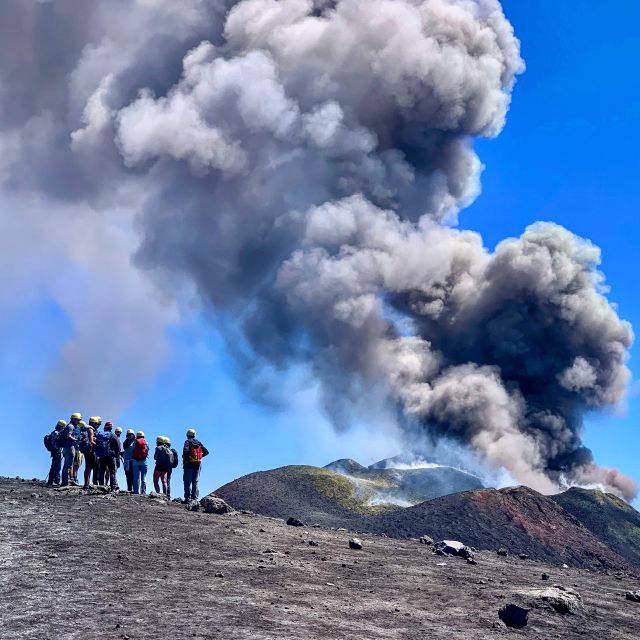
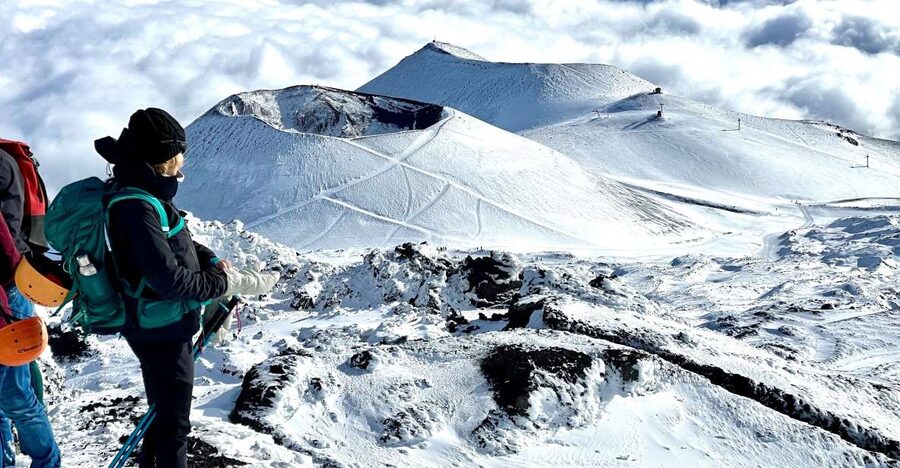
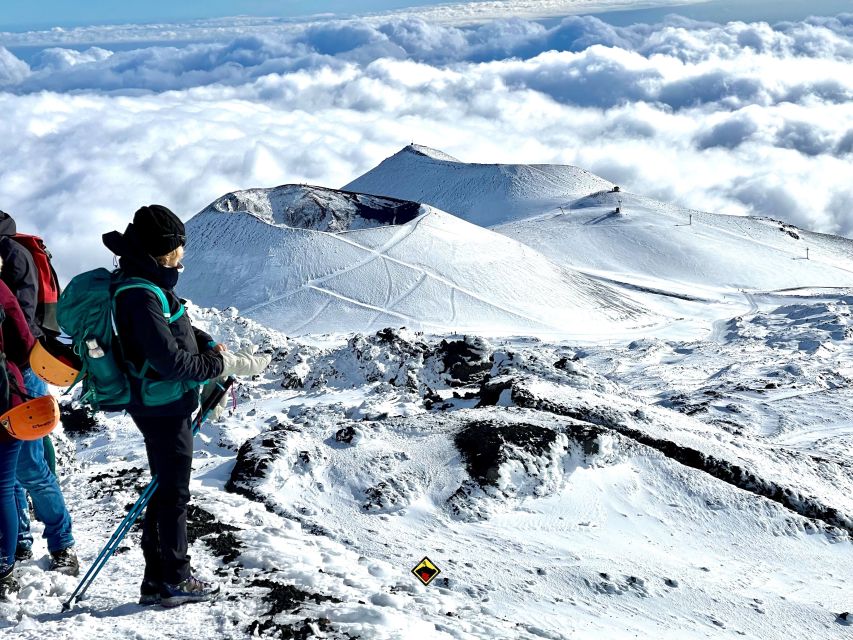
Next you’ll reach the base of the most active crater at the moment: the Southeast Crater. Then you head toward the large craters of 2002. This is where you get the strong crater-edge atmosphere: steep drops, big wind, and that feeling that you’re standing on a living system.
The tour involves climbing and walking near crater edges. If you’re prone to dizziness, this is explicitly a concern. It’s also for trained hikers, and the pace can include steep or tricky sections. One person described the descent as requiring concentration, especially on sandy shale—so I’d treat both the climb and the return as part of the work.
What about the photo time? You’ll have a photo stop (about 40 minutes) and another window with break time and photos. But on windy days, you may not want to hang out at the ridges longer than necessary. Build your expectations around quick, crisp moments rather than long top-of-the-world lounging.
Valle del Bove return and the descent: knees, snow, and a calmer finish
After crater time, the route turns toward the cable car station for the return. You’ll pass the Valle del Bove transfer segment on the way back, which is a nice change of pace from constant crater attention.
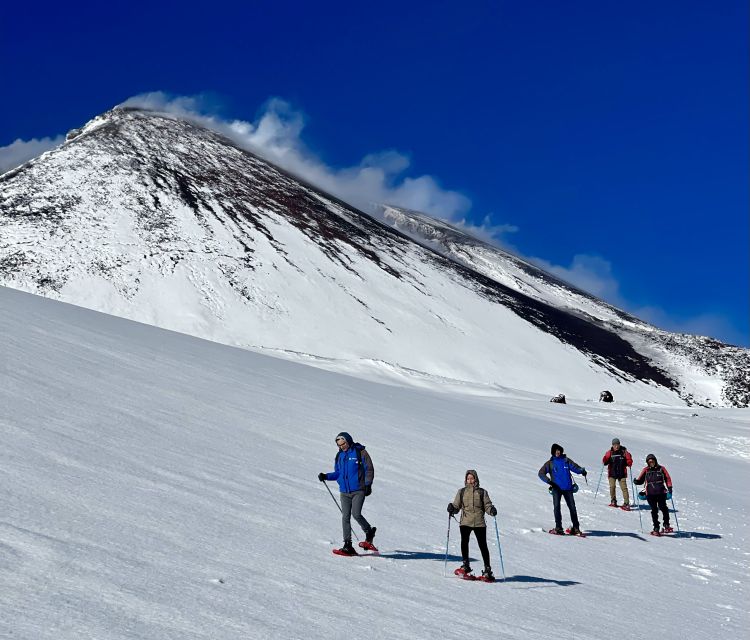
The descent can involve a path that may be full of snow in winter. That means trekking poles can feel less optional and more like a “thank you, past me” choice. The tour includes trekking poles, helmets, warm jackets, and a backpack, which helps you show up more prepared even if you didn’t pack for volcanic conditions.
Also, remember: what goes up must come down. Expect a workout for your legs, especially your knees. If you have back problems or heart/respiratory issues, the tour notes you’re not a good fit, so don’t try to brute-force it with willpower.
Price and value: what $28 gets you, and what your day actually costs
The headline price is around $28 per person, and that’s a real hook. But for a full Etna crater hike experience, you need to budget the on-site extras.
Here’s what’s included in the tour package:
- Trekking poles
- Helmets
- Accident insurance
- Etna entry fee
- Warm jackets
- Trekking shoes
- Backpack
And here’s what’s not included:
- Volcanological guide service: €30 per person to be paid on-site
- Round-trip cable car tickets: €52 per person to be paid on-site
- Transport from your accommodation to the starting point
- Snowshoe rental only for deep snow: €15 on-site
- Food and drinks
One key rule: if you do not pay the additional fee for the scientific information, you can’t participate in the hiking activity. So treat that €30 as part of the “do it for real” cost, not an optional add-on.
My value read: even with those extras, the tour can still feel like good value because you’re paying for safety gear, guided access, and high-altitude expertise—not just a casual stroll. The guides also matter. Several guides named Vincenzo, Fabio, and Andrea Montemagno show up in the tour stories as organized, funny, and serious about keeping everyone safe.
What to bring (and what to skip) for 3,000 meters on active terrain
This is high altitude, wind, and volcanic footing. The tour is clear about what you should bring, and it’s smart.
Bring:
- Windbreaker and a warm jacket (and expect layers)
- Sunglasses
- Sunscreen
- Comfortable long pants
- Snacks and drinks
- Change of clothes
- Hiking shoes
- Gloves and a hat (gloves and hats are not included)
The tour also says not allowed:
- High-heeled shoes
- Sandals or flip flops
- Alcohol and drugs
- Open-toed shoes
Glove-and-hat omission is not minor. At altitude, hands and ears can feel frozen fast, even if the sun is out. I’d rather arrive over-prepared than be stuck doing the whole walk with cold fingers.
Also, pack your patience. Guides will stop often for explanations and short recovery breaks, which helps a lot once you feel the altitude.
Who should book this Mount Etna craters hike—and who should not
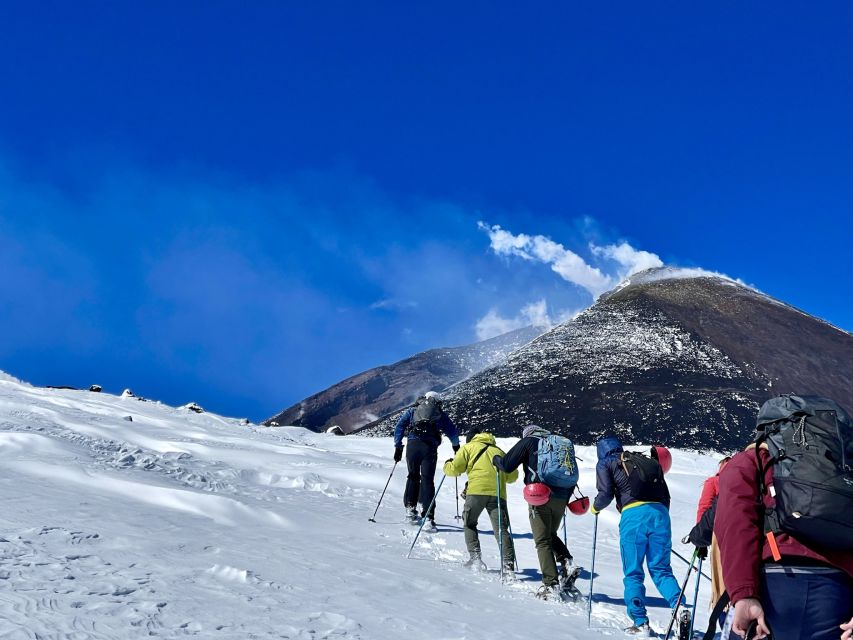
This tour is for trained hikers. If you’ve done mountain walking before, you’ll likely enjoy it more, because you won’t fight the terrain as much.
It also has clear “not for you” categories:
- Children under 12
- Mobility impairments
- People with back problems
- Vertigo
- Heart problems
- Respiratory issues
- Epilepsy
- People with low fitness
- People without hiking experience
- People with recent surgeries
- People with high blood pressure
If you’re generally healthy but get nervous near heights, still take the dizziness warning seriously. The route includes crater edges. You can love volcanoes and still decide this isn’t the day for steep exposure.
Should you book Mount Etna’s volcano craters hike?
Book it if you want Etna in its real form: fumaroles, steaming lava, crater areas like the Southeast Crater and the 2002 craters, plus a guide who explains what you’re seeing while keeping the group moving safely. I also think it’s a strong choice if you like small-group dynamics and guides who handle snow/ice days without drama.
Skip it if any of the “not suitable” conditions apply, or if you know you struggle with altitude, wind, or heights. This tour can be cold, windy, and demanding. It’s not a casual nature walk.
If you do book, prepare like a serious hike day: good footwear, layers, sunglasses, and your own gloves/hat. Once you’re at the crater zone, the experience makes sense fast. You’ll understand why people talk about Etna like it’s a neighbor.
FAQ
How long is the Mount Etna volcano craters hiking tour?
The duration is 5 hours, though you should check availability to see the starting times.
What altitude do you reach on this tour?
You start at about 1,900 meters at the Esagonal Bar, ride the cable car to about 2,500 meters, and hike up to around 3,000 meters with the guide under scientific authorization rules.
Is the cable car ticket included?
No. Round-trip cable car tickets cost €52 per person and are paid on-site at the Funivia dell’Etna office.
Do I need to pay an extra fee for the scientific part?
Yes. There is a volcanological guide service fee of €30 per person paid on-site, and you must pay it to participate in the hiking activity.
What’s included in the tour price?
Included items are trekking poles, helmets, accident insurance, Etna entry fee, warm jackets, trekking shoes, and a backpack.
What languages do the guides speak?
The live tour guide is available in Italian, French, and English.
Where do I meet the group?
You meet at Etna Guides Official in the parking lot in front of the Esagonal Bar.
What should I bring with me?
Bring a windbreaker, sunglasses, change of clothes, snacks, drinks, hiking shoes, sunscreen, a jacket, comfortable clothes, and long pants. Gloves and hats are not included, so bring your own.
Who is this tour not suitable for?
Children under 12 are not allowed, and it is not suitable for people with vertigo, mobility impairments, back problems, heart problems, respiratory issues, epilepsy, recent surgeries, low fitness, or high blood pressure, and for people without hiking experience.