REVIEW · BELPASSO
Mount Etna: Summit Crater Trek with Cable Car
Book on GetYourGuide →Operated by Aitne Med Etna Excursions · Bookable on GetYourGuide
A trip to Europe’s wildest active volcano turns your body into a compass. This small-group Etna summit trek pairs a volcanologist guide with up-close crater views, plus a lava tunnel and volcanic craters that make the island’s geology feel real.
What I especially like are the way guides explain what you’re seeing and the way you’re kept moving at a safe pace, even when the terrain changes fast. A key consideration: the summit route can change (or you might not reach the top) due to volcanic activity and weather, and the cable car/4×4 add-on is extra in cash.
In This Review
- Why Etna’s summit trek feels different from a normal hike
- The day’s two best moments: crater-edge views and lava-tube weirdness
- Quick hits before you go
- Meeting at Etna South: where the day starts and what the gear helps with
- Cable car up: the short lift that sets your rhythm
- Jeep/SUV to the Torre del Filosofo area: lunar terrain and quick adjustments
- Bocca Nuova and the summit craters: where 360° views meet active steam
- The crater circuit: passing 2002 eruption areas and moving through volcanic sand
- Valle del Bove: the big volcanic amphitheater you can actually walk around
- Lava tunnel time: the inside view that makes Etna feel real
- Price and value: the $77 base fare versus the cash add-on
- What to bring (and what to do on a sulfur-active volcano)
- How hard is this hike, really?
- Booking smart: when the summit might not be available
- Should you book the Mount Etna Summit Crater Trek?
- FAQ
- Is the cable car included in the tour price?
- How much extra do I pay for the cable car and 4×4?
- What does the tour price include?
- Where do I meet the guide?
- How long is the experience?
- Who can join this tour?
- What languages are the guides available in?
- What should I know about health and safety rules?
- What if weather or volcanic activity prevents reaching the summit?
Why Etna’s summit trek feels different from a normal hike
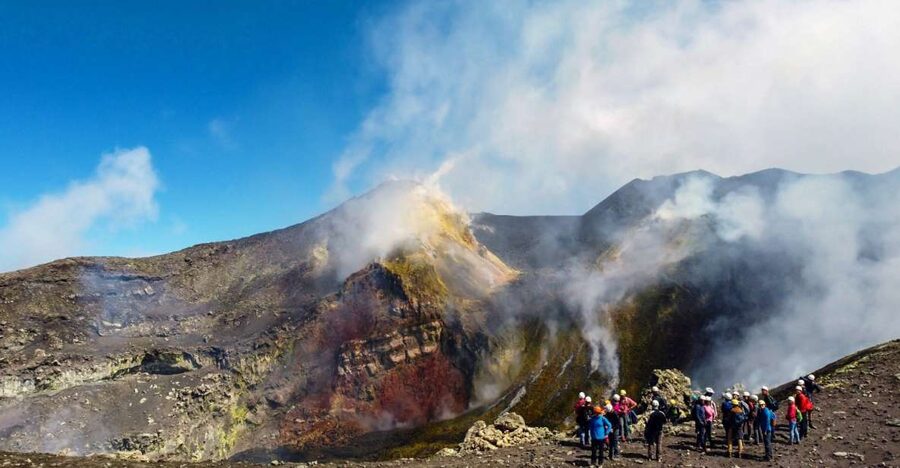
If you’ve only seen volcanoes from photos, this is the correction. Etna is active, and that means the air, the sound, and the ground all feel like part of the story—especially when you’re standing near major craters with steam rising and the view spreading out across northern Sicily.
I love how the guide turns a hard hike into an on-the-ground lesson. You’re not just walking from point to point; you’re learning why certain areas look the way they do, how eruptions shaped the terrain, and what to watch for as you move.
The day’s two best moments: crater-edge views and lava-tube weirdness
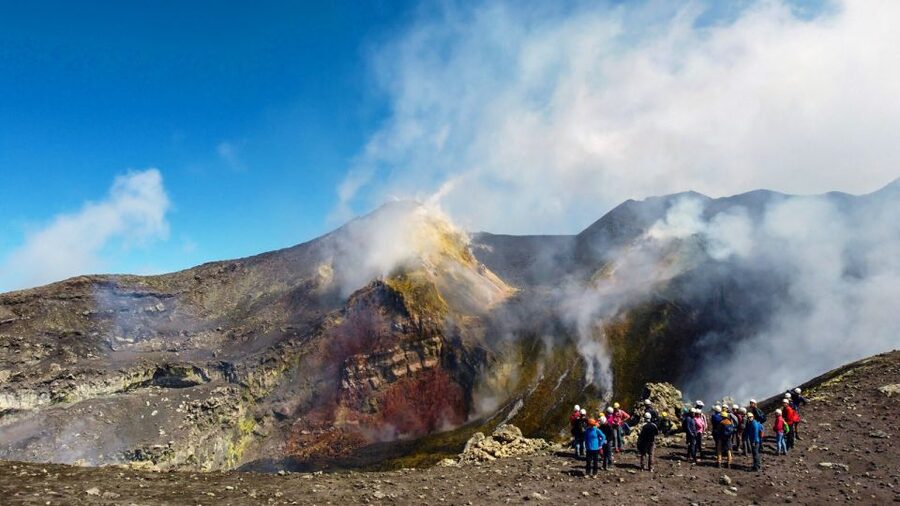
The first big wow is reaching the summit area near Bocca Nuova, where the views can stretch to distant islands on clear days. Even when clouds move in, Etna still has this dramatic, close-up feel—steam, color shifts in the ground, and a constant sense that the mountain is doing something.
The second standout is the way you’re brought into volcanic features you can walk through, including a lava tunnel. It’s not just scenery; it’s a physical timeline—heated rock that cooled into hollow space, and craters you can stand near and compare.
One possible drawback to plan for: the “tour price” doesn’t cover the main way up. You’ll pay extra for the cable car and, if conditions allow, the one-way 4×4 portion, and you’ll pay it in cash at the office.
You can also read our reviews of more tours and experiences in Belpasso.
Quick hits before you go
- Small-group guide-led pacing so you don’t get stretched out on uneven volcanic ground
- Summit craters approach (when conditions allow) with 360° views from the Bocca Nuova area
- Cable car comfort buffer to reduce the strain compared with going fully on foot
- Lava tunnel visit for that rare inside-the-volcano feeling
- Route changes for safety, including re-routing away from the planned summit if needed
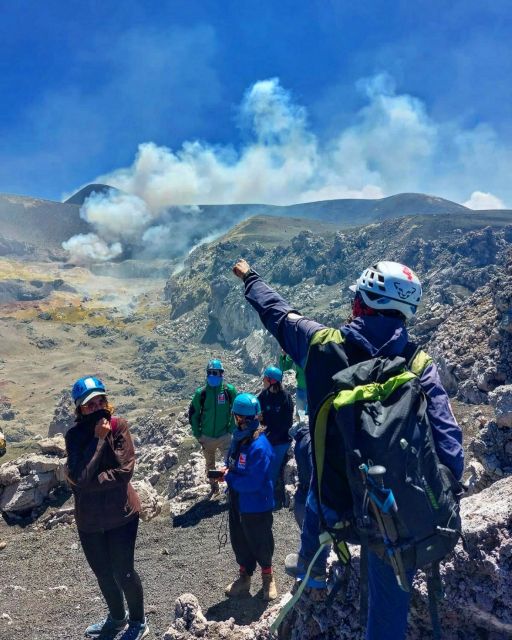
- Gear provided (boots, sticks, wind jacket, helmet), which helps you travel lighter
Meeting at Etna South: where the day starts and what the gear helps with
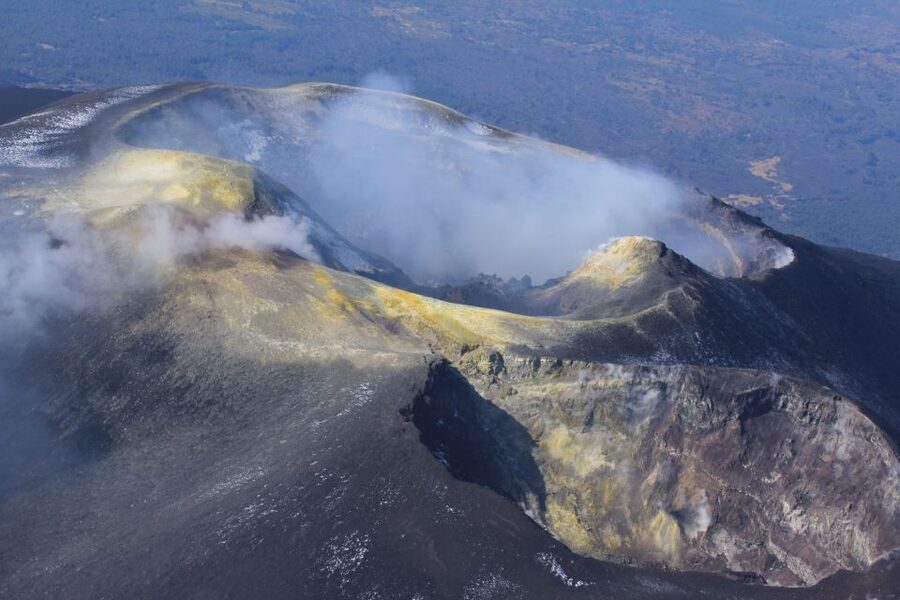
Your day starts at the local partner office next to the restaurant La Terrazza dell Etna, in front of the station for the south Etna cableway. From there, you’ll do a short safety briefing before heading toward the lift.
One practical advantage here is that you’re not left to figure out gear at the last minute. The tour includes hiking boots, walking sticks, a wind jacket, and a helmet. That matters on Etna because you’re dealing with loose volcanic scree in places, plus sudden wind and temperature swings depending on altitude and cloud cover.
Even if you’re fit, plan for a hike that asks for steady legs, not speed. Several guides on Etna are used to mixed groups, and the better ones keep the pace readable and the steps safe. You’ll want to listen when the guide talks about where to place your feet—on lava rock and volcanic sand, small choices matter.
Cable car up: the short lift that sets your rhythm
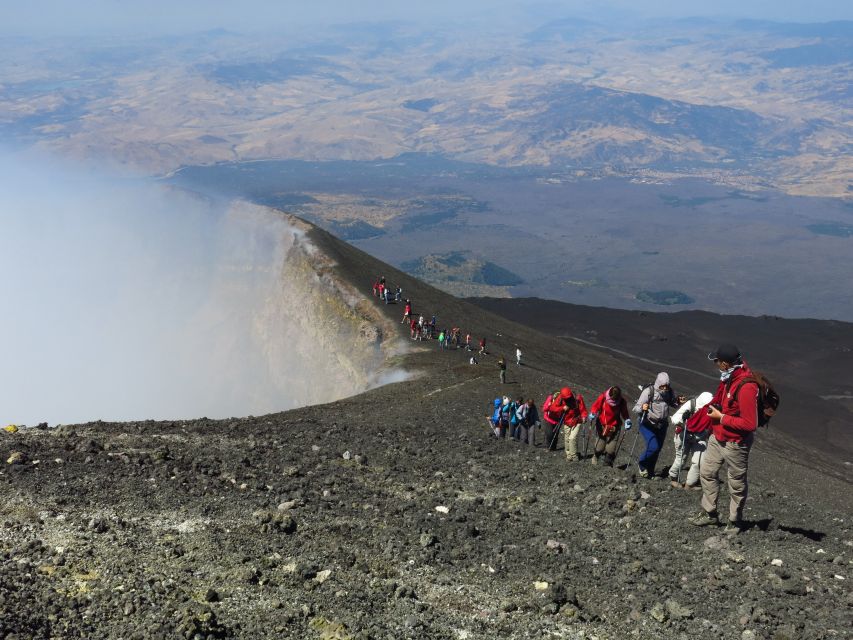
The cable car portion is brief, but it’s a smart opener. It quickly moves you into the volcanic zone without requiring an all-day climb from sea level.
Once you’re at the top of the cable car, you’ll continue by 4×4/SUV toward the higher starting area around Torre del Filosofo (up to about 2,850 meters, depending on conditions). This isn’t just convenience. It’s how the tour manages altitude and energy so you can focus your strength on the summit walk rather than burning out on the road uphill.
If weather is rough, you might notice the tone shift—guides tend to get stricter about what’s safe near craters and exposed terrain. That’s part of the Etna reality.
Jeep/SUV to the Torre del Filosofo area: lunar terrain and quick adjustments
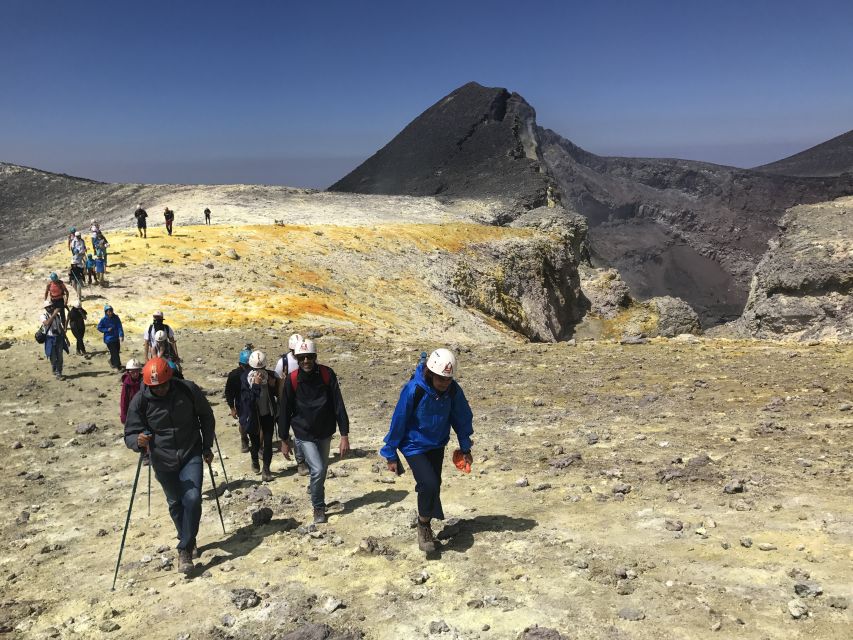
The 4×4 leg is short, but it’s a big mental switch. You go from the “normal” feeling of hiking with trees and familiar trails to terrain that looks almost lunar—gray, sharp, and strangely quiet except for wind.
This is also when you’ll likely get your first real check-in with the day’s plan. Etna’s activity and local forecasts can affect how close you can get to specific craters. Your guide’s job is to translate those changes into a route you can still enjoy, even if the summit approach is modified.
Bocca Nuova and the summit craters: where 360° views meet active steam
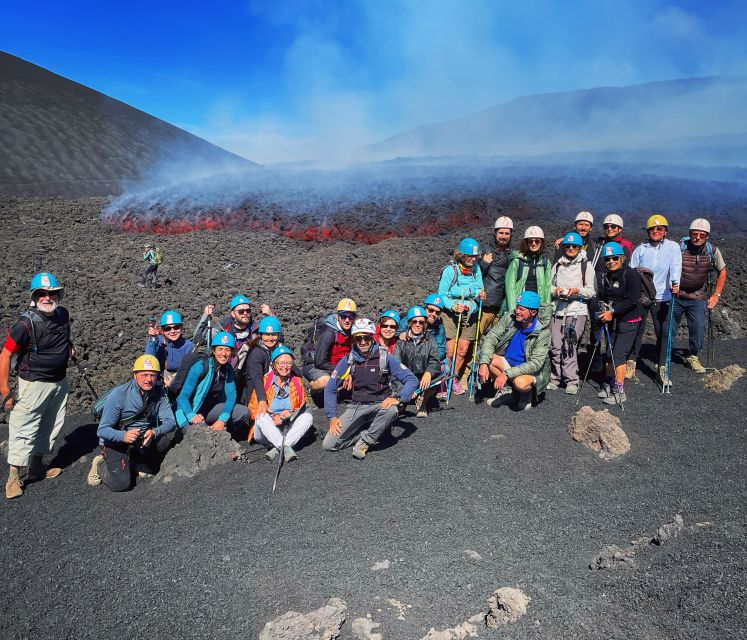
The main guided hike begins as you head toward the edge of Bocca Nuova (around 3,300 meters), a crater that opened in 1968. This part is the heart of the experience: you’re walking toward the summit zone where Etna’s activity is visible up close.
When the conditions are right, you’ll stroll near the crater edge and have time for 360° panoramas. On clear days, visibility can stretch to the Aeolian Islands and across much of northern Sicily. Even if the sky is less cooperative, you still get the key Etna feeling—steam rising, ground that looks freshly reworked, and a strong sense of scale.
A note on comfort: the air can be sharp. Sulfur can sting your throat, and it’s smart to protect your mouth and nose if you’re sensitive. Some visitors recommend using a covering to reduce that burn.
Also, be ready for the fact that the summit area is not a passive viewpoint. You’re on volcanic ground that can be uneven, with changing footing. In good conditions you’ll feel energized; in cold or windy conditions you’ll feel the day more.
The crater circuit: passing 2002 eruption areas and moving through volcanic sand
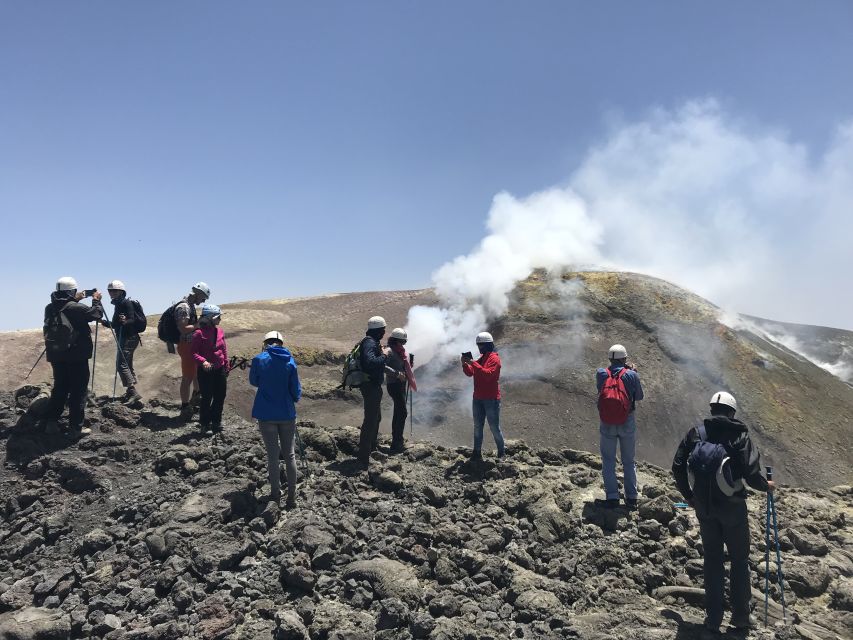
After the summit craters, the route shifts from “standing and staring” to more crater-to-crater movement. You’ll pass through areas associated with the 2002 eruption, then continue through volcanic terrain that can include volcanic sand and a fun, controlled descent.
This is where pacing matters. The tour works best when you treat it like a careful trek rather than a race. Guides often slow you down not to be annoying, but because loose ground is safer when you’re not rushing. Your legs will feel it later if you try to make time.
If you’re the type who likes photography, this is also the best section for quick stops—because you’ll move through different colored rock layers and crater shapes. You’ll see how Etna doesn’t create one “type” of volcano scenery. It creates multiple textures in a single day.
Valle del Bove: the big volcanic amphitheater you can actually walk around
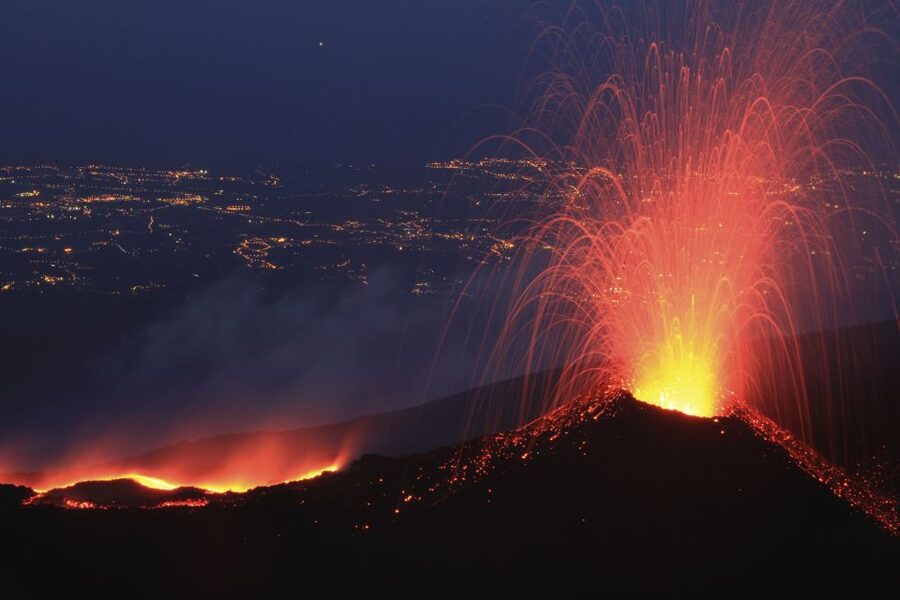
One of Etna’s grand features is the Valle del Bove, described as a caldera roughly 8 km long and 4 km wide. On this tour, you don’t just glance at it from far away—you reach viewpoints and then keep moving so the scale becomes understandable.
This part helps you connect the dots. From up near the summit, Etna looks like a series of sharp craters and active spots. Around Valle del Bove, you start to feel the bigger structure underneath—how eruptions and collapses can create a wide amphitheater-like valley. It’s the kind of geography that makes you stop thinking in postcard terms.
Lava tunnel time: the inside view that makes Etna feel real
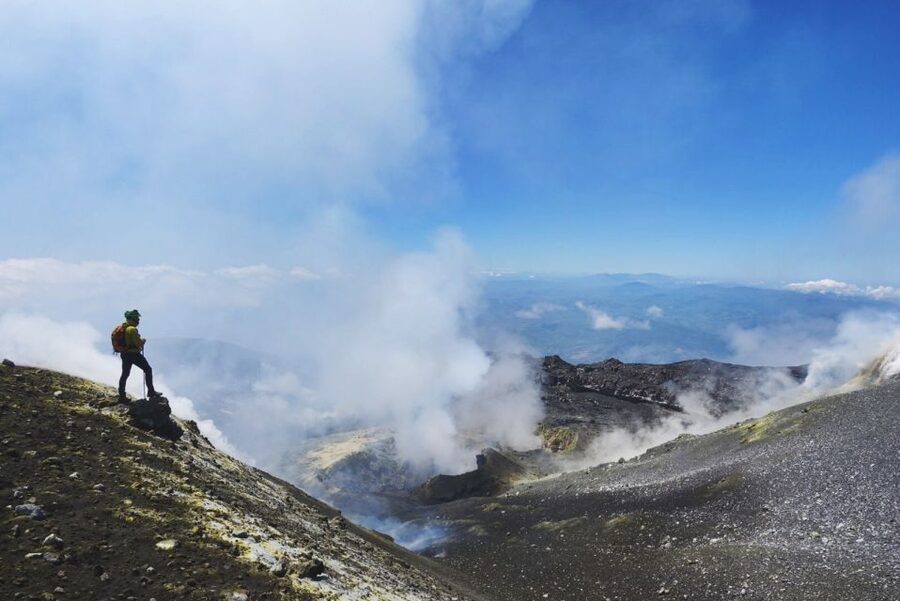
You’ll also explore a lava tunnel, one of the most memorable inclusions for this kind of Etna experience. Walking inside volcanic rock changes your senses quickly: sound changes, the space feels different, and you get a stronger respect for how lava can build hollow passages as it cools.
Even if you’re not a geology fan, this is where the tour earns its keep. A lava tunnel isn’t a lecture—it’s proof you can walk through. The guide can point out what you’re seeing, and your brain does the rest.
If you’re claustrophobic or nervous in enclosed spaces, it’s worth mentally preparing for a short, guided walk through a tunnel rather than a fully open crater rim. The tour data doesn’t list a special alternative here, so check with the operator before booking if that’s a concern.
Price and value: the $77 base fare versus the cash add-on
The listed price is $77 per person for a 5-hour guided experience. That base cost is what you’re paying for the volcano guides, hike support, and the provided safety gear: boots, sticks, wind jacket, helmet, plus insurance and free parking (until supplies run out).
But here’s the part you must plan for: the cable car and 4×4 are not included. The add-on is €65 per adult for the full cable car round trip and the 4×4 one-way (and €50 for children under 11). If you can’t reach the summit due to volcanic activity or adverse weather, you’ll take just the cable car round trip for €52 per person.
Also important: payment for the cable car/4×4 must be made in cash at the office.
Is it still good value? For most people, yes—because the tour isn’t just “walk a trail.” You’re getting guide-led crater walking at altitude plus included safety gear and insurance. The extra €52–€65 is the price of getting into the mountain’s working zone safely and efficiently. If you’re the kind of traveler who hates surprise costs, just budget that cash add-on before you arrive.
What to bring (and what to do on a sulfur-active volcano)
The gear is provided, which is great. Still, you should pack like the weather will change every hour—because it often does on Etna. Here are the essentials that actually help:
- Long pants (volcanic ground and friction are no joke)
- A warm layer and a jacket for wind; the tour provides a wind jacket, but cold can still sneak in at altitude
- Sun protection (yes, even when it’s cloudy)
- A snack or small bite for energy during longer crater-to-crater walking
- Something to cover your mouth and nose if sulfur stings your throat
- Water (the tour data says food/drinks aren’t included, so plan accordingly)
One smart mindset: treat your clothing and pace like you’re hiking in winter at altitude, even in warmer months. Cold wind + exposed ground is a tough combo.
How hard is this hike, really?
The tour is not marketed as an easy stroll, and the conditions can make it harder. The route involves walking at altitude, descending through volcanic sand, and navigating uneven ground. Reviews also hint at tough terrain like loose scree and windy/cold days, and you may sometimes hike less directly than planned if routes must be adjusted.
The operator also lists clear limits: the tour isn’t suitable for people with mobility impairments, wheelchair users, heart problems, respiratory issues, pregnancy, recent surgeries, low fitness, or for children under 6 (and the operator separately notes under 7 as not suitable too). People over 95 are also excluded.
If you’re on the edge, be honest. This is active-volcano terrain with safety rules. The best guides can adjust pace, but they can’t change altitude physics.
Booking smart: when the summit might not be available
Etna runs on risk management. The tour may change due to volcanic risk or weather conditions. That can mean fewer crater steps, or a different route that still delivers the Etna experience.
Some people end up not reaching the summit edge because the mountain says no that day. If summit access is your only goal, you’ll feel the disappointment. If you’re open to seeing different craters, crater-viewpoints, and volcanic features like the lava tunnel, you can still end the day with an unforgettable story.
Should you book the Mount Etna Summit Crater Trek?
Book it if you want the closest thing to an on-foot, guided understanding of an active volcano. You’ll get crater-edge time, a volcano guide who explains what you’re seeing, and a route that includes multiple volcanic features like Valle del Bove and a lava tunnel. Add in the provided boots/sticks/jacket/helmet and it’s a solid “value for what you’re doing” day.
Skip it if you’re looking for an easy walk, you have medical limitations (especially respiratory/heart issues), or you want everything included in one fixed price with no cash add-ons. And if sulfur or enclosed spaces bother you, consider asking questions before you book so you’re not surprised.
If you’re reasonably fit and willing to dress for wind and changing conditions, this is one of those Sicily experiences that turns into a real memory fast—because Etna doesn’t let you stay a spectator.
FAQ
Is the cable car included in the tour price?
No. The cable car round trip and the 4×4 one-way are extra. Payment for these is required in cash at the office.
How much extra do I pay for the cable car and 4×4?
The full cable car and 4×4 cost is €65 per adult and €50 for children under 11. If you can’t reach the summit due to weather or volcanic activity, you’ll pay €52 for the cable car round trip only.
What does the tour price include?
The included parts are the volcano guides, the Etna hike, hiking boots, walking sticks, wind jacket, helmet, insurance, and free parking (until supplies run out). Food and drinks are not included.
Where do I meet the guide?
Meet the guide next to the restaurant La Terrazza dell Etna in front of the Etna south cable car station.
How long is the experience?
The duration is about 5 hours.
Who can join this tour?
It is not suitable for children under 6 (and also notes under 7 as not suitable), pregnant women, people with mobility impairments, wheelchair users, people with heart problems, people with respiratory issues, people who have dived up to 24 hours prior, people with recent surgeries, people with low level of fitness, and people over 95 years.
What languages are the guides available in?
The live tour guide is available in French, English, and Italian.
What should I know about health and safety rules?
Alcohol and drugs are not allowed. You’ll also have safety gear included like a helmet, and the route can change based on volcanic risk or weather.
What if weather or volcanic activity prevents reaching the summit?
The tour may be adjusted for safety. If the summit can’t be reached, you’ll still do the cable car round trip (instead of the full cable car plus 4×4 and summit walk).