REVIEW · LANZAROTE
Guided hiking in the Natural Park of Los Volcanes.
Book on Viator →Operated by Canary Trekking Lanzarote · Bookable on Viator
Volcano trails turn Lanzarote into a live geology lesson. I love how the hike puts lava flows right under your feet, and I also love the clear, well-paced guiding that keeps the walk fun even in heat. One consideration: you’ll need to plan for sun and rocky ground—closed shoes and water matter a lot.
This is a guided walk through the northeast sector of the Los Volcanes Natural Park, tied to the Timanfaya eruption from 1730–36. You’ll move across lava surfaces, climb up volcanic cones, and see features like lava channels/tubes, lava lakes, and dramatic craters. The park’s arid climate helps preserve everything almost like an open-air rock museum, plus you’ll learn why life is slowly coming back on top of hardened lava.
I also think the value is strong for $46.86 per person, since the experience is about 3 hours and the admission ticket is free. You’ll go with a maximum group size of 16, in English, with a mobile ticket. If you’re very sensitive to uneven footing or you hate heat, this is the one part to take seriously.
Key things I’d highlight before you go
- Timanfaya 1730–36 on foot: You’re walking terrain shaped during one of Lanzarote’s defining eruptions.
- Real volcanic features, not just views: Expect cones, craters, lava channels/tubes, and even lava-lake type formations.
- Small group size (max 16): Better questions, better control of pace when it’s hot.
- Guides who explain and manage energy: People consistently praise guides for being informative and keeping hikers comfortable.
- Moderate fitness, but plan for sun: Closed footwear, water, and sun protection are non-negotiable.
- Admission included: You’re paying for the guided experience, and park entry is free.
In This Review
- Los Volcanes in 3 hours: why walking beats looking
- What you can expect on the trail (and what you won’t)
- Stop at the Timanfaya lava fields: walking the 1730–36 eruption scars
- Spotting cones, tubes, and craters: what your guide will help you notice
- The guide makes the difference: Manuel and Laurent as examples
- Group size and pace: what max 16 really means
- Timing and meeting point: plan around a 10:00 start
- What to wear and bring when the ground is lava rock
- Price and value: why $46.86 can be a smart deal here
- Weather matters more than you think on a hike like this
- Is this hike right for you?
- FAQ
- FAQ
- How long is the hike in Los Volcanes?
- What language is the guided hike offered in?
- Where do we meet for the tour?
- What is the maximum group size?
- Is the hike suitable for beginners or only experienced hikers?
- What should I wear?
- Is admission included in the price?
- Do I need a printed ticket?
- What if the weather is bad?
- What is the cancellation policy for a full refund?
- Should you book this guided lava hike?
Los Volcanes in 3 hours: why walking beats looking
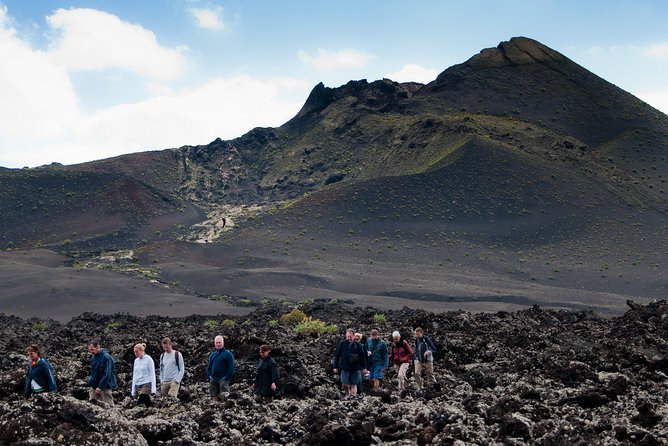
Lanzarote can feel like one giant science demo, but only if you slow down enough to notice details. This hike is built for that. You don’t just pass volcanic terrain—you cross it, climb partway up volcanic forms, and learn how those shapes formed when lava cooled.
That matters because lava landforms can look similar from a distance. On the trail, your guide helps you connect what you’re seeing—lava flows, channels/tubes, cones, and craters—to the forces that made them. You start to understand how the landscape stayed so “fresh” looking for centuries. The arid climate means little vegetation takes over, so the park preserves hardened rock like a giant open-air collection.
Then there’s the human side. The best guides don’t stop at the rocks. Based on what people mention in their experiences, you may hear how geology connects to how people live and even farm here—especially around vineyards and Lanzarote’s distinctive winery culture. Even if that part is brief, it gives you context beyond the dramatic scenery.
What you can expect on the trail (and what you won’t)
This is a focused 3-hour hiking outing. That means you shouldn’t expect long stops for photos like a full-day trek, or a wandering “anywhere we want” day. Instead, it’s a steady guided route designed to hit the volcanic highlights and explain them as you go.
You’ll be on foot in the natural park’s northeast sector of the Timanfaya eruption area. The route centers on:
- crossing lava flows
- ascending to volcanic cones
- spotting lava channels and tubes
- encountering lava-lake formations and craters
Because the walk stays in one concentrated window, it’s a great fit if you’re trying to pack a lot into Lanzarote without burning a whole day.
You can also read our reviews of more tours and experiences in Lanzarote.
Stop at the Timanfaya lava fields: walking the 1730–36 eruption scars
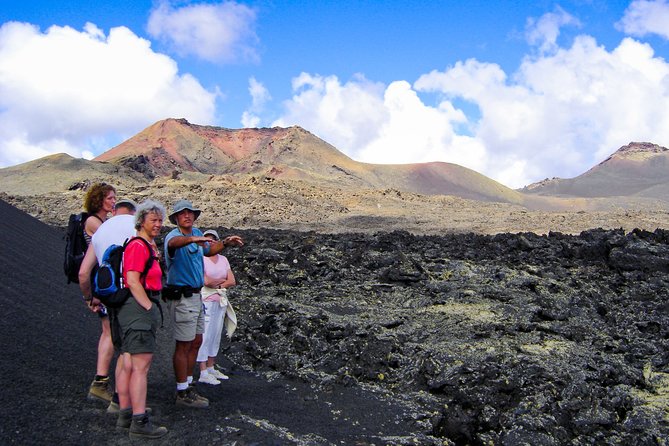
Your core stop is the Parque Natural de Los Volcanes, where you explore the northeast zone affected by the Timanfaya eruption from 1730 to 1736. This is the heart of why the guided format works. When you walk lava terrain with a guide, you start noticing how lava behaved—where it flowed, how it cooled, where it left hollow channels, and how different volcanic forms developed.
One of the most fascinating things you’ll hear about is how the park still shows evidence of the eruption’s internal processes. The guide typically frames it as a look into the planet’s forces from millions of years ago—then brings it back to what happened during Timanfaya. You’re learning the “why” behind the shapes instead of just admiring them.
You also get an excellent lesson in time. The hard truth of lava land is that it’s an ugly starting point for ecosystems. But the hike is also described as a chance to see the slow resurgence of life. In other words: you’re not only looking at destruction from an eruption centuries back. You’re watching a long recovery in progress.
Spotting cones, tubes, and craters: what your guide will help you notice
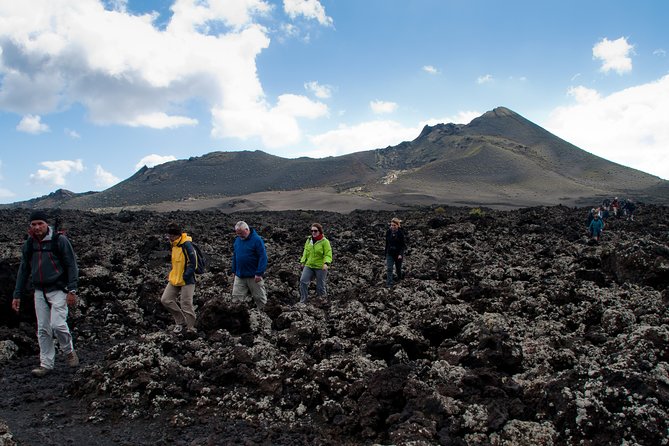
If you’ve ever looked at volcanic rocks and thought, That all looks the same, you’ll probably feel different after this hike. The trail is designed to take you to formations that are visually different, but only if you know what to look for.
Here’s how the main features usually land on a guided walk:
- Lava flows: You see how the rock cooled and what the flow path looks like when you’re close enough to judge texture and direction.
- Volcanic cones: Climbing to these vantage points helps you understand the elevation changes created by volcanic activity.
- Lava channels and tubes: These are the structures that help explain how lava moved beneath or through hardened crust.
- Lava lake-type areas: These formations connect to how lava behaved when it pooled or cooled in place.
- Spectacular craters: Crater views give you the big-picture geometry of the eruption.
The practical value is that you’re learning a vocabulary you can reuse afterward. Even after your walk ends, you’ll have a mental checklist for reading volcanic terrain. That’s where guided time earns its keep.
The guide makes the difference: Manuel and Laurent as examples
The most repeated praise in people’s feedback is for the guides. You’ll see names like Manuel and Laurent come up, and the pattern is clear: guides are not just pointing things out. They’re explaining volcanic history in a way that makes it feel understandable and connected.
In particular, people emphasize that the guides:
- give lots of interesting information
- explain Lanzarote’s geology and volcanic past clearly
- manage the pace so nobody feels rushed or overwhelmed, especially when it’s hot
That last point matters more than it sounds. A “simple” walk on lava rock can feel harder when temperatures rise. A good guide reads your group and keeps it calm—faster hikers get chances to look around without leaving others behind, and slower moments aren’t treated like a problem.
Group size and pace: what max 16 really means
This experience caps at 16 travelers, which is a sweet spot for hikes. You get the benefits of a group—social energy, questions, shared storytelling—without it turning into a slow line you can’t move around.
The hike is also described as having moderate physical fitness requirements. That doesn’t mean it’s a technical climb with ropes, but it does mean you should be ready for uneven, rocky walking on volcanic ground. If you regularly avoid hills or your legs tire quickly, you might want to be cautious.
One more practical detail: service animals are allowed. If you’re traveling with a helper animal, you’ll want to confirm any on-the-day needs with the operator, but the important baseline is that it’s part of the rules.
Timing and meeting point: plan around a 10:00 start
The start time is 10:00 am, and the tour ends back at the meeting point. For timing, that’s usually ideal in Lanzarote because you’re not starting in the hottest part of the day. Still, volcanic terrain doesn’t forgive mistakes with sun—so arrive ready.
You’ll meet at X8PF+FP Conil (Conil, Spain). Having a precise pin makes it easier to coordinate, especially if your lodging is spread out. If you’re the type who likes a buffer, give yourself extra time to find the exact spot and settle before you start walking.
What to wear and bring when the ground is lava rock
This is not a day for flip-flops. The experience specifically recommends closed footwear, and open sandals aren’t advised. That’s your biggest safety call. Lava rock can be sharp-edged or uneven, and your feet will thank you for sturdy shoes with good grip.
Also bring:
- Sun protection
- Water
Since the hike is about 3 hours, I treat it like a mini day hike: lightweight layers, a hat, sunscreen, and a small bag you can keep handy. If you tend to overpack, resist the urge—your goal is comfortable, heat-ready mobility.
Price and value: why $46.86 can be a smart deal here
Let’s talk value in real terms. At $46.86 per person, you’re paying for:
- a guided experience (in English)
- a focused 3-hour route in a protected park
- admission being free
- a small group size (max 16)
If you’ve done self-guided walks in volcanic areas before, you know the difference: without a guide, you can still enjoy the scenery, but you miss the “how” and “why.” Here, the price buys interpretation. That’s what turns volcanic rocks from scenery into learning.
It’s also a popular activity. The tour is commonly booked about 40 days in advance, so prices can be fine but availability isn’t infinite. If Lanzarote is your main island plan, booking ahead saves you from scrambling later.
Weather matters more than you think on a hike like this
This experience requires good weather. That’s standard for many outdoor tours, but here it’s extra important because lava ground can get slippery or less comfortable when conditions aren’t right.
If it’s canceled due to poor weather, you’re offered a different date or a full refund. My practical suggestion: when you’re picking days, choose one that fits your schedule but also try to align it with a better forecast window. If your itinerary is tight, build in flexibility so you’re not stuck with only one possible day.
Is this hike right for you?
You should book this guided hike if you want:
- a compact way to see major volcanic formations
- geology explained in plain language (with lots of interesting info)
- a small-group experience that respects pace
- an active morning plan without committing to a full day
You might skip (or choose a different format) if:
- you hate heat and can’t manage sun exposure
- you’re not comfortable on uneven rocky terrain
- you want long, leisurely stops rather than a guided, structured route
If your travel style is equal parts photos and understanding, this one fits nicely. You’ll walk away with a mental map of how volcanic features connect—and that makes future sightseeing much more fun.
FAQ
FAQ
How long is the hike in Los Volcanes?
It lasts about 3 hours.
What language is the guided hike offered in?
The tour is offered in English.
Where do we meet for the tour?
The meeting point is listed as X8PF+FP Conil, Spain.
What is the maximum group size?
The maximum is 16 travelers.
Is the hike suitable for beginners or only experienced hikers?
The tour recommends a moderate physical fitness level.
What should I wear?
Wear closed footwear. Open sandals are not recommended, and you should bring sun protection and water.
Is admission included in the price?
Yes. The admission ticket is free as part of the experience.
Do I need a printed ticket?
No. You’ll have a mobile ticket.
What if the weather is bad?
The experience requires good weather. If it’s canceled due to poor weather, you’ll be offered a different date or a full refund.
What is the cancellation policy for a full refund?
You can cancel up to 24 hours in advance for a full refund, and the cut-off is based on local time.
Should you book this guided lava hike?
I’d book it if you want a high-impact Lanzarote activity that’s active but not brutal, and you care about understanding what you’re seeing. The best part is the combination: volcanic formations you can’t easily “read” on your own, paired with guides who manage pacing and explain the geology in a way that clicks. Add the small group size, admission included, and a 10:00 am start, and it’s a practical morning plan with strong value.
Just take the essentials seriously: closed shoes, sun protection, and water. If you do that, you’ll get a real sense of Timanfaya-era volcanic power—then see why the land is slowly filling back with life.