REVIEW · LOMBOK
Hiking Rinjani 3 days 2 nights summit – Lake
Book on Viator →Operated by Rinjani Samalas Tour and Trekking · Bookable on Viator
Rinjani is one of Lombok’s loudest adventures. This 3 days 2 nights route takes you from Sembalun up to the summit, down to Segara Anak Lake, then back to Senaru, with a real support crew along the way. I like the fact that you get an English-speaking guide plus professional porters and full meal support, so you can focus on walking. My only caution: the itinerary includes steep sections and an early start, so you’ll want moderate fitness, not a casual stroll vibe.
What makes this plan feel practical is how it’s paced to match the mountain. Day 1 builds your rhythm with a gentle ascent through open grassland and a first camp on the crater rim. Day 2 shifts into a midnight summit push, then swaps “hard climb” for lake views and a hot-spring break. Day 3 finishes with a long descent through tropical forest to Senaru village in about five hours.
This is also a small-group trek, capped at a maximum of 10 people, which matters when you’re hiking in the dark and setting camp at altitude. The price is $360 per person, and most of what you’d otherwise pay for is already included: national park entrance fees, camping gear, and all meals, snacks, fruits, and drinks on the trek.
In This Review
- Key highlights
- Sembalun to Senaru: the route that makes sense on Rinjani
- Day 1 from Sembalun: pos stops, grassland pace, and first rim camp
- Day 2 midnight summit start: sunrise strategy and lake reset
- Day 2 to Day 3: why the lake-to-rim transition matters
- Day 3 down to Senaru village: tropical forest and the long finish
- Guides and porters: what makes this company feel worth it
- Food, gear, and comfort: what’s included and what you still need
- Price and value: does $360 make sense for this 3D2N package?
- Who should do this trek, and who should skip it
- Should you book this Rinjani Samalas 3D2N summit-to-lake trek?
- FAQ
- How long is the trek and what are the main days like?
- Where do I meet the tour, and where does it end?
- What is included in the $360 per person price?
- What fitness level do I need?
- How big is the group?
- What if weather is bad or I need to cancel?
Key highlights
- Sembalun start, Senaru finish: a clear out-and-back style that ends back near the same meeting point area.
- Day 1 grassland acclimation: pos stops at 1300m, 1500m, and 1800m before the first rim camp at about 2639m.
- Midnight climb logic: you’re up around 2:00 am to start the summit trek at 3:00 am and catch sunrise around 6:00 am.
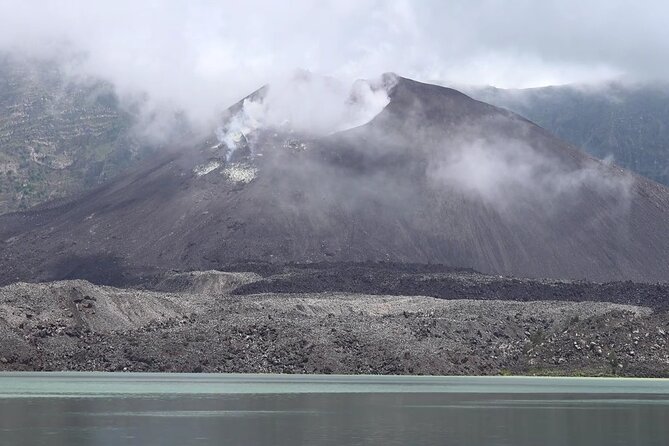
- Segara Anak + hot spring time: you go from summit down to the lake area, eat lunch, and get time to rest and shower.
- Camp setup is handled: tents, sleeping bags, mats, plus toilet tents and camp seating come with the package.
- Guides and porters with names you’ll remember: people repeatedly credit crews like Nas, Azmi, Edi, Supi, and Sufi for patience and encouragement.
Sembalun to Senaru: the route that makes sense on Rinjani
This trek is built around a classic Rinjani storyline: lift off from Sembalun, climb high enough to earn sunrise, drop down to the lake, then wrap up through forest to Senaru. You’re not just “going up and down.” You’re moving between very different zones of the volcano, each with its own feel.
Day 1 starts at Sembalun Village around 8:00 am with an easy-to-moderate ramp through open grassland. That matters because Rinjani punishes bad pacing. If you start too fast, your body pays later. This itinerary gives you a chance to settle in, reach pos 1 at 1300m, pos 2 at 1500m, and pos 3 at 1800m, then pause for lunch before the steeper push to camp.
By the end of Day 2, you’ll be camping again around the crater rim near Senaru at about 2641m. That “rim-to-rim” rhythm keeps you at high altitude for most of the trek, which is why having solid logistics is a big deal. When the camp setup and meals are handled by a guide and porters, your energy can go toward walking.
Finally, Day 3 is a descent through tropical forest to Senaru Village that takes about five hours. It’s the part where your legs finally get to relax a bit, but don’t expect it to be easy. Going down on a steep volcanic trail can still feel like a workout.
You can also read our reviews of more tours and experiences in Lombok.
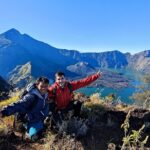
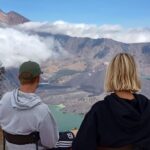
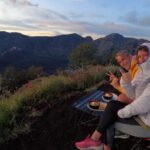
Day 1 from Sembalun: pos stops, grassland pace, and first rim camp
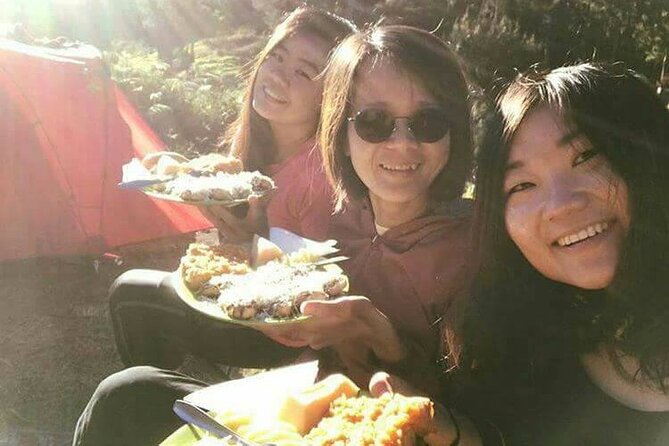
Day 1 is the “get your rhythm” day. The trek starts around 8:00 am in Sembalun, and you begin with a gentle ascent through open grassland. Open grassland has one big advantage: you can see the line of travel and judge your pace. There’s less surprise twisting trail than in tighter forest routes, so you can settle into steady breathing.
After about two hours, you reach pos 1 at 1300m. Then it’s another 40 minutes to pos 2 at 1500m. Next comes pos 3 at 1800m, where you stop for lunch. That lunch at pos 3 is more than a meal break. It’s a planned reset before the steep climb to the rim.
Then comes the change in character. You continue toward the Sembalun crater rim at about 2639m. The schedule calls it a three-hour climb including a prolonged steep section. This is where your pacing from earlier pays off. If you conserve energy in the open grassland, you’ll have enough left to grind through the steeper final segment.
You camp at the rim after Day 1. The value here is that you’re not camping randomly. The plan puts you at a high, dramatic viewpoint area where the next day can start at the summit window. It also means you’ll be sleeping close enough to the action to avoid wasting time on extra travel.
Practical tip: for Day 1, bring layers. Mountain weather can swing fast, and camping at 2639m means you’ll want to stay warm after the sun drops.
Day 2 midnight summit start: sunrise strategy and lake reset
Day 2 is the day that people remember, mostly because of the timing. You’ll be awakened around 2:00 am with hot drinks and a light breakfast. You start heading toward the summit at about 3:00 am, still in darkness.
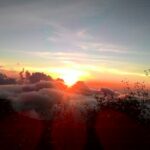
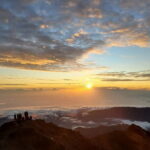
The climb from 3:00 am is described as a moderate climb, and then the sunrise arrives around 6:00 am. That’s a huge piece of why you’re doing an overnight summit. You’re not just “climbing early.” You’re climbing early so you can stand in the light and look out over Lombok Island with panoramic views.
Then the plan shifts gears. After the summit accomplishment and sunrise, you continue down to Segara Anak Lake and the hot spring area. This descent is where many people feel tired but also start to feel hope again. The lake area changes everything visually and mentally. Your body is still working, but you’re walking toward a payoff that’s tangible: a place to eat lunch, rest, and recharge.
Your porters prepare lunch while you’re down at the lake and hot spring area. The schedule even notes you can shower and rest after lunch. In a trek like this, that kind of reset is priceless. It helps your body recover for the next climb to camp.
After the lake break, you leave the lake area and climb up to the Senaru crater rim at about 2641m, where you camp for the night. The big idea for Day 2 is balance: summit effort, then lake comfort, then another high-altitude climb to finish the “loop” portion of the trek.
Day 2 to Day 3: why the lake-to-rim transition matters
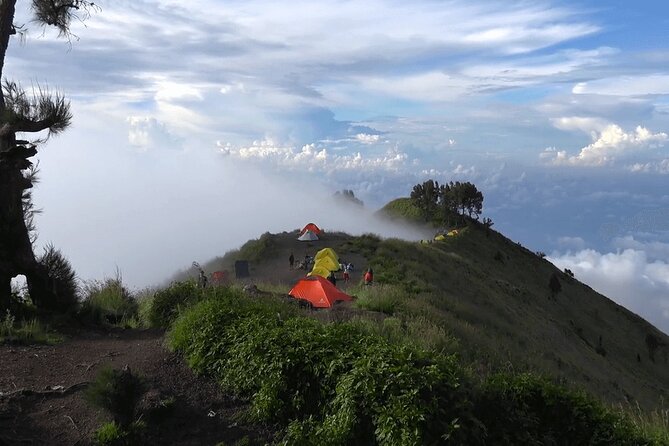
A lot of treks treat “the lake” as a quick stop. Here, the lake is a real recovery block. You’re walking from summit down, reaching the lake/hot spring zone, eating lunch, and then resting enough to feel human again before you climb back up to the rim.
That matters for two reasons.
First, the Day 2 to Day 3 campsite move keeps you near the crater rim system rather than dropping all the way down and coming back up. In practical terms, it avoids extra up-down hiking that can drain you. Second, camping near 2641m means you get the rim experience on the Senaru side, which sets you up for the Day 3 descent through forest.
From a reader standpoint, this is the part where you should plan your energy. Don’t treat the lake like a picnic. Use it for what it’s for: food, rest, and body reset. Even a short nap can change your Day 3 mood.
Also, notice the emphasis on hot drinks early and then meals and rest later. The trek has a steady rhythm: keep moving, stop when scheduled, refuel, then move again. That’s not just comfort. It’s how you finish a tough trek without getting wrecked by bad timing.
Day 3 down to Senaru village: tropical forest and the long finish
Day 3 starts after breakfast with the sunrise. Then it’s down to Senaru Village through tropical forest, taking about five hours.
Forest descent has a different rhythm than grassland. Instead of seeing far ahead, you’re often walking with more attention on footing and the slope. You’ll likely feel your knees here, especially if you’ve been pushing hard on the rim and lake-area paths.
The schedule is straightforward: trek down to Senaru Village and the program ends there. You’re not asked to do another big climb at the end. That’s a relief. The finish is timed so you’re not hiking until late in the day.
One more real-world note: on volcanic trails, downhill can still be strenuous even when the elevation numbers aren’t as high. If you know you struggle with steep descents, focus on short steps and controlled footing.
By the time you reach Senaru village, you’ve experienced the full arc of Rinjani in a compact format: rim altitude, summit sunrise, lake and hot spring break, then forest descent.
Guides and porters: what makes this company feel worth it
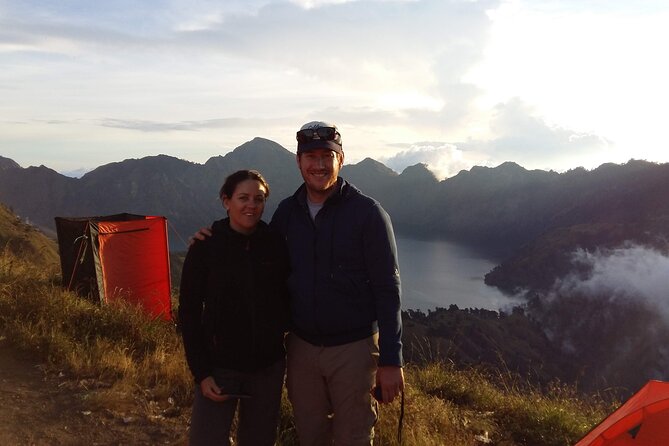
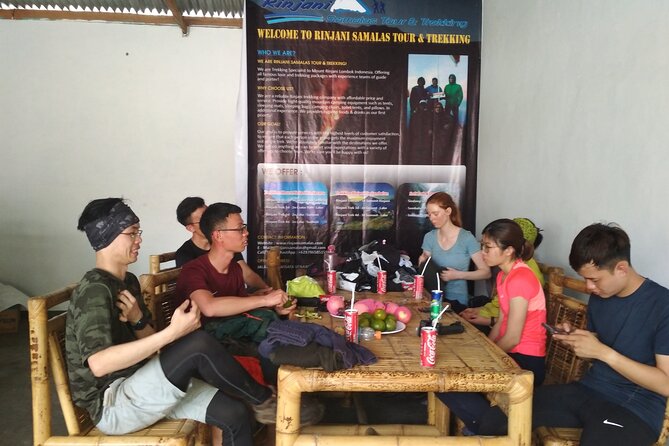
The biggest “human” advantage in this trek is the combination of an experienced English-speaking guide and professional porters. You’re not carrying your camp setup alone. The package includes the tent and sleeping gear, plus toilet tents and a pillow.
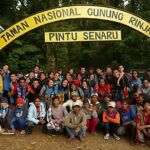
In the feedback patterns, the names that show up most are people who are credited with patience and encouragement. Guides like Nas, Supi, Edi, Azmi (often mentioned as a key contact point), and Sufi come up for their calm leadership during tough moments. The tone in the notes is consistent: guides helped hikers keep going, especially when the summit attempt got mentally heavy.
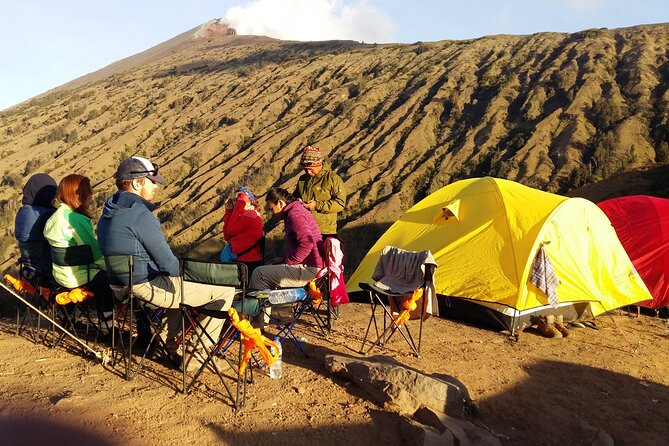
Porters get praised for setting camp quickly and carefully, with camps described as clean and well-prepared. One detail that pops up: they set up not just tents, but also camp seating like tables and chairs. That turns “camp” from survival mode into actual recovery.
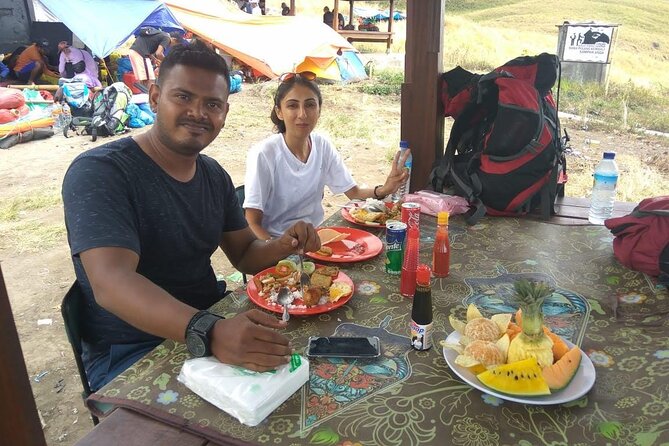
Food is another major theme. The trek includes all meals, snacks, fruits, and drinks. People mention that the meals were plentiful and delicious, with curry called out in particular. On a hike like this, good food matters because it helps you keep energy steady, not just fill your stomach.
Two practical caution points from the same context:
- You should budget for tipping your guide and porter since tipping is not included.
- If you have a lot of personal belongings and want extra support, an extra porter is an option, but it’s not included.
If you’re the kind of hiker who needs structure and encouragement, this team setup can be a big part of why the experience lands well.
Food, gear, and comfort: what’s included and what you still need
The included camping gear list is a strong one:
- tents
- sleeping mats
- sleeping bags
- camping chairs
- toilet tents
- pillow
That coverage is useful because it reduces the “what did I forget” stress right before a mountain trek. It also means you can pack light without sacrificing sleep quality.
Meals are fully handled: all meals, snacks, fruits, and drinks on the trek are included. This is one of those quiet value add-ons. When food is taken care of, you can focus on eating at the times your body needs it, not on rationing cash or searching for snacks.
What you’ll still want to bring is personal hiking gear and basic clothing, but the trek data doesn’t list those items. Still, with a 2:00 am wake-up and a 3:00 am start on Day 2, plan for a night hike feel: bring what you need for visibility and warmth.
Comfort upgrades show up at the right moment. The itinerary includes shower time after lunch at the lake/hot spring area. For many people, that’s the mental turning point between “surviving the summit day” and “making it to the end feeling better than you started.”
Price and value: does $360 make sense for this 3D2N package?
At $360 per person, the big question is what you’re actually paying for. Here, a lot is included: national park entrance fees, camping equipment, an English-speaking guide, professional porters, and all meals plus snacks, fruits, and drinks.
So you’re not just buying “a hiking route.” You’re buying an operating system for the trek: gear logistics, food support, and the staffing that lets you hike without managing every camp detail.
The value gets even clearer when you consider the time. This is not a casual day hike. It includes a midnight summit run, camping at high elevation, and multiple meals across three days. The cost also fits a small-group cap of up to 10 people, which usually keeps the experience more manageable.
One thing to keep an eye on is pricing fairness for small groups. In one solo booking story, the hiker wanted a group to lower the price. They paid the 3 to 5 person price even when they hiked with a 2 people group arrangement. That doesn’t necessarily mean it will happen for everyone, but it’s a good reminder to confirm how pricing works for solo travelers or very small groups.
For most people, if you want a guided, fully supported summit-to-lake trek without handling food and camp logistics yourself, $360 looks like a solid value.
Who should do this trek, and who should skip it
This is best for people with reasonable hiking stamina and moderate physical fitness. The trek itself is described as ideal for someone in a reasonable level of fitness who wishes to trek and explore Rinjani.
It’s also not a “total beginner” walk. The route includes steep climbing, and some notes mention that the descent can be quite steep. If you’re brand-new to hiking, you might feel okay on Day 1 grassland, then get slammed on the steep rim climbs or the downhill portions later.
On the other hand, if you’re comfortable hiking several hours, keeping a steady pace, and you can handle an early wake-up, this plan can be a great first serious Rinjani trek. The small group size helps, too, because you can move with your guide and porters without the trail turning into a crowded rush.
It also works well for solo hikers who want a group and structure. You’ll still meet and trek with others, and the guide and porters handle the hard parts of camp and meals.
Should you book this Rinjani Samalas 3D2N summit-to-lake trek?
Book it if you want a guided Rinjani experience where:
- the itinerary includes the big milestones you came for: summit, sunrise, Segara Anak Lake, and the crater rim camps
- food and camping gear are handled
- you like having an English-speaking guide who can help you keep going when altitude and steep trail take over your brain
Consider skipping or choosing a different plan if:
- you’re looking for an easy hike
- steep descents and early starts sound like a deal-breaker
- you prefer to manage your own camp and food, because this package is built around full support (which is great, but it’s a different style than DIY)
If your main goal is to hit the summit and still enjoy the lake and hot spring break, this route matches that goal. It’s not gentle, but it’s well structured—and the support crew is a major reason the experience rates so high.
FAQ
How long is the trek and what are the main days like?
It runs for about 3 days and 2 nights. Day 1 starts around 8:00 am from Sembalun and ends with camping on the crater rim. Day 2 includes an early wake-up around 2:00 am, a summit start around 3:00 am, sunrise in the morning, time down at Segara Anak Lake and hot springs, then a climb to camp again on the Senaru crater rim. Day 3 finishes with a trek down to Senaru Village that takes about 5 hours.
Where do I meet the tour, and where does it end?
You meet at the Rinjani Samalas Tour and Trekking office in Senaru. The activity ends back at the meeting point area.
What is included in the $360 per person price?
Included are Mount Rinjani National Park entrance fees, camping equipment (tents, sleeping mats, sleeping bags, camping chair, toilet tents, and pillow), an experienced English-speaking guide and professional porters, and all meals plus snacks, fruits, and drinks on the trek.
What fitness level do I need?
The trek is described as ideal for people with a reasonable level of fitness and moderate physical fitness. It also involves steep sections, so it’s not meant for total beginners.
How big is the group?
This tour/activity has a maximum of 10 travelers.
What if weather is bad or I need to cancel?
You can cancel for a full refund if you cancel up to 24 hours in advance of the experience start time. If the trek is canceled due to poor weather, you’ll be offered a different date or a full refund. There is also a minimum number of travelers requirement, and if that isn’t met, you’ll be offered a different experience/date or a full refund.