REVIEW · LOMBOK
Mount Rinjani Second Summit Trekking ( 2Days-1Night )
Book on Viator →Operated by Dhyns Rinjani Hiking · Bookable on Viator
A volcano rim camp beats most day hikes.
This Mount Rinjani second summit package sends you to the crater rim for one night on Lombok, with an English-speaking guide leading the way while porters handle the kitchen and camping gear. I like that it’s built around real comfort for hikers who want the big views without stuffing their own backpack with everything.
Two things I really like: you get the payoff of sunrise over the Gili Islands and a view toward Bali’s Mt. Agung, plus a clear lookout at the crater lake from the Senaru rim. I also love the small-group feel (max 10) and the way the team supports you on a hard hike, including motivation from guides like Adet and Oky in the experience stories I saw.
One consideration: this is still Rinjani, so even though the rim route fits less-experienced trekkers and families with older kids, you should expect a steep, tiring day. And the $170 price does not include the entrance fee (IDR 410,000 per person), plus tips and any transport you need before/after.
In This Review
- Key Highlights You’ll Actually Care About
- Why Senaru Crater Rim Feels Like a Volcano-Sized Shortcut
- The Carry-Plan: What You Bring vs. What Porters Handle
- Day-by-Day: Sunset to Sunrise on the Rim
- The Guide and Porter Team: The Difference Between Hard and Miserable
- Meals, Water, and Camping Comfort: What’s Included Really Adds Up
- Price and Value: What $170 Actually Buys You
- Weather Rules Everything on Rinjani
- Who Should Book This Trek, and Who Might Want Another Option
- Quick Logistics Notes That Save You Time
- Should You Book Dhyns Rinjani Hiking’s 2 Days-1 Night Crater Rim Trek?
- FAQ
- What is included in the Mount Rinjani crater rim trekking package?
- Is the entrance fee included?
- How many people are in the group?
- Do you provide drinking water during the trek?
- Is luggage storage available?
- What happens if weather is bad or I need to cancel?
Key Highlights You’ll Actually Care About
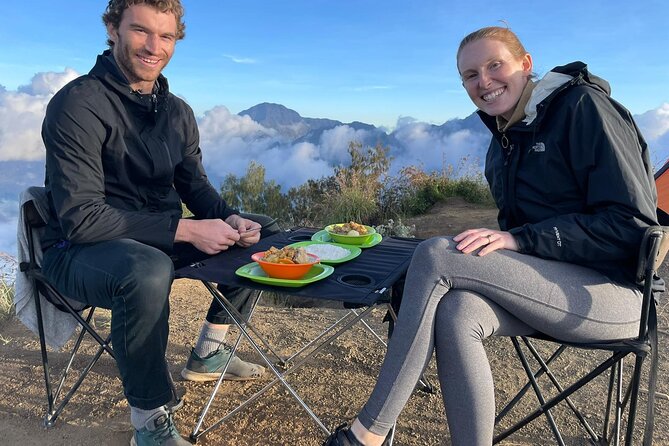
- Crater rim camping with tents and even a restroom tent set up for you
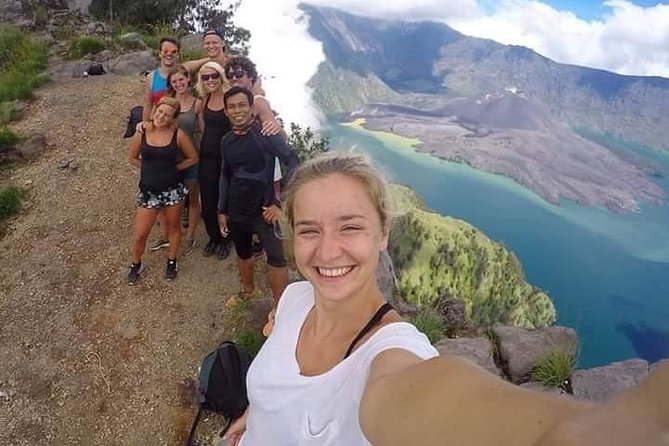
- Senaru viewpoint for wide crater lake views and the three Gili islands
- Sunrise viewing with Gili Islands and Bali’s Mt. Agung in the same scene
- Porters handle the heavy stuff, including cooking gear and camping equipment
- English-speaking guide support, with names like Darwin, Ali, Nur, and Oky showing up in past experiences
- Luggage storage at the hiking office, so you can hike lighter
Why Senaru Crater Rim Feels Like a Volcano-Sized Shortcut
Mount Rinjani is famous for being serious business. Even the “short” version still has you climbing on active-volcano terrain, but this crater-rim focused trek keeps the experience tied to the most visual parts of the mountain. You’re camping on the rim, then doing a sunrise moment that many people remember more than the hardest steps.
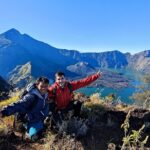
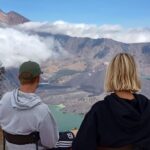
The Senaru rim part matters because it’s a viewpoint. You’re not just walking up to suffer. From here, you can see the crater lake, and on a clear day you’ll also get that three-Gili-island view. That combination is why this option works so well if you want the volcano drama without committing to a longer, summit-heavy itinerary.
Also, you don’t have to be a hardcore trekker to join. The trek is described as suitable for less-experienced trekkers and families with older children, and the guidance style is clearly built for keeping you moving safely and steadily.
You can also read our reviews of more tours and experiences in Lombok.
The Carry-Plan: What You Bring vs. What Porters Handle
Let’s talk weight, because this trek is won or lost in your shoulders.
What’s included covers the big stuff:
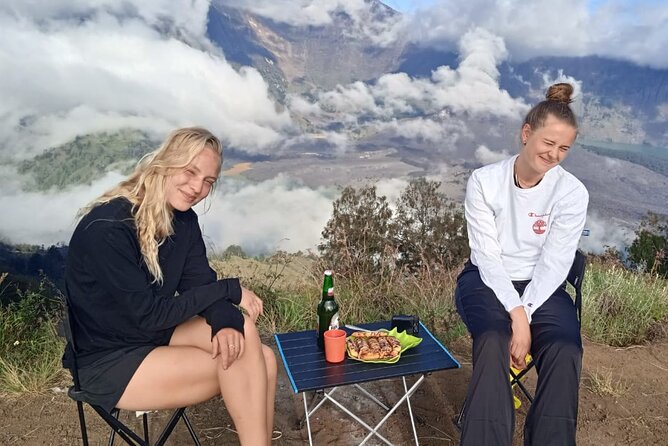
- Tent, sleeping bag, mattress, pillow, and a chair
- A toilet tent and paper
- Kitchen setup support carried by the team
Your guide leads, while porters carry the food, cooking gear, and camping equipment. That setup is the main reason many people feel this is more approachable than going independent. It’s also the reason the hike can be family-friendly in the way it’s marketed: you’re not expected to improvise camp logistics at high altitude.
There’s also luggage storage at the Dhyns Rinjani Hiking office. That’s a huge practical win. You can leave extra items behind and show up ready to hike with a lighter load, instead of dragging a full travel bag up the mountain.
One more thing: an extra porter for your own luggage is not included. So if you arrive with a big pack you plan to keep with you, you’ll likely pay extra (or you’ll carry it yourself). This is one of those small details that changes your day.
Day-by-Day: Sunset to Sunrise on the Rim
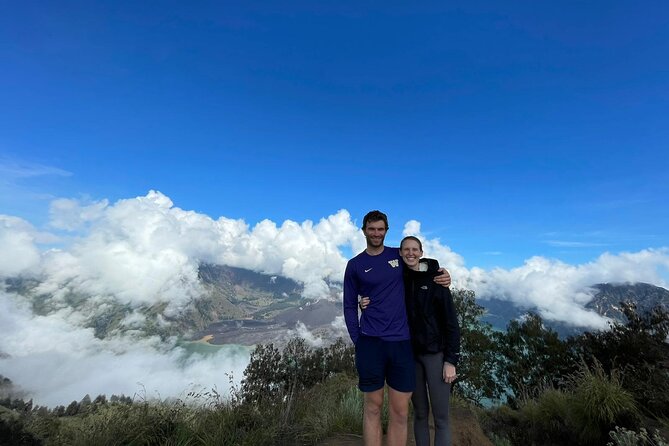
Even with the name Second Summit, this specific package is focused on the crater rim experience. That shapes the whole rhythm.
Day 1: Senaru up to the crater rim and a sunset viewpoint
You start at the Rinjani Trekking Official meeting point in Senaru (Jln. Pariwisata, Senaru, Kec. Bayan, Lombok Utara). From there, you hike toward the Senaru crater rim, where the goal becomes camp and a sunset viewing moment. This is where you’ll feel the volcano scale most strongly. The rim is the “front row seat.”
What helps on day one is that you’re not managing camp alone. The team brings the cooking gear and camping equipment, so your job is mainly to keep your pace and get yourself safely uphill. If your legs are already tired before camp, that’s where having a guide who sets expectations and controls speed makes a difference.
Overnight: sleep on the rim
Camping on an active volcano rim is the core of this trek. You’ll have a tent setup, plus sleeping gear (sleeping bag, mattress, pillow) and even a restroom tent. In other words: you’re camping, but you’re not roughing it in the “no basic comfort exists” way.
Day 2: sunrise views and crater rim return
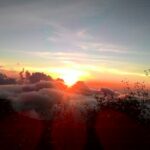
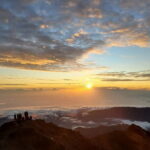
The second day is about that famous payoff: sunrise over the Gili Islands and toward Bali’s Mt. Agung, along with views of the crater lake from the rim. It’s the kind of scene that makes the steep climb feel like it had a point.
After sunrise, you return back to the meeting point. In the experience stories shared by others, the guide-porters team repeatedly comes up for pacing and support—names like Ali and Oky show up in notes about safety, patience, and getting people to the rim and through the steep sections.
The Guide and Porter Team: The Difference Between Hard and Miserable
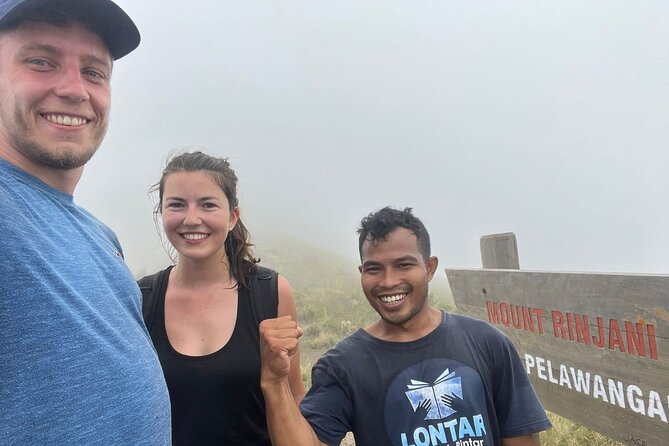
On Rinjani, the mountain is the obvious challenge. The less obvious challenge is whether your team helps you stay calm and steady when the trail starts feeling long.
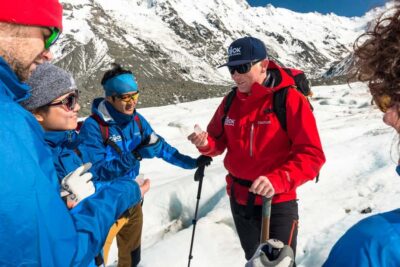
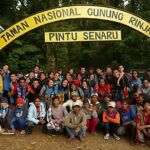
The trek includes an experienced English-speaking guide and professional porters. That matters because communication isn’t just nice—it can change how you handle steep stretches, fatigue, and timing for sunrise/sunset.
I also liked seeing specific guide names associated with good experiences:
- Darwin, noted for making the experience safe and comfortable
- Adet, credited with motivating hikers through a point where they weren’t sure they’d make it
- Ali, praised for responsiveness and for helping keep the group moving while answering questions
- Nur and Oky, mentioned alongside strong care and organization, including support that goes beyond just walking pace
- Porters like Saleh and the supportive presence of Jen, called out in positive stories for care and attention
You should treat this as a sign that the company doesn’t only hire bodies—they focus on a team style that handles the human side of a tough hike: patience, encouragement, and practical guidance.
Meals, Water, and Camping Comfort: What’s Included Really Adds Up
Food and water can make or break a trek day, especially when you’re climbing hard and trying to keep energy steady.
This package includes:
- Food during the trek
- 3 litre mineral water a day per person
That water amount is a big deal on a volcano trek. Dehydration can sneak up fast, and having water handled by the team reduces your stress and pack weight.
Camping comfort is also part of the value:
- Mattress and pillow (not just a sleeping bag on the ground)
- A chair (small detail, big morale after hours on your feet)
- Tent, plus restroom tent and paper
If you’ve done treks where “camp gear included” means you get a basic blanket and a dream, this setup is more properly thought through.
The only “don’t forget” part: entrance fees are not included, and tips for guide and porters are not included. So while the package includes meals and camp gear, you still need to budget a little extra.
Price and Value: What $170 Actually Buys You
$170 per person is not pocket change, so here’s the reality check: what you’re paying for is the organization that turns a steep multi-hour hike into a managed experience.
Your money goes toward:
- Guide and porters (including cooking gear and camping equipment)
- Food and mineral water (3 litre/day/person)
- Full camping setup: tent plus sleeping gear and basic comfort items
- Luggage storage at the hiking office
- Mobile ticket (you get something easy to manage digitally)
What you still pay separately:
- Entrance fee: IDR 410,000 per person
- Tips for guide and porters
- Transport pick-up before and transfers after the trek (not included)
So the real “all-in” cost depends on your transport needs, plus whether you tip. But even after you add those, you’re still paying for a system: people to carry camp and food, a guide to lead, and the logistics of sunrise viewing from the rim.
For me, the value is strongest if you want the crater-rim experience and sunrise views, but you don’t want to run the whole operation yourself.
Weather Rules Everything on Rinjani
Rinjani weather can flip fast, even when you think you’re prepared. This experience explicitly requires good weather, and if conditions cause cancellation due to poor weather, you’ll be offered a different date or a full refund.
You’ll also want to plan for rain season risk. In December, one earlier experience noted they climbed in a less pleasant month and the trek team still kept things moving. That’s a good reminder: rain gear, a dry layer, and patience are not optional—they’re your survival kit.
A practical approach:
- Pack for wet conditions and temperature changes
- Don’t count on every sunrise being perfectly clear
- Trust that the team is handling the “go/no-go” reality of mountain weather
Who Should Book This Trek, and Who Might Want Another Option
This trek is a strong match if you:
- Want a volcano crater rim experience without signing up for the longest, summit-focused version
- Prefer a guided trip with porters carrying the heavy, camp-related load
- Like the idea of sunrise views over the Gili Islands and a crater lake viewpoint
- Travel with kids old enough for hiking and older enough to understand pacing and safety rules
It also fits people who are less experienced, since the trek is described as suitable for less-experienced trekkers and families with older children, with a guide-led pace.
Who might want something else:
- If you’re chasing the full, hardest Mount Rinjani challenge, this may feel “short” because it’s described as rim-only. The bigger summit experience is mentioned as far more intense, and this route is positioned as one of the alternatives.
In plain terms: this is for people who want the rim moment and the sunrise story, not only the hardest badge.
Quick Logistics Notes That Save You Time
You’ll meet at Rinjani Trekking Official in Senaru (Jln. Pariwisata, Senaru, Kec. Bayan, Kabupaten Lombok Utara, Nusa Tenggara Bar. 83354, Indonesia). The office hours listed are 7:00 AM to 1:00 PM. The trek ends back at the same meeting point.
The group size is capped at 10 travelers, which keeps the experience from turning into a long conga line. For most people, that’s a comfort factor—less crowding on narrow sections, and more room for questions.
If you care about carrying less, use the luggage storage at the hiking office. That’s one of those “quietly excellent” features.
Should You Book Dhyns Rinjani Hiking’s 2 Days-1 Night Crater Rim Trek?
I’d book this if your top priorities are crater rim camping, a view-rich sunrise (Gili Islands and Bali’s Mt. Agung), and a guided, porter-supported trek that makes Rinjani feel doable. The combination of camping gear setup, 3 litre water/day, and an English-speaking guide is exactly what you want for value.
I’d think twice if:
- You hate steep climbs even when support exists
- You don’t want to deal with additional costs like the IDR 410,000 entrance fee, plus potential tips and your own transport
One last nudge: bring the right mindset. You’re not just “going for a hike.” You’re chasing a rim view and a volcano night. If that sounds like your kind of travel, this is a solid way to do it.
FAQ
What is included in the Mount Rinjani crater rim trekking package?
The package includes a trekking guide and porters (who carry cooking gear and camping equipment), an English-speaking guide, food and mineral water (3 litre per person per day), and camping gear such as a tent, toilet tent, sleeping bags, mattress, pillow, and chair. Luggage storage is also available at the Dhyns Rinjani Hiking office.
Is the entrance fee included?
No. The entrance fee is listed as IDR 410,000 per person and it is not included in the package price.
How many people are in the group?
This activity has a maximum of 10 travelers.
Do you provide drinking water during the trek?
Yes. Food and drinking water are included, with 3 litre mineral water per day per person.
Is luggage storage available?
Yes. Luggage storage is available at the Dhyns Rinjani hiking office, and there is an option for an extra porter for own luggage that is not included.
What happens if weather is bad or I need to cancel?
This experience requires good weather. If it’s canceled due to poor weather, you’ll be offered a different date or a full refund. You can cancel for free up to 24 hours in advance for a full refund; if you cancel less than 24 hours before the start time, the amount paid is not refunded.