REVIEW · MOSHI
5 Days Marangu Route Kilimanjaro hiking
Book on Viator →Operated by BEST Kilimanjaro CLIMB | HIKE | BIKE TREK | Tanzania Safaris from Moshi & Arusha · Bookable on Viator
Kilimanjaro, made a bit less punishing. This 5-day Marangu Route trek is known as the Coca-Cola route for a gentler climb, with a summit attempt that starts in the dark and ends at Uhuru Peak. You’ll also get a real taste of vertical ecosystems, from rainforest birds and colobus monkeys to moorland and the strange moonscape above.
What I like most is how the plan builds you toward the summit. You spend nights sleeping in huts and you’re moving long enough to help your body adjust, not just sprinting to the top. I also really like the human support factor: you hike with a guide and crew that includes porters and a cook, so you’re not stuck figuring everything out solo.
One thing to consider: even on the easier Marangu profile, summit night is still steep, cold, and demanding. You’ll start between midnight and 2 am, walk over heavy scree or snow to the crater rim at Gilman’s Point, and then keep going to Uhuru before a long descent.
In This Review
- Key takeaways before you commit
- Marangu Route Basics: the “Easy” Trail That Still Hits Hard
- Moshi, the Park Gate, and Day 1 Rainforest to Mandara Hut
- Day 2 to Horombo: Moorland Views and the First Altitude Nudge
- Day 3 to the Saddle: Kibo Meets Mawenzi and the Moonscape Feeling
- Summit Night: From Midnight to Gilman’s Point, Then Uhuru Peak at Dawn
- Day 4 Descent: Cold Relief, Long Walking, and Strategic Rest
- Day 5 Back to Marangu: Mud, Forest Smells, and the End of the Climb
- What You Pay For: $1,014 Value, Meals, Huts, and the Real Cost Drivers
- Gear That Actually Matters on Marangu (Based on the Trail Demands)
- How the Crew Makes or Breaks Summit Night
- Who This Trek Suits Best (and who should rethink)
- Should You Book the 5-Day Marangu Route to Uhuru Peak?
- FAQ
- What route is this, and why is it considered easier?
- How does the summit day work for Uhuru Peak?
- Where do you sleep during the trek?
- Are meals included?
- What’s included in the $1,014 price, and what extra costs should I expect?
- Where does the tour start, and what time do you begin?
Key takeaways before you commit
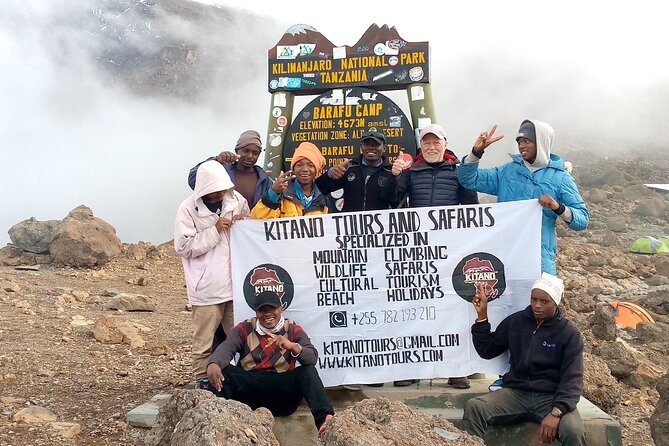
- “Coca-Cola route” pacing: smoother grades compared with many Kilimanjaro trails, which can help your morale on day after day walking
- Rainforest to moorland to moonscape: you’ll pass through several Kilimanjaro zones without needing technical climbing skills
- Huts and crew support: you sleep in huts and get meals prepared by your crew, plus guide leadership through the hardest parts
- Summit timing at Gilman’s Point: an early summit push sets you up for the sunrise experience near the crater rim
- Mud and cold are real: warm layers, rain gear, and tools like trekking poles/gaiters make the difference on the way down
- Team personalities matter: guides named in past trips include Mudi, David, Martin, Muddy, Tadey, Daniel, and Martin, with a strong focus on motivation and teamwork
Marangu Route Basics: the “Easy” Trail That Still Hits Hard
Let’s clear the first confusion: Marangu is often called the easiest route on Kilimanjaro, but it’s not easy like a stroll through a park. The real advantage is route profile—a more gradual slope and a direct line upward. That means fewer dramatic ups and downs compared with rougher paths.
Why that matters for you: on Kilimanjaro, your biggest enemy isn’t always your legs. It’s altitude fatigue plus the mental grind of long days. Marangu’s steady pacing can make it more manageable to keep going when your breathing gets weird and your legs start counting steps like it’s a full-time job.
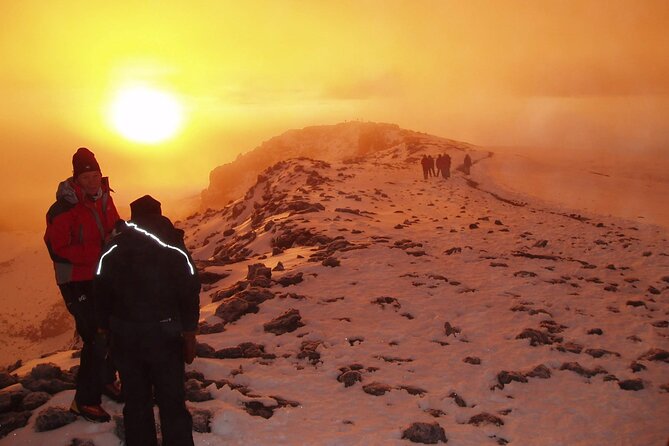
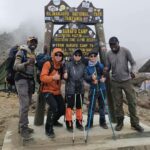
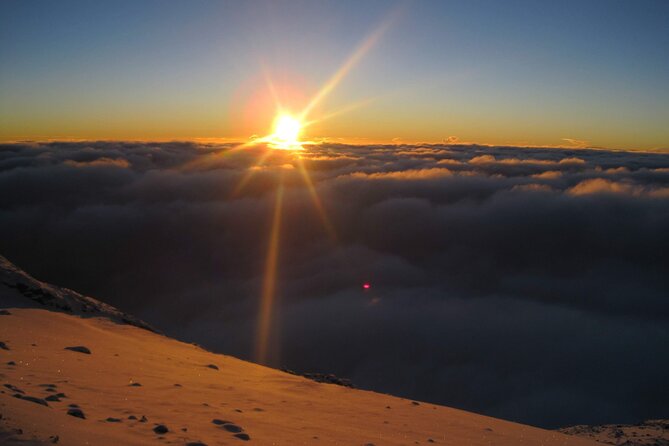
Also, this trek is designed around the big objective: Uhuru Peak, the highest point in Africa. You’ll see sunrise near the crater rim from Gilman’s Point, then make the final push and get photos at the top. This is the part people remember forever, mostly because it feels impossible until it isn’t.
You can also read our reviews of more tours and experiences in Moshi.
Moshi, the Park Gate, and Day 1 Rainforest to Mandara Hut
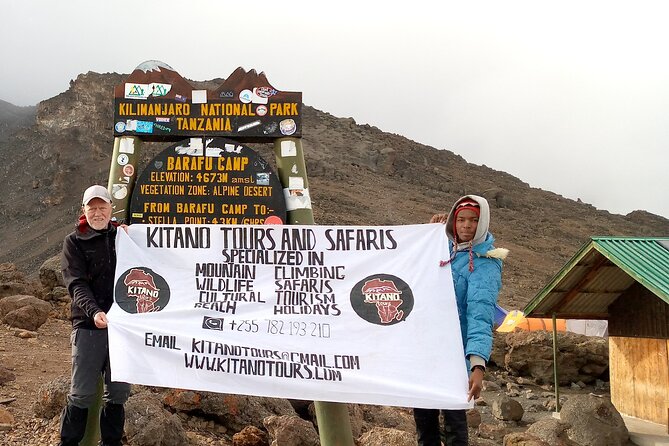
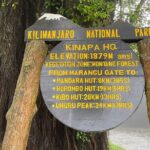
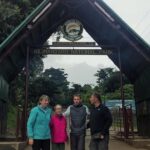
You start from Cable Millan (with the activity starting at 8:30 am). Then the plan is straightforward: breakfast and briefing first, then a drive to the Kilimanjaro National Park Gate (about 45 minutes). After registration, you begin walking into the rainforest.
Day 1 is all about getting your body moving at the right intensity. You’ll hike through forest to Mandara encampment, typically about 4–5 hours of walking for roughly 7 km, with altitude climbing from about 1,700 m to 2,740 m.
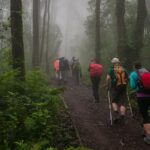
What’s special here is the change of scenery. You’re not just walking uphill—you’re switching worlds. In the rainforest, you might spot towering eucalyptus trees, birdlife, and Colobus monkeys. There’s also a side trip to Maundi Crater, which is a nice way to look out over parts of northern Tanzania and even Kenya on clear days.
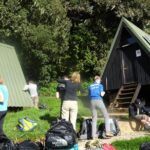
You’ll sleep at Mandara Hut and eat lunch and dinner. This is your first real acclimatization day—enough altitude gain to matter, not so much that you burn out. The drawback? Rainforest walking can be damp and uneven, so you’ll want footwear that doesn’t hate wet ground.
Day 2 to Horombo: Moorland Views and the First Altitude Nudge
Day 2 starts leaving the rainforest mood behind. You’ll move from glades into open moorlands, following an ascending path toward Horombo encampment. This day is longer—about 8 hours of walking.
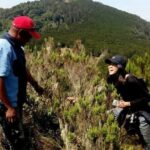
The big payoff is the view. As you gain altitude, you get clear sightlines to Mawenzi and the summit area of Kibo. On the ground, keep an eye out for giant lobelias and groundsels—plants that look like they belong in a science-fiction movie set.
This is also the day where altitude effects can show up. The trek notes that you may start feeling altitude impacts. That’s normal. It doesn’t mean you’re failing; it means your body is doing the acclimatization work you came for.
You’ll end at Horombo, and the important part is what you do with the day’s effort: eat well, keep moving at a steady pace, and don’t treat the walk like a sprint. If you rush, summit night will punish you later.
Day 3 to the Saddle: Kibo Meets Mawenzi and the Moonscape Feeling
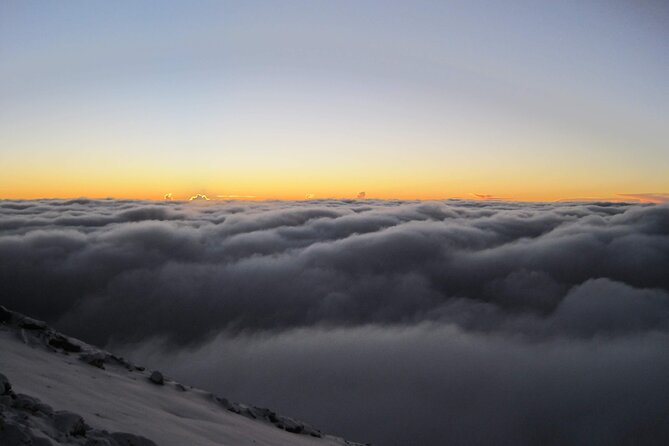
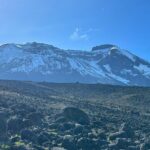
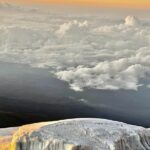
Day 3 is a turning point. You ascend toward the saddle of Kilimanjaro between Kibo and Mawenzi. Vegetation changes as you go: upper heathland shows up first, then gradually you walk into a kind of moonscape—less greenery, more rock and wind-scoured terrain.
Your walking distance is around 10 km, usually 6–8 hours, with altitude roughly 3,700 m to 4,700 m. That range is where many people start feeling the thin air more clearly.
This day is special because it sets up the next step: summit preparation. You’ll have breakfast, lunch, and dinner, then rest. The goal is not just sleep. It’s mental readiness. Summit night is where discipline matters: you need energy, calm, and the ability to keep going even when it feels slow.
Summit Night: From Midnight to Gilman’s Point, Then Uhuru Peak at Dawn
This is the day your group talks about all along the climb, even if you pretend you aren’t thinking about it.
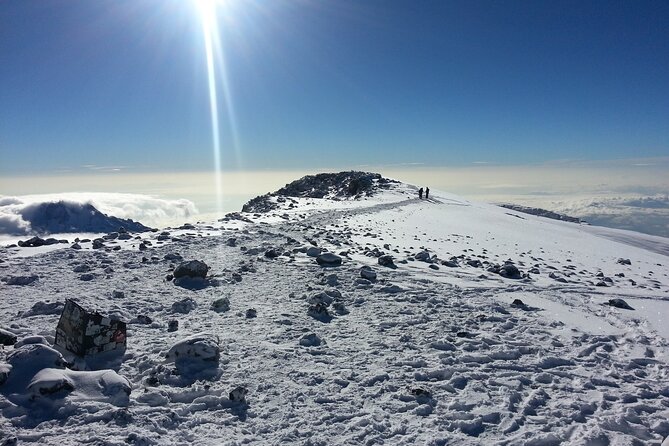
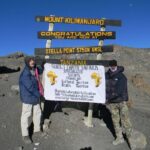
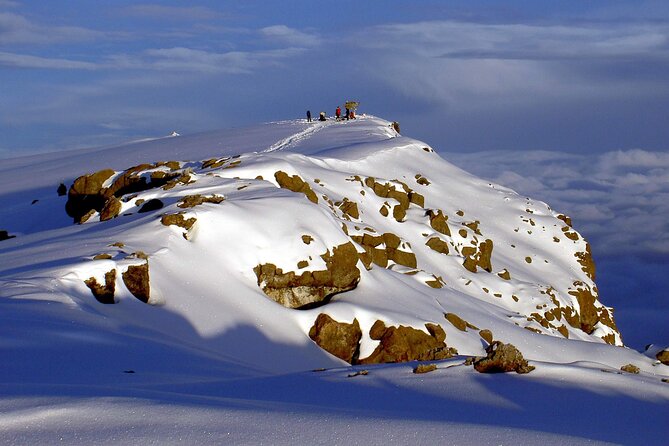
You start very early—between midnight and 2:00 am. The climb from there is steep and on heavy scree or snow up to Gilman’s Point on the crater rim. After that, you continue upward to Uhuru Peak, the highest point in Africa.
You should expect unbelievable views along the way, turning a “how long is this?” walk into “how is this real?” moments. And yes, they set things up so you get a picture taken at the summit—a practical little mercy for your future self.
Two very important notes from your plan:
- The early portion is done in the dark, so you’ll need headlamps or flashlights.
- It will be very cold. Warm layers are not optional. Even if you’re sweaty earlier in the climb, summit night brings cold fast.
The trek describes the early climbing as difficult. It’s steep. It’s repetitive. And it can feel slow no matter how fit you are. What helps is the crew and guides keeping you moving in a steady rhythm—motivating when you need it, pacing when you don’t.
Then, after reaching Uhuru, you don’t stop the story there. You begin the descent, including a lunch and rest at Kibo, before continuing down toward Horombo.
Day 4 Descent: Cold Relief, Long Walking, and Strategic Rest
Day 4 starts off with that post-summit reality: you’re proud, exhausted, and your body wants to go back to sleep forever. But Kilimanjaro doesn’t care about your feelings. It requires descending, and that descent still takes time.
You’ll descend from the summit area to Kibo for lunch and rest, then continue down toward Horombo encampment. The overall idea is to get you safely to lower altitudes while giving you enough recovery to finish day 5 strong.
This part is where the small choices matter. If you move carefully, you’ll save your knees. If you rush, you’ll feel it later. Even if the terrain looks straightforward, remember you’re descending from extreme altitude. Your legs may not respond the way you expect.
You’ll also feel the contrast: you’re likely leaving the harshest summit conditions and returning to “walkable but still demanding” conditions. That’s not the same as easy. It’s just a different kind of hard.
Day 5 Back to Marangu: Mud, Forest Smells, and the End of the Climb
Day 5 is the payoff day: lower elevations and a steady descent back to Mandara Hut, then through forest to the Marangu gate.
You’ll first walk down through moorland to Mandara Hut, then continue descending through a lush forest path to the park gate. Altitude comes down dramatically—from about 3,700 m to 1,700 m. Distance is listed around 18 km with a 5–7 hour timeframe.
This is where weather matters. The trek specifically warns that at lower elevations it can be wet and muddy. For that, gaiters and trekking poles are a smart move. They keep your feet drier and help your balance when the trail gets slick.
In terms of clothing, the plan suggests shorts and t-shirts might be enough at lower elevations. Still, keep rain gear and warmer clothing handy. Kilimanjaro weather can swing during the day, even when you’re leaving the coldest zones behind.
At Marangu gate, you meet a vehicle and drive back to your hotel in Moshi or Arusha. Then you celebrate. You should. This climb isn’t a normal hike. It’s a genuine achievement.
What You Pay For: $1,014 Value, Meals, Huts, and the Real Cost Drivers
At $1,014 per person, this trek is priced for a guided, crew-supported Kilimanjaro climb over five days. The main value isn’t just the route name. It’s the structure: you get guides, porters, a cook, park gate transfer, and sleeping in huts during the climb, plus a full set of meals across the days.
Here’s what’s listed as included:
- Crew wages, guide, cook, and porters (with fair and sustainable salary noted)
- Gate transfer
- Sleeping in huts during the climb
- Meals: 4 dinners, 5 breakfasts, and 5 lunches (as specified in the package details)
What’s not included:
- Flights
- Tipping the crew
- Visas
- Park fees and tax
- Personal items like laundry
So is it good value? For most people, yes—because Kilimanjaro logistics are expensive in labor. You’re not only buying a trail; you’re buying safe movement, food handling, and manpower to carry much of what keeps you going.
Big caution: don’t assume park fees are rolled in. Your package says park fees and tax are not included. That’s the kind of surprise cost that ruins the budget unless you check it early.
Gear That Actually Matters on Marangu (Based on the Trail Demands)
You don’t need to dress like an astronaut, but you do need the basics for altitude weather and a summit-night climb.
Here’s what your trek description points to directly:
- Headlamp or flashlight for the summit climb portion in the dark
- Warm layers for summit night, when cold stays with you until you start descending
- Rain gear because lower parts can be wet and muddy
- Trekking poles and gaiters to handle muddy sections on the way down
- Normal hiking clothing like shorts and t-shirts may be fine at lower elevations, but keep layers for when temperatures drop
Also think about comfort and foot care. You’ll walk a lot—especially the longer descent day. Good socks and shoes that handle mud will help your day 5 legs survive.
How the Crew Makes or Breaks Summit Night
If you’ve ever heard people say Kilimanjaro is as much mental as physical, here’s the practical version: summit night is not a test of toughness. It’s a test of pacing, breathing, and not panicking when you can’t speed up.
That’s where the crew focus shows up in the strongest way. Past experiences tied to this operator highlight the team’s ability to motivate and support people through the hardest hours. Guides named include Mudi, Muddy, Tadey, David, Martin, Daniel, plus others like Emmanuel, Migaan, Michael seen in team role credits.
You may sing, joke, and swap Tanzania life stories on the way—one review-style theme here is that the trip can feel more family-like than strictly business. That matters because a friendly group lowers stress, and lower stress helps you climb better.
Your key takeaway: choose a trip where your guide keeps the pacing realistic and the mood steady. This trek is set up for that kind of team-led experience.
Who This Trek Suits Best (and who should rethink)
This trek says most travelers can participate, which fits the Marangu approach: non-technical walking, gradual profile, and hut nights.
You’ll likely love it if:
- You want a 5-day plan that helps with altitude adjustment
- You prefer a route that’s known for being easier in terms of grades
- You want a supported hike with a guide, cook, and porters
- You’re aiming for Uhuru Peak without technical climbing
You might think twice if:
- You hate cold starts and early nights. Summit night is brutal in timing and temperature.
- You’re expecting “easy” in the everyday sense. Steep scree and a long summit push are still part of the deal.
This is the right style for people who want the summit experience, not just a sightseeing walk.
Should You Book the 5-Day Marangu Route to Uhuru Peak?
If your dream is to stand on Uhuru Peak and you want a climb that’s paced to help your body adjust, this 5-day Marangu Route is a strong match. The combination of huts, crew support, and a steadier trail profile is exactly what makes it workable for many first-time Kilimanjaro hikers.
Book it if you’re prepared for the summit night reality: headlamp, warm layers, and the long steep push from Gilman’s Point. Book it if you want a guided experience where motivation and logistics are handled, not something you DIY from scratch.
Skip (or choose a different plan) if you’re not ready for cold, darkness, and the grind of altitude. Even the “easy” route demands respect.
FAQ
What route is this, and why is it considered easier?
This is the Kilimanjaro Marangu Route, often called the Coca-Cola route. It’s described as having a more gradual slope and a direct path compared with harder alternatives.
How does the summit day work for Uhuru Peak?
The summit attempt starts very early, between midnight and 2 am. You climb steep terrain up to Gilman’s Point on the crater rim, then continue to Uhuru Peak. The plan includes getting a picture at the summit.
Where do you sleep during the trek?
You sleep in huts during the climb, including Mandara Hut on day 1 and hut-based sleeping at the other encampments across the route.
Are meals included?
Yes. The trek includes breakfasts, lunches, and dinners across the days of the climb (with 4 dinners, 5 breakfasts, and 5 lunches listed).
What’s included in the $1,014 price, and what extra costs should I expect?
Included items are the guide and crew wages (including cook and porters), gate transfer, hut sleeping during the climb, and meals. Not included are flights, visas, park fees and tax, and tipping.
Where does the tour start, and what time do you begin?
The activity starts at Cable Millan, 3445 Rengua Rd, Tanzania, with a listed start time of 8:30 am.