REVIEW · MOSHI
7 Days Kilimanjaro Climbing | Hiking Tour via the Lemosho Route
Book on Viator →Operated by KILIMANJARO CLIMBING TOURS · Bookable on Viator
Kilimanjaro is a week-long test, and the Lemosho Route makes it feel oddly doable. I like that this trek is structured for real pacing: you start through forest and shifts into savannah, then higher moorland, then the big alpine zones where the air thins. Meals and camping support are handled for you, so you’re mostly focused on walking, resting, and staying warm.
The best part for me is the solid guidance right from Moshi, including a helpful company director named Geoffrey who answers questions. One consideration: this is still a summit climb, so altitude can stop you even with good gear, good porters, and a great guide.
In This Review
- Key points before you choose Lemosho
- Moshi meet-up, transfers, and the start of your Kilimanjaro week
- Day 1: Londorosi entry and Big Tree Camp (Mti Mkubwa)
- Day 2: Shira Camp 1 and Shira Camp 2 via jungle to savannah
- Day 3: Moorland, Lava Tower acclimatization, and Barranco Camp
- Day 4: Barranco Wall to Karanga Valley
- Day 5: Barafu Camp, the elevated desert, and pre-summit rest
- Day 6: Uhuru Peak night plan, cold temperatures, and the sunrise payoff
- Day 7: Down to Mweka Gate, certificates, and back to Moshi
- Price and value: what $965 buys you (and what to budget for)
- What camping gear and “pack light” really means on Kilimanjaro
- Who this trek fits best: your body, your mindset, and your weather expectations
- Should you book the 7-Day Lemosho Kilimanjaro climb from Moshi?
- FAQ
- What route does this Kilimanjaro tour use?
- How long is the trek?
- How much does the tour cost?
- What’s included in the price?
- What is not included?
- Where do we meet and when does it start?
- Is the tour cancellation refundable?
- Is there a weather contingency?
Key points before you choose Lemosho
- Route variety from forest to alpine so your body and eyes both get a change of scenery
- Camping gear and tents provided, which helps you pack lighter than DIY treks
- Meals included across the trek, so you’re not hunting food at altitude
- A real acclimatization day with a visit up to the Lava Tower area before descending to sleep lower
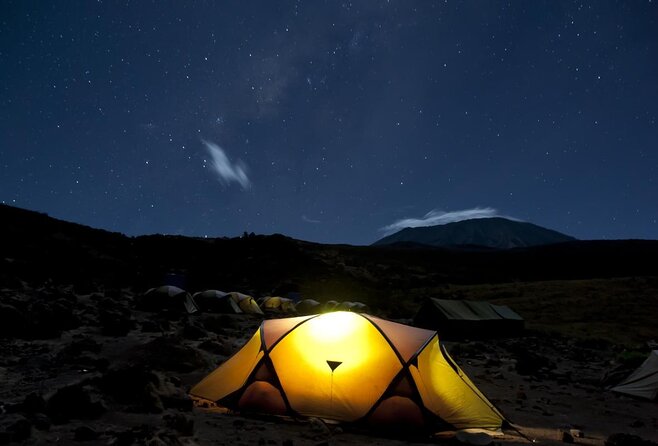
- Summit push starts from Barafu at very early hours, meaning layers and cold-weather planning matter
Moshi meet-up, transfers, and the start of your Kilimanjaro week
Most Kilimanjaro days are won or lost in the early logistics. This tour is based in Moshi, and the big win is that transfers from Moshi are included, plus pickup is offered. That means you spend less time wrangling rides and more time getting your head right for the trek.
You meet at Burigi Chato Safaris CO LTD on Mkwawa Street in Moshi. Start time is listed as 8:30 am, so plan to eat a calm breakfast before you go. If you’re coming from a tour in town the day before, keep your evening low-key—your best altitude strategy is not to “celebrate” too hard the night before the climb.
You can also read our reviews of more tours and experiences in Moshi.
Day 1: Londorosi entry and Big Tree Camp (Mti Mkubwa)
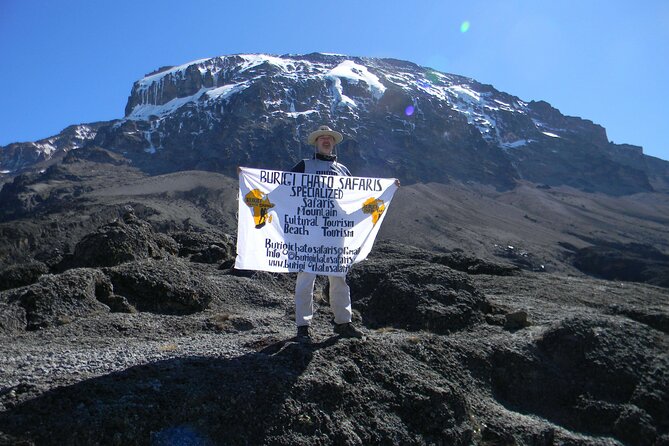
Day 1 is about getting moving without trashing your legs. After breakfast at your inn, a driver picks you up around 10:00 to 10:30 am, joins the team, and heads to Londorosi entryway. You’ll go through the park enrollment process, then you can grab lunch before your walking day officially begins.
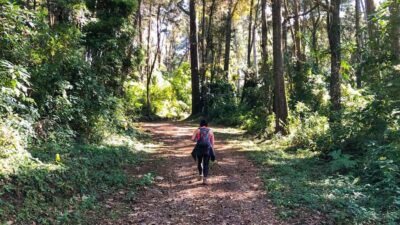
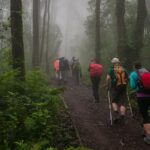
From Lemosho Gate, the trek starts in lush forest, where you may spot high-contrast colobus monkeys as you follow the trail toward Big Tree Camp (Mti Mkubwa). It’s a good day to settle into the rhythm: slow steps, steady breathing, and getting used to the feel of trekking at altitude that’s not yet screaming at you.
What I like about the first day on Lemosho: it’s scenic, but not so aggressive that you feel destroyed before you’ve even started acclimatizing.
Possible drawback: you’re still doing driving time plus walking time, so if you’re prone to getting carsick, tell your guide early and take it seriously with hydration and rest.
Day 2: Shira Camp 1 and Shira Camp 2 via jungle to savannah
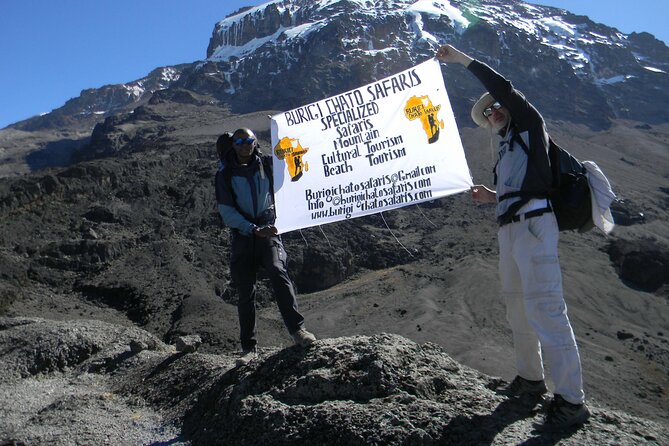
Day 2 has a classic Kilimanjaro “biome shift” feeling. You walk around 8 km through tropical jungle, then transition toward savannah and rougher terrain. There are also water streams to cross, so you might end up with wet footwear. This is the day where good socks and a workable shoe plan really matter.
You reach Shira Camp 1, stop for lunch, and enjoy one of the big view moments: the best perspective on Kibo from Shira edges, depending on cloud cover and weather. After that, you keep climbing to Shira Camp 2 for the evening.
Why this day is valuable: the views give your brain motivation, but the walking also teaches your pacing. You learn what “steady effort” feels like before the higher, colder days.
Consideration: with stream crossings and mixed terrain, you’ll want to keep your pace controlled. Going too fast early is a common way to end up paying for it later.
Day 3: Moorland, Lava Tower acclimatization, and Barranco Camp
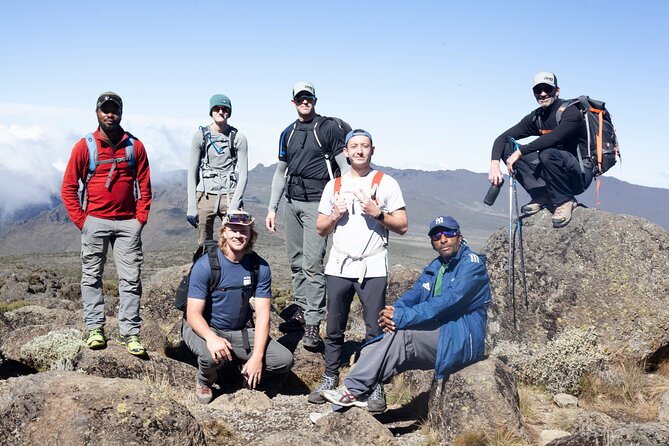
Day 3 is the one you’ll remember for acclimatization. You cross moorland vegetation, then the zone of giant heather, and arrive at Shira Plateau—not just scenic, but also long and fairly level, which helps you settle into the day.
Then comes the key move: a climb up toward the Lava Tower area (4,640 m) for lunch. After the high point for the day, you travel down while spotting giant Senecio kilimanjari trees (the “cabbage” giant plant look). Eventually you reach Barranco Camp (3,960 m).
This is one of the most important parts of the trek because it follows a proven idea: you gain altitude for acclimatization, then you sleep lower than the day’s high point. Your body has a chance to adapt rather than only getting hammered by continuous ascent.
Possible drawback: even when a day is planned for acclimatization, it can still feel like effort because you’re working above 4,000 m. Hydration and slow pace matter more than “pushing through.”
Day 4: Barranco Wall to Karanga Valley
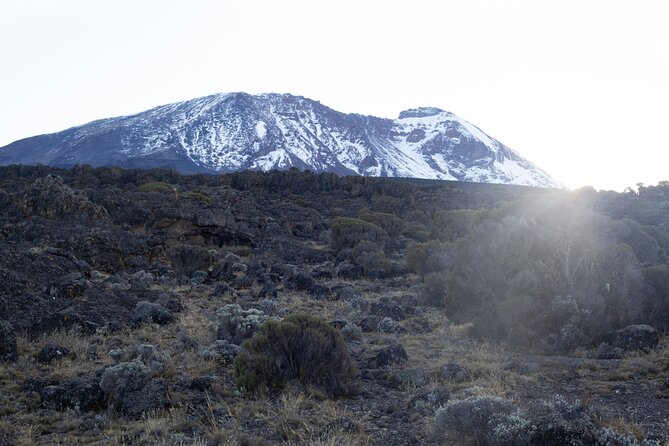
Barranco Day is where many people start feeling the difference between “walking” and “hiking that actually climbs.” You’ll tackle the Barranco Wall—not described as technically extreme, but it’s specialized and tiring, plus it’s longer than it looks on a map.
Once you finish that wall work, you descend toward the Karanga Valley (3,963 m). You rest, mingle with the group, eat, and then head back to your tent for the night.
What I like about this day: it’s a mental milestone. You’re past the initial forest and Shira zones, and now you’re in the part of the trek that feels like real progress toward the summit.
Consideration: if you’re the type who tries to prove you’re fine, this is a day to be honest with your guide. The wall burns energy. Save your energy for the summit night.
Day 5: Barafu Camp, the elevated desert, and pre-summit rest
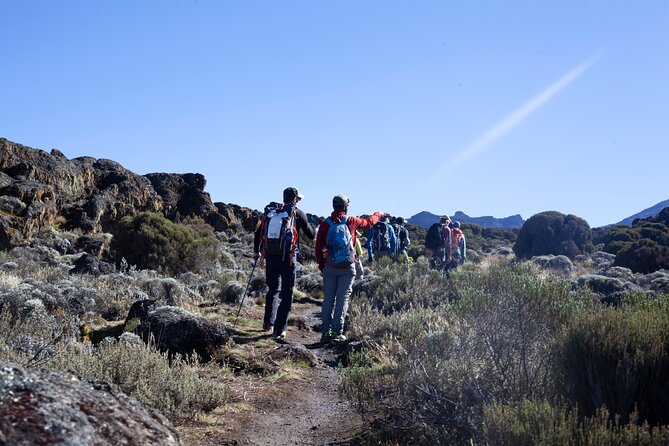
Day 5 sets up the final push. After breakfast, you follow a trail that takes you toward the west edge, described as a route that follows a crevasse. You eventually reach Barafu Camp (4,664 m)—a short walk by distance but troublesome by effort, especially because of altitude and the “feel” of the air.
The trail is marked by cairns, and you’re asked to go gradually. When you arrive at Barafu, it can be very cool. You’ll eat your initial dinner, then get your pre-summit rest for the climb that typically begins around 11:00 to 12:00 am.
This is also a practical day for expectation-setting: above 4,000 m the description shifts to an elevated desert feel. You might notice birds like the white-necked raven around the camping area. The tour info also notes no water for washing and no water streams over this rise, so plan your comfort accordingly. Your “freshen up” options at Barafu are limited.
Why Barafu Day matters: it’s where your summit success strategy becomes simple—warm layers, calm head, and enough rest to start moving when it’s dark and cold.
Potential drawback: if you hate cold nights, or you don’t pack layers well, this day can be miserable fast. You’ll want to treat the temperature shift like a serious event, not an afterthought.
Day 6: Uhuru Peak night plan, cold temperatures, and the sunrise payoff
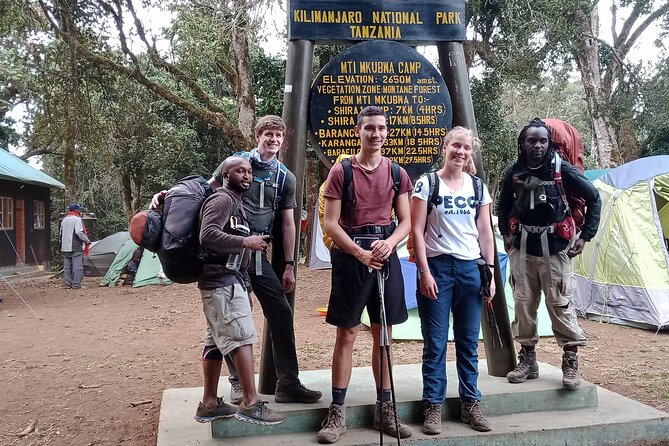
Day 6 is the big one. Before you go, you have coffee and treats or rolls, then you put on the rest of your summit layers—your “top-of-the-world” outfit. The climb from Barafu to Uhuru Peak is described as taking about 6 to 7 hours.
Temps can get brutally cold. The tour notes that in June, the thermometer can drop to -20°C. Even if your dates are different, you should assume cold conditions and pack to handle it. This isn’t a day for being brave with thin gear.
The summit climb is a slow-walk game. You’re told to walk gradually and follow your guide’s directions. On a night climb, small mistakes stack up fast: too much pace, too little hydration, or layers that are wrong for how you actually sweat.
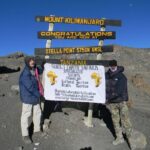
At Uhuru Peak, you’re rewarded with stunning views and, if the weather allows, a fantastic dawn. Then you head back down, making short memories at the top and turning attention to survival-level comfort: staying warm and moving steadily downhill.
Possible drawback: even with a great plan, weather and altitude are real variables. You might be ready, your team might be ready, and still the mountain can say no.
Day 7: Down to Mweka Gate, certificates, and back to Moshi
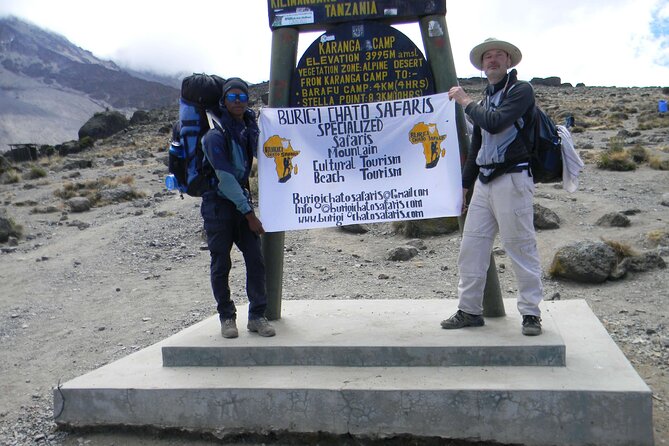
Day 7 is mostly about finishing well. After breakfast, you descend to Mweka Gate, where you sign out and receive certificates. Then you transition back to town: the driver-guide takes you to your lodging in Moshi Town along with the team.
It’s also the moment where you can organize a celebration with your aide if you want—something quick with the group after the climb. If you have plans right after, you’ll at least have your legs and head back in civilization mode.
This final day is shorter on stress, but still take it seriously. The descent is when tired knees complain loudly. Take small steps, watch your footing, and keep going until the gate.
Price and value: what $965 buys you (and what to budget for)
At $965 per person, this trek isn’t cheap, but it’s not just you paying for the view. The tour includes all fees and taxes, a guide, and meals across the trek (listed as 6 breakfasts, 7 lunches, and 6 dinners). Camping is supported too: tents are provided and camping gear is included so you can keep your pack more manageable.
Transfers from Moshi are included, and there’s pickup offered, plus the tour lists group discounts and a mobile ticket.
What you’ll likely still pay extra:
- Tipping the guide (not included)
- Visas, and medical/travel insurance
- Flight costs
- Airport pick up costs
- One night hotel accommodation before the tour
So the value question comes down to this: are you avoiding the hardest part—planning, staffing, food, and mountain logistics? If yes, the price looks fair for a properly guided trek with included meals and camping support.
If you’re someone who wants to control every variable yourself, you might feel constrained by what’s included and what isn’t. But for most people, that structure is the point.
What camping gear and “pack light” really means on Kilimanjaro
This tour explicitly pushes the pack-light idea: tents are provided, and camping gear is included. That matters because Kilimanjaro success isn’t about carrying your entire life on your back. It’s about keeping your load realistic so you can keep your pace controlled on steep, cold, high-altitude days.
Practically, you’ll want to think about two categories:
- Your on-person essentials (layers, water plan, headlamp, meds you actually need)
- Everything else that the crew can handle more efficiently
You’ll also notice where comfort is limited. Barafu has no water for wash, so don’t count on daily “reset” hygiene. The mountain is about function, not spa day.
Who this trek fits best: your body, your mindset, and your weather expectations
This is best for people who want:
- A guided summit attempt with real structure
- The chance to see multiple Kilimanjaro environments in one week (forest, moorland, alpine)
- A trek where meals are handled and tents are set up for you
It’s not a good match if you’re looking for leisurely sightseeing only. The days include long walking segments, a tougher wall day, and a summit climb that runs for several hours in cold night conditions.
One more reality check: altitude risk isn’t theoretical. On climbs like this, some people feel sick and may have to adjust plans. The best outcome usually comes from listening early to your guide and not treating discomfort like a puzzle you can win by stubbornness.
Should you book the 7-Day Lemosho Kilimanjaro climb from Moshi?
Yes, if you want a structured shot at Uhuru Peak and you’re okay with cold, steep effort, and the fact that weather and altitude can still change the ending. I like this tour plan because it’s not just “walk up and hope.” The route includes shifts in terrain, an acclimatization move toward the Lava Tower area, and a descent plan that supports your body.
Don’t book if you:
- Hate cold nights and don’t have proper layering
- Need unlimited wash-water comforts at high camp
- Want a guaranteed summit outcome (nobody can promise that)
If you’re realistic, prepared, and ready to pace, this Lemosho week gives you a strong mix of scenery, support, and practical mountain logistics—exactly what you want when Africa’s highest peak is waiting.
FAQ
What route does this Kilimanjaro tour use?
It climbs Kilimanjaro via the Lemosho Route and aims for Uhuru Peak before descending to Mweka Gate.
How long is the trek?
The tour is 7 days (approx.).
How much does the tour cost?
The price is $965.00 per person.
What’s included in the price?
Included items are all fees and taxes, a guide, meals (breakfast and lunch and dinner counts are listed), and camping gear/tents. Transfers from Moshi are included as well, and pickup is offered.
What is not included?
Not included are tipping the guide, visas, medical and travel insurance, flight costs, airport pick up costs, and one night hotel accommodation before the tour.
Where do we meet and when does it start?
The meeting point is Burigi Chato Safaris CO LTD in Moshi. Start time is listed as 8:30 am.
Is the tour cancellation refundable?
Yes. Free cancellation is offered up to 24 hours in advance for a full refund. If you cancel less than 24 hours before the start time, the amount paid is not refunded.
Is there a weather contingency?
Yes. Since the experience requires good weather, if it’s canceled due to poor weather, you’ll be offered a different date or a full refund.