REVIEW · MOSHI
The Best of Machame Route in 6 Days: Your World’s Summit Guide
Book on Viator →Operated by AFRICA NATURAL TOURS · Bookable on Viator
Climbing Kilimanjaro is a mood shift. This 6-day Machame route trek from Moshi is built for acclimatization, and I like how it mixes rainforest, moorland, semi-desert, and alpine zones so you can feel the mountain changing under your feet. The best parts? A very early summit bid for views from the top (sunrise for sure, sunset if weather cooperates) and all your meals plus camping basics included—so you’re not scrambling on the mountain. The one caution: it’s a hard climb with a long summit day, and park fees plus tips aren’t included in the price.
What makes this trip practical is the “logistics covered” approach: pickup from Moshi to Machame Gate, trekking with a professional guide, and drop-off back to your hotel at Mweka Gate after you finish. You’ll also get a briefing, a trekking certificate, and you travel with camping equipment like a tent and mattress—real comfort for a cold, high-altitude adventure. On the flip side, you’ll still need to handle your own pre- and post-trek hotel in town and bring personal hiking gear.
If you want a classic Kilimanjaro experience that doesn’t waste time, Machame is a strong choice. You’ll hike day after day up through changing habitats, take a key acclimatization turn around Lava Tower (“Shark’s Tooth”), then go for the summit at night. Just be honest with your fitness and expectations: this is moderate fitness friendly, but the mountain is not gentle.
In This Review
- Key Things I’d Plan Around Before You Go
- Why the Machame Route Feels Like the Right Plan
- Moshi to Machame Gate: Day One’s Rainforest Climb Is About Pace
- Shira Plateau and Moorland on Day Two
- Lava Tower (“Shark’s Tooth”) and Barranco: The Acclimatization Sweet Spot
- Barranco Wall to Barafu Camp: Where the South Circuit Feels Real
- Midnight Summit Push: Stella Point, Uhuru Peak, and Sunrise
- Mweka Descent and Summit Certificates: Getting Back With Your Legs Intact
- Price: What $1,150 Buys You (and What to Budget for)
- What Included Camping Gear Means on a Cold, High Night
- Who Should Choose This Machame Trek
- Practical Gear and Comfort Tips That Actually Matter
- Should You Book This Machame Route Climb?
- FAQ
- How long is the Kilimanjaro trek on the Machame route?
- Where does the trek start and how do you get there from Moshi?
- Are meals included during the trek?
- What camping equipment is provided?
- Are Mount Kilimanjaro park fees included in the price?
- Does the tour include a guide and briefing?
- What costs extra besides park fees?
- What is the maximum group size?
- What is the cancellation policy?
Key Things I’d Plan Around Before You Go
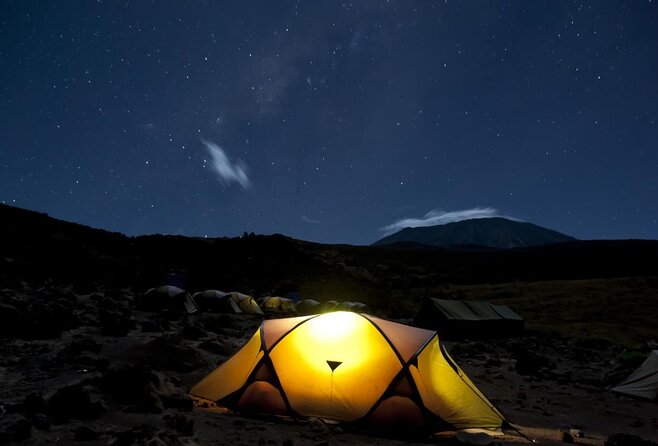
- Machame’s acclimatization rhythm uses altitude gains and a built-in reset around Lava Tower.
- A midnight to 2 am summit push means you’ll be hiking in the dark, then rewarded with sunrise.
- Meals included (breakfast, lunch, dinner) so your energy plan is handled on the mountain.
- Camping equipment included (tent and mattress), which helps you travel lighter than you might expect.
- Park fees and tips are extra, so budget for those up front instead of last-minute math.
Why the Machame Route Feels Like the Right Plan
Machame is one of the most popular ways up Kilimanjaro, and the reason makes sense when you look at the day-by-day altitude profile. You start in rainforest, climb into moorland, then push higher into semi-desert and alpine desert. That progression is not just scenery—it’s a built-in way to help your body adjust as you gain altitude.
I like that the itinerary doesn’t just “go up, go higher, go even higher” with no breathing room. You get an important acclimatization day that takes you up toward the Lava Tower area and then back down toward Barranco. That pattern—go up, then come down—helps many hikers manage the classic altitude problem of feeling rough too soon.
Here’s the reality check: Machame is popular because it works, but “works” doesn’t mean “easy.” The day 5 summit effort is long, steep, and mentally demanding. If you’re the type who gets frustrated by slow, careful steps, you’ll want to practice patience before you arrive.
You can also read our reviews of more tours and experiences in Moshi.
Moshi to Machame Gate: Day One’s Rainforest Climb Is About Pace
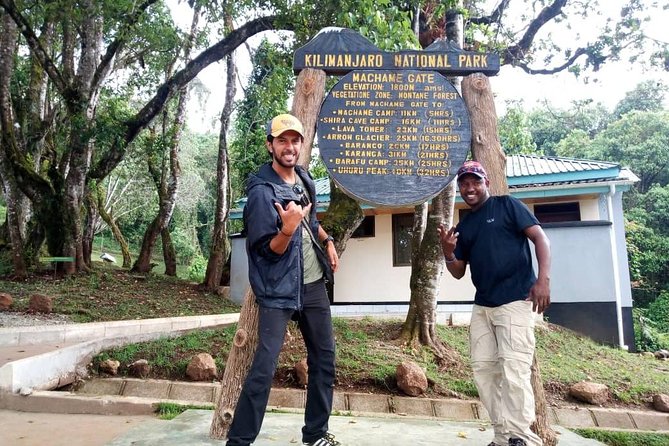
Day one starts with a roughly 45-minute drive from Moshi to Machame Gate. Then you hike about 11 km (7 miles) through montane forest, climbing from about 1,830 m (6,000 ft) to around 3,050 m (9,950 ft) over about 5–6 hours. The goal here is not to race; it’s to settle into a steady hiking cadence while your body starts adapting.
You’ll stop for lunch and continue with dinner at Machame Camp. That matters because the first day sets how well you sleep and how you feel the next morning. If you treat day one like a warm-up hike, you’ll have an easier time adjusting to cooler nights and higher altitude air.
Possible drawback: you’re hiking significantly on day one, so if you’re coming straight from sea-level travel chaos, give yourself a day in Moshi to rest, eat, and hydrate. The trek starts quickly after the gate.
Shira Plateau and Moorland on Day Two
On day two you leave the rainforest glades and keep ascending on an ascending path. The trail crosses a valley along a steep rocky ridge, then you move into a river gorge before reaching Shira Camp. The route climbs from about 3,050 m to roughly 3,850 m (10,150–12,600 ft), covering about 5 km (3 miles) in around 4–5 hours.
Even with the shorter distance, day two can feel serious because of the altitude shift. The habitat changes to moorland, which often feels colder and more exposed. I like this stage because it’s a clear transition—your body starts noticing the air thinning, and you learn what a steady effort feels like at higher elevations.
Meals are included again (breakfast, lunch, dinner), so you’re not chasing food schedules while your energy is being spent on elevation gain. Overnight at Shira Camp means you sleep higher than you did on day one, which is part of the Machame strategy.
Lava Tower (“Shark’s Tooth”) and Barranco: The Acclimatization Sweet Spot
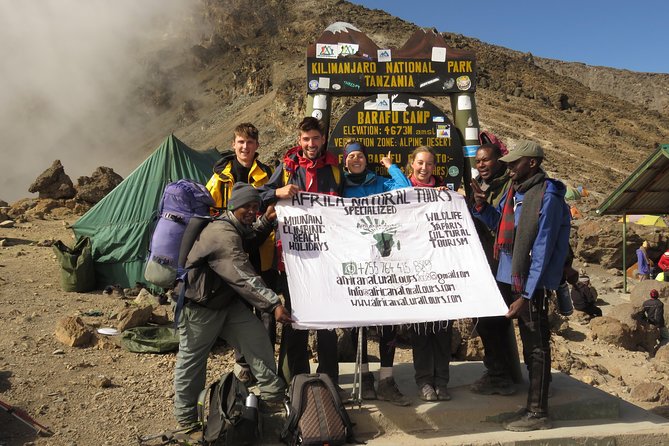
This is one of the most important days on the mountain, not because it’s the biggest number on paper, but because it teaches your body what to expect. You start from Shira Camp, hike along a ridge, then move toward the Lava Tower area—also known as “Shark’s Tooth”—at about 4,650 m (15,250 ft). After that, you descend to Barranco Camp.
Your elevation goes from roughly 3,850 m to about 4,000 m (12,600–13,000 ft), with about 10 km (6 miles) of hiking over around 5–6 hours. That “go higher, then come down” structure is the point. It helps reduce the shock of later higher camps.
Habitat is described as semi-desert, which means less lush forest cover and more open, exposed walking. It’s a good day to remember that the mountain isn’t one uniform environment. Your clothing and your water habits need to match changing conditions.
I also appreciate how this day ends around about the same altitude you started from. It sets you up for the next day, where you’ll tackle the Barranco Wall and then continue climbing again.
Barranco Wall to Barafu Camp: Where the South Circuit Feels Real
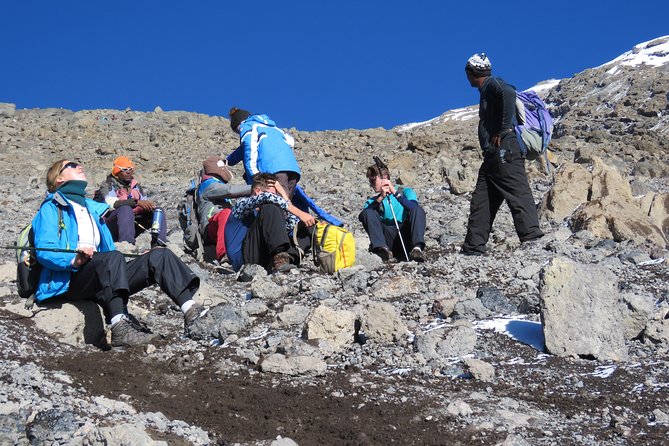
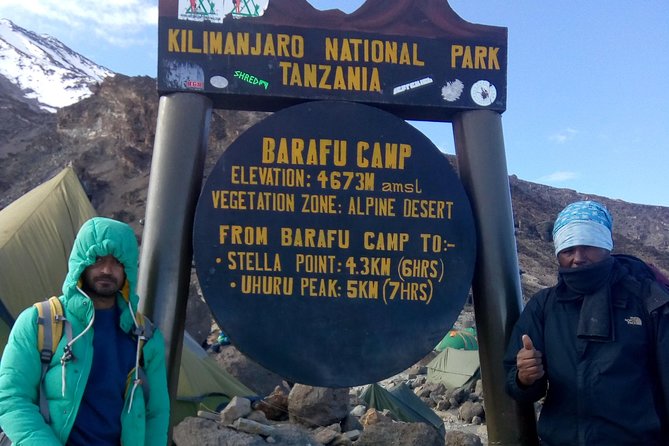
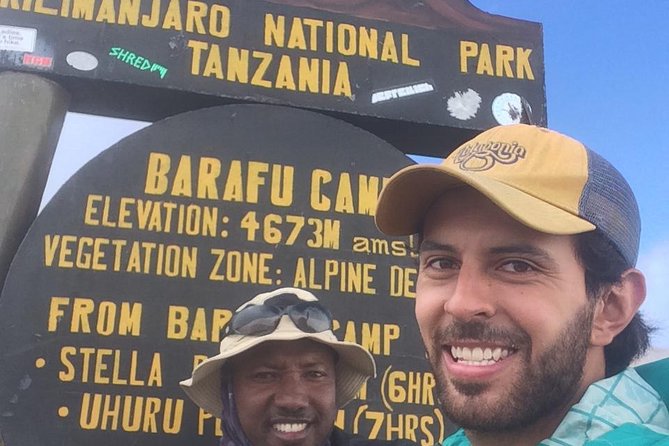
Day four starts after breakfast at Barranco Camp, and then you tackle the steep Barranco Wall. You reach around 4,250 m (13,900 ft), then traverse through Karanga Valley around 4,050 m (13,250 ft) before continuing on to Barafu Camp.
You climb from about 4,000 m to roughly 4,700 m (13,000–15,350 ft) over around 9 km (6 miles), with about 6–8 hours of hiking. This is described as part of completing the South Circuit, and you can feel that in the way the day flows: it’s hard, it’s continuous, and it sets you up for the summit push.
Habitat is listed as alpine desert. That can be a mental shift as much as a physical one. Once you’re in these higher, drier zones, your pace depends on careful foot placement and steady breathing more than raw motivation.
Meals are included (breakfast, lunch, dinner), and you’ll overnight at Barafu Camp. This is also the day that primes you for the overnight timing of day five—so don’t plan to “save all your energy” by under-eating. Fuel is what gets you through the next few hours and beyond.
Midnight Summit Push: Stella Point, Uhuru Peak, and Sunrise
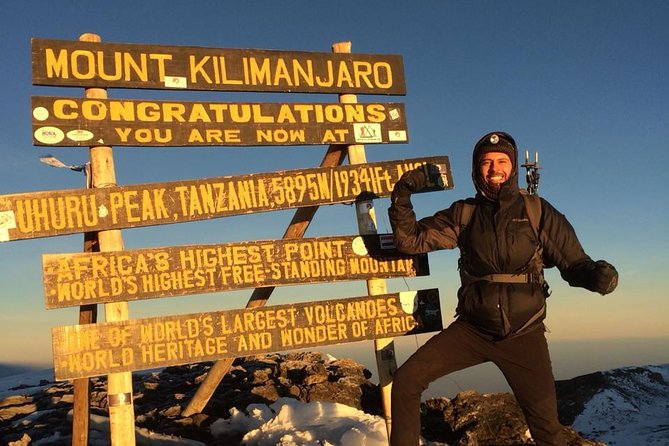
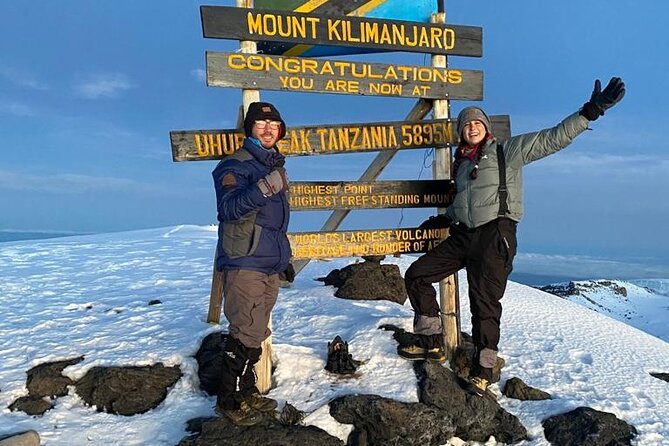
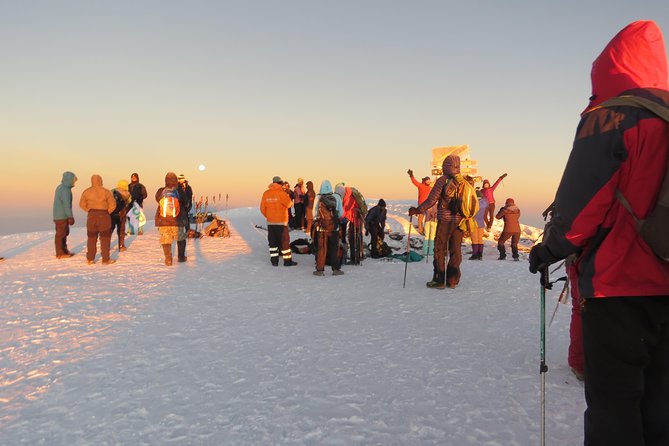
Day five is the big one. You leave very early, starting between midnight and 2 am, heading toward the summit. You’ll navigate between the Rebmann and Ratzel glaciers, ascending through scree toward Stella Point on the crater rim at about 5,700 m (the route description references Stella Point as part of the crater rim approach).
From Stella Point, the key payoff is sunrise. Then you continue on to Uhuru Peak, the highest point in Africa at 5,895 m (19,340 ft). This is the moment most people dream about—and it comes after hours where the only real job is moving carefully.
After summiting, you descend to Mweka Camp, stopping at Barafu for lunch along the way. The elevation pattern is dramatic: from about 4,700 m to 5,895 m, then down to around 3,090 m (10,150 ft). The hiking distance on this day is described as roughly 5 km up and 13 km down, with a total hiking time around 10–13 hours.
Practical reality: descending can be tough on your knees and ankles because your body is tired and the ground can be loose. It can also be colder than you expect earlier at night, and later as the sun rises. You’ll want to treat this day like a controlled effort, not a sprint to the top.
Also note the trip highlights mention an unforgettable sunset from the summit weather permitting. In practice, your summit timing centers on sunrise, but if weather lines up on your schedule, you might get those dramatic sky moments as well.
Mweka Descent and Summit Certificates: Getting Back With Your Legs Intact
Day six begins with breakfast and a descent from Mweka Camp to Mweka Park Gate. The trail goes from about 3,090 m down to around 1,680 m (10,150 to 5,500 ft), over about 10 km (6 miles) in roughly 3–4 hours.
The most helpful detail here is the weather/ground note: the descent can be wet and muddy at lower elevations. That’s exactly the scenario where poles and gaiters become more than optional. If your ankles and shins get cooked by slipping, your finish won’t feel like a victory—it’ll feel like damage control. Go in expecting the ground to be the boss at the end.
After the hike, you receive your summit certificates at Mweka Park Gate. Then a vehicle picks you up and drives you back to Moshi, about 60 minutes. You finish with breakfast before the trek is done.
This end-of-trek structure matters. You don’t just get dropped somewhere and left to figure it out. You get the official certificate moment, then a straightforward return to town.
Price: What $1,150 Buys You (and What to Budget for)
At $1,150 per person, this isn’t the cheapest way to climb Kilimanjaro. But it’s also not just marketing words, because the included package covers several big-ticket items for a multi-day trek.
What’s included:
- Breakfast, lunch, and dinner during the trek
- Pickup in Moshi to Machame Gate
- Drop-off back to your Moshi hotel after descending
- Camping equipment like a tent and mattress
- A professional guide plus a briefing
- Trekking certificate
What’s not included:
- All Mount Kilimanjaro park fees
- Tips to the mountain crew
- Your hotel in Moshi before and after the trek
- Airport pickup/drop-off
- Flights
- Personal hiking gear
So the value question is: does the price reduce your stress and risk? For most people, the answer is yes, because tent/mattress, meals, and guided logistics are the hard parts to DIY safely and comfortably. You’re still paying for park fees, but those are normal for the region and can be handled direct to the park or via the operator.
I’d think of this as paying for coordination. When you’re tired and acclimatizing, coordination is worth real money.
One more planning note: it’s described as booked about 90 days in advance on average. If your travel dates are fixed, don’t wait until the last month to confirm.
What Included Camping Gear Means on a Cold, High Night
Camping sounds simple until you realize how fast conditions change above the clouds. The package includes camping equipment like a tent and mattress, which helps you avoid the two biggest rookie mistakes: arriving underprepared for cold nights and carrying too much weight.
You’ll still need personal hiking gear, which isn’t included, so build your packing list with cold weather and wet conditions in mind—especially for the finish when lower sections can turn muddy.
Also keep in mind this trek has a maximum of 100 travelers. That doesn’t mean you’ll feel like you’re in a crowd, but it does suggest you should expect a typical group trekking setup, not a private “your pace only” experience.
Who Should Choose This Machame Trek
This tour is aimed at people with moderate physical fitness. That’s a helpful word because it means you don’t have to be a mountaineering athlete, but you do need endurance, a steady walking rhythm, and the willingness to go slow up high.
You’ll get the best match if you:
- Want the Machame route approach with a clear acclimatization structure
- Like guided planning and prefer not to manage daily logistics
- Want full meals during the climb so your energy plan stays consistent
- Are okay with a long summit day starting at midnight to 2 am
You might rethink if you:
- Know you struggle with long, early starts
- Get discouraged by steep sections like the Barranco Wall
- Are worried about wet/muddy conditions on the descent
In other words: this is for people who can hike for hours each day and stay mentally steady when the weather shifts.
Practical Gear and Comfort Tips That Actually Matter
The package covers camping basics, but you’ll still control how comfortable you are. Based on the route details, focus on traction and protection for varied ground.
For the descent, the trip specifically notes it can be wet and muddy at lower elevations. That’s when you’ll want trekking poles for stability and gaiters to help keep debris and dampness off your legs and boots.
Also remember the summit day starts very early in the dark. Even if you don’t know the exact weather, you should plan for cold conditions typical of high-altitude climbing. Dress in layers you can manage while moving slowly uphill.
Finally, since park fees and tips aren’t included, plan your budget so you’re not juggling money at the wrong moment. That’s one less stressor when altitude already takes enough attention.
Should You Book This Machame Route Climb?
I’d book it if you want a classic, well-timed Kilimanjaro climb with a route that prioritizes acclimatization and a summit attempt that’s designed for sunrise. At $1,150, the value is strongest because meals, camping equipment basics, and guided logistics are handled, which makes the mountain experience more about hiking and less about problem-solving.
Don’t book it if you’re looking for a casual walk or you want everything fully inclusive. Park fees, tips, your personal gear, and town lodging before/after the trek will add cost, and day five is seriously long.
If you’re ready for a real challenge—rainforest to alpine desert, crater-rim sunrise, summit certificates, and a muddy but rewarding finish—this Machame route plan is a solid way to go.
FAQ
How long is the Kilimanjaro trek on the Machame route?
The experience is listed as about 6 days. The overview also mentions 6 or 7 days, so your exact schedule may vary slightly.
Where does the trek start and how do you get there from Moshi?
You’ll drive from Moshi to Machame Gate on day one, about 45 minutes. Pickup is offered from the hotel you booked in Moshi town.
Are meals included during the trek?
Yes. Breakfast, lunch, and dinner are included during the hiking days.
What camping equipment is provided?
Camping equipment like a tent and mattress is included.
Are Mount Kilimanjaro park fees included in the price?
No. All Mount Kilimanjaro park fees are not included, and they can be paid directly to the park or via the tour operator.
Does the tour include a guide and briefing?
Yes. A professional Kilimanjaro hiking guide and a briefing are included.
What costs extra besides park fees?
Tips to the mountain crew, personal hiking gear, and your hotel accommodations before and after the trek in Moshi are not included. Airport pickup/drop-off and flights are also not included.
What is the maximum group size?
The tour lists a maximum of 100 travelers.
What is the cancellation policy?
Free cancellation is offered. You can cancel up to 24 hours in advance for a full refund, but if you cancel less than 24 hours before the start time, the amount paid is not refunded.