REVIEW · ARUSHA
8-Day Small-group Lemosho Kilimanjaro Summit Trekking
Book on Viator →Operated by Climb Kili · Bookable on Viator
Kilimanjaro sounds bigger than life. This 8-day Lemosho trek turns it into a step-by-step plan, with acclimatization built in and a small team moving at a human pace. I love how the route walks you through distinct climate zones and keeps you focused on low-oxygen adjustment, not just pushing for the highest point.
My favorite part is the practical, all-in style: round-trip transfers from your Arusha hotel, plus camping equipment, fees, and meals are included. When you’re busy going uphill and breathing hard, you don’t want to also manage logistics.
One consideration: this is still a real mountain. You’ll be hiking long days at high altitude, and summit night is described as one of the steepest non-technical sections—so strong physical fitness matters, and the exposed Kosovo Camp ridge means you’ll need to be comfortable walking in challenging terrain before dark.
In This Review
- Key things to know before you hike
- The Lemosho Route: why it’s built for acclimatization
- Price and what $2,895 really buys you
- Small-group trekking: the attention you feel on steep days
- Days 1–2: Londorossi gate to Mti Mkubwa and into Shira views
- Day 3: Shira plateau exploration and Moir Camp in a lava gorge
- Days 4–5: Lava Tower acclimation, Arrow Glacier area, Barranco wall, and Karanga
- Day 6–7: Kosovo Camp ridge prep, then midnight to Stella Point and Uhuru Peak
- Day 8: Mweka Gate walk and the shower waiting back in Arusha
- What the best reviews consistently praise (and how it helps you)
- Who should pick this Kilimanjaro trek (and who should think twice)
- Should you book this 8-day Lemosho trek with Climb Kili?
- FAQ
- How long is the Kilimanjaro trek?
- Where does the trek start?
- What is the maximum group size?
- What’s included in the price?
- Is the trek designed for acclimatization?
- What time does the trek start?
- Where do you camp during the trek?
- What happens on summit night?
- Can I get a full refund if I cancel?
Key things to know before you hike
- Small group size (max 15) for closer guide attention and smoother pacing control.
- Lemosho route uses a gradual approach through multiple zones to help with acclimatization.
- All-in camping setup: equipment, meals, and park fees included so you can focus on walking.
- Mind-and-body summit night: midnight start, steep ascent, and sunrise at Stella Point.
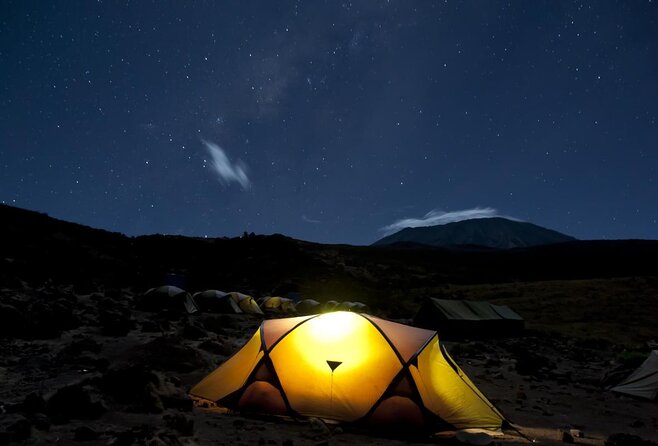
- Scenic, varied camps like Mti Mkubwa (Big Tree), Moir Camp, and the ridge at Kosovo.
- Return transfer lined up: a vehicle meets you at Mweka Gate for the ride back to your hotel.
The Lemosho Route: why it’s built for acclimatization
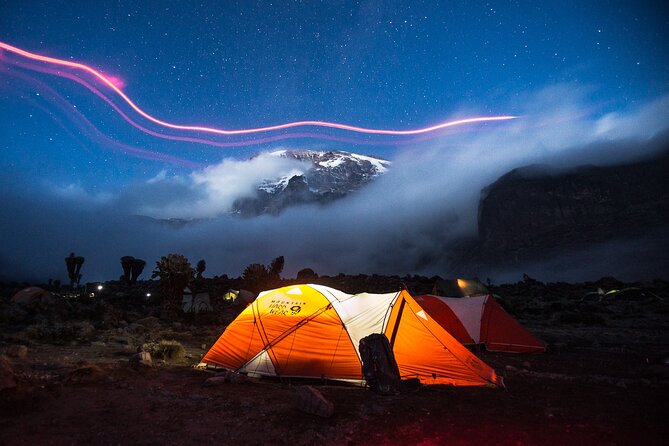
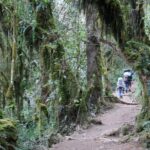
Lemosho is one of those Kilimanjaro routes that feels like it’s doing the thinking for you. Instead of rushing upward, it takes you through a sequence of climatic zones—montane forest, high-altitude savannah and desert plateau, then colder alpine and arctic-feeling terrain closer to the summit. That matters, because Kilimanjaro isn’t just about willpower. It’s about how your body handles dropping oxygen as you gain altitude.
The trek’s pacing is also the point. Over eight days, you get repeated altitude exposure with built-in adjustment hikes. You even get a full day on the Shira plateau before moving higher. Then later you do a classic acclimatization day around Lava Tower and the Arrow Glacier area, followed by a day that swings into the Barranco Valley and Karanga terrain. The itinerary keeps giving you chances to rest, reorganize your energy, and prepare for the harder days.
You’ll still feel the mountain’s personality. Expect long days, thinner air, and terrain that can be mentally demanding—especially on summit night. But Lemosho’s strength is that it treats altitude as a main character, not an afterthought. That’s exactly what you want if you’re aiming for a high chance of reaching the top.
You can also read our reviews of more tours and experiences in Arusha.
Price and what $2,895 really buys you
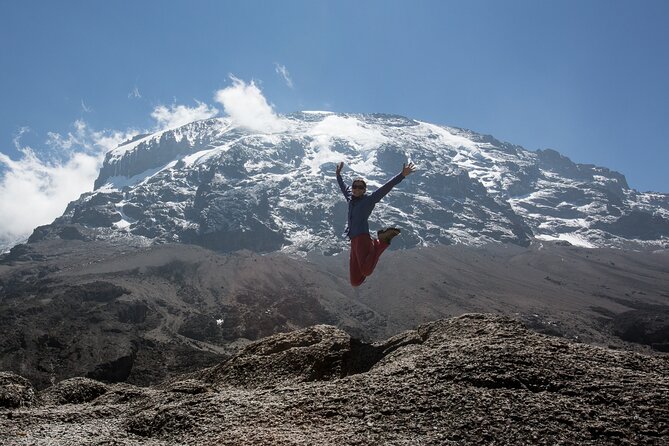
At $2,895 per person for this 8-day trek, the headline price can look steep if you compare it to a DIY idea. But Kilimanjaro is not a simple hike. You’re paying for a supported, all-in expedition that handles the costly, staff-heavy parts.
Here’s what’s included in what you’re paying for:
- Round-trip transfers from your Arusha hotel
- All camping equipment
- Park fees and meals
- Admission tickets tied to the hiking route and gates
When that’s bundled, you lose fewer hours to planning, shopping, and scrambling. More importantly, you keep your energy for walking and acclimatizing. On summit night, the difference between being well-fed and properly set up versus improvising can be the difference between coping and struggling.
This also includes the “human scale” advantage: the group has a maximum of 15 travelers. That doesn’t sound like much until you’re following a line in thin air and you need space, guidance, and time to manage your pace. A smaller group can mean more attention from your guide team when someone needs to slow down or take an extra minute.
Finally, confirmation is handled with a mobile ticket system, and you should receive confirmation within 48 hours of booking (subject to availability). That’s a small detail, but it helps you feel organized when you’re planning flights and time around the climb.
Small-group trekking: the attention you feel on steep days
This trek is explicitly designed for small-group hiking, and the maximum group size is 15. In practice, that usually means your guide can read the room better. I like that the experience is built around more attention rather than a big herd moving together.
The reviews reinforce what you’d hope for on Kilimanjaro: guides who prioritize health and safety, adjust to how you’re feeling, and keep the plan moving without turning it into a pressure cooker. Names that show up in guide praise include Amani, Raymond, Steve, Herment Mosha, Manny, and Cinga, plus assistant guides such as Isaya/Isaiah and Emmanuel/Emanuel in some teams. People also call out team members like Simon (chef) and porters such as Luigi, with details like summit-night encouragement and extra care with comfort and timing.
That kind of team attention matters most during two moments:
- Acclimatization days, when you need smart pacing more than speed.
- Summit night, when you’re tired, cold, and mentally focused on one next step at a time.
If you want a climb where people notice your energy and your breathing instead of just counting miles, this size makes sense.
Days 1–2: Londorossi gate to Mti Mkubwa and into Shira views
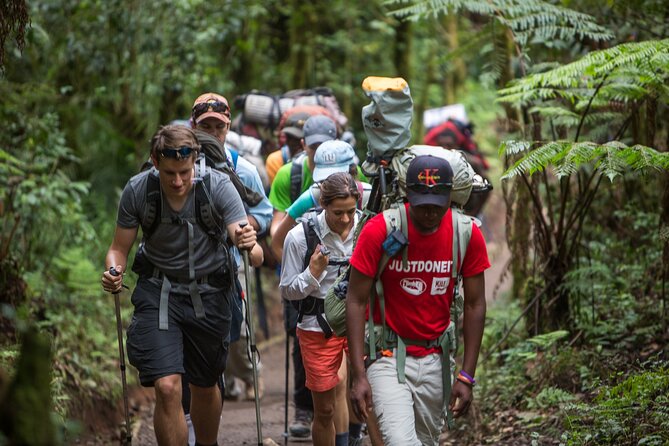
You start from the Arusha-side setup, then begin the trek by entering through the Londorossi gate on the western side. Day one climbs from about 7,742 ft / 2,360 m for roughly 3–4 hours, rising gently through montane forest. This matters because your body gets a warm-up. You’re hiking, but you’re not immediately dropped into brutal altitude.
You arrive at camp under the Climb Kili banner, with tents set up and your belongings placed inside. Tonight’s camp is at Mti Mkubwa, which literally means Big Tree in Swahili. That gives you a sense of place right away—this isn’t just sleeping near the trailhead.
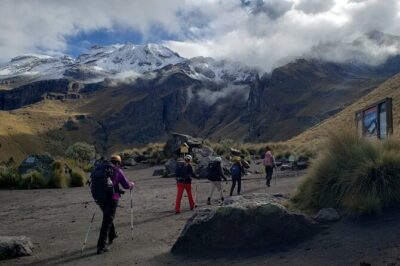
Day two pushes higher, to around 11,500 ft / 3,505 m over 5–6 hours. The big change is that you leave the forest and step into savannah-like terrain with tall grasses, heather, and volcanic rock dusted with lichen. In the afternoon you track along the Shira ridge, and the first major views of Kilimanjaro open up on the horizon. For many people, that’s the moment the trip stops feeling like an itinerary and starts feeling like a real expedition.
Possible drawback to note: the scenery transition can be mentally tough if you expect the climb to feel like a steady forest hike. Day two is more exposed and visually raw. Plan for that shift and keep your pace controlled.
Day 3: Shira plateau exploration and Moir Camp in a lava gorge
Day three is a full day on the Shira plateau, reaching about 13,800 ft / 4,206 m and hiking around 5–7 hours (including exploration time). This is where the route becomes more than “get higher.” You’re moving east toward Kibo’s glaciated peak, and you have the option to visit the ancient collapsed Shira cone—described as the oldest of Kilimanjaro’s three volcanoes.
You then head to Moir Camp (and yes, you’ll feel the altitude climb here). The camp sits in a huge gorge at the end of a dormant lava flow. That detail matters because it helps explain why the air can feel so different from day to day—this is volcanic terrain, not just a “high mountain trail.”
The benefit of spending time on Shira: you get more acclimatization through careful altitude exposure, and you also build confidence with camp routine—water, meals, layering, and rest—before the harder phases.
One consideration: Shira can feel like a high-altitude desert. If you get impatient with long stretches or wide-open terrain, you’ll want to follow your guide’s pacing closely rather than pushing to “feel better” by hiking faster.
Days 4–5: Lava Tower acclimation, Arrow Glacier area, Barranco wall, and Karanga
These days are where many hikers feel the route’s intelligence. You’re not just climbing; you’re practicing how to handle altitude.
On day four, you do an acclimatization trek to Lava Tower around 15,000 ft / 4,500 m, then continue toward the area near the Arrow Glacier. You rest, then descend through the Senecio forest, with a waterfall along the way, finishing at Barranco Camp near the Barranco wall. The wind and clouds can shift here—there’s often breeze carrying clouds from the Barranco Valley, which can change how the night feels.
The special part of Barranco: it’s both scenic and purposeful. It’s a day that trains your legs and your nerves for uneven terrain, while still keeping you moving within a controlled altitude plan.
Day five starts with the big Barranco move—down through the Barranco Valley and up the Barranco wall, described as adventurous. After that, you enter the South Circuit path through the Karanga Valley and camp at Karanga Camp around 13,100 ft / 3,992 m for about 4–5 hours of hiking.
Possible drawback: day five includes a zone described as arctic-zone terrain of Kilimanjaro. Cold becomes a factor sooner than you might expect if you’re coming from warmer climates. The way you pace and take breaks becomes the difference between coping and burning out.
Day 6–7: Kosovo Camp ridge prep, then midnight to Stella Point and Uhuru Peak
This is the heart of Kilimanjaro: the section where you feel both the physical climb and the mental game.
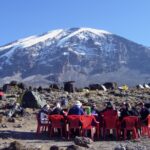
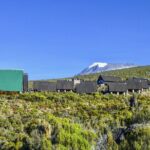
On day six, you hike to Kosovo Camp around 16,000 ft / 4,876 m, about 5–6 hours (with a slow pace). You pass Barafu camp, which offers excellent views of Kibo and Mawenzi. Kosovo Camp is on an exposed ridge, and the route notes that it’s necessary to familiarize yourself with the terrain before dark. That’s not just trivia. It’s a reminder that on summit eve, visibility and footing matter.
You then have rest and preparation time, including preparation for summit night. This is where good pacing earlier pays off—if you’re already exhausted, summit day feels like a wall.
Day seven is the midnight climb to the top. It’s described as one of the steepest non-technical paths on Kilimanjaro. You start around 19,340 ft / 5,895 m and hike about 6–7 hours to Stella Point for sunrise. From Stella Point, it’s roughly one hour to Uhuru Peak, and you’ll see the summit from the crater rim.
The route details are direct: you ascend through heavy scree toward Stella Point. This is the portion that can be the most mentally and physically challenging, because scree slows your legs and makes your footing feel unstable when you’re already tired.
Then you descend to Mweka Camp for dinner and celebration. The down part matters. It’s a reminder that summiting isn’t the finish line; getting your body safely back down is part of the win.
Day 8: Mweka Gate walk and the shower waiting back in Arusha
Day eight starts with a morning walk to Mweka Gate at about 5,400 ft / 1,645 m, then you’re picked up for the transfer back to your hotel. The hiking time is around 3–4 hours. The big practical win here is that you’re not left to figure out transport after the biggest day of your life.
This day is often emotionally loaded because you’re watching Kilimanjaro slowly fade from the immediate problem-solving mode into a distant memory. The fact that the company has a vehicle waiting at the gate helps you keep your focus on finishing safely, not hunting rides.
What the best reviews consistently praise (and how it helps you)
Across the feedback, three themes show up again and again, and they line up with what you’d want on Kilimanjaro:
First: safety and health-focused leadership. People specifically mention that the team’s first priority is safety, plus attention to comfort, food, energy, and the joy of the adventure. On summit night, that translates to slower, smarter decision-making and a guide who watches how you’re doing rather than treating everyone like a metronome.
Second: pacing that feels human. Lead guide praise often highlights patience—guides who ask how you feel, manage meal timing, set start times, and monitor your energy. That sounds simple, but it prevents the common altitude-trouble spiral of going too hard because you feel fine at the beginning.
Third: a full crew, not just a guide. Chef support and porter teamwork show up in the way people talk about the experience: meals at the right times, tents handled properly, and small comfort touches that help you keep moving. Even details like coffee wake-up calls get mentioned, because they’re the little routines that make cold mornings less miserable.
If you want an expedition where the team has your day-by-day success in mind, this kind of support is a big reason to choose this operator and this route.
Who should pick this Kilimanjaro trek (and who should think twice)
This climb is positioned for both beginner and advanced hikers, and it emphasizes a very high summit rate. That suggests the pacing and support are designed to help a range of fitness levels reach the goal—assuming you can meet the basic demand.
So this trek fits best if:
- you can commit to a strong fitness base and long hiking days
- you want a small group up to 15 travelers
- you care about having meals and camping support handled for you
- you’re ready for summit night steep climbing and a sunrise summit goal at Stella Point and Uhuru Peak
It may not fit if you’re likely to panic in exposed terrain or you know you struggle with cold and steep scree on long nights. Even with a good team, the mountain doesn’t negotiate.
Should you book this 8-day Lemosho trek with Climb Kili?
Book it if you want a supported Lemosho route Kilimanjaro trek with all the heavy lifting handled—equipment, meals, park fees, and round-trip transfers—plus a small group that makes it easier to control pace and get real attention. The route design (Shira plateau time, Lava Tower acclimatization, and summit strategy aiming for sunrise) is exactly what you want when altitude is the main challenge.
Hold off or ask lots of questions first if you’re not confident in your fitness level, or if steep exposed segments like the Kosovo Camp ridge and the summit night scree climb sound like your personal nightmare. This is a big goal with a serious day seven. If that’s what you came for, this trek has the structure and team support to make it achievable.
FAQ
How long is the Kilimanjaro trek?
It’s an 8-day trek (approx.).
Where does the trek start?
You’ll begin from Arusha with pickup offered, then enter Kilimanjaro via the western-side Londorossi gate.
What is the maximum group size?
The group size has a maximum of 15 travelers.
What’s included in the price?
The trek includes round-trip transfers from your Arusha hotel, all camping equipment, fees, meals, and admission tickets.
Is the trek designed for acclimatization?
Yes. The route includes acclimatization time and a trek to Lava Tower, plus a slow pace on the approach to summit day.
What time does the trek start?
The start time is 8:00 am.
Where do you camp during the trek?
Camps include places like Mti Mkubwa (Big Tree), Moir Camp, Barranco Camp, Karanga Camp, Kosovo Camp, Mweka Camp, and others along the route.
What happens on summit night?
There’s a midnight start to climb to Stella Point for sunrise, then you continue to Uhuru Peak, before descending to Mweka Camp.
Can I get a full refund if I cancel?
Yes. Free cancellation is available up to 24 hours in advance for a full refund, based on local time cutoff rules.